A falls prevention app improved balance in older adults within 12 weeks
FallsPart of a story we are following · 4 articles · See every update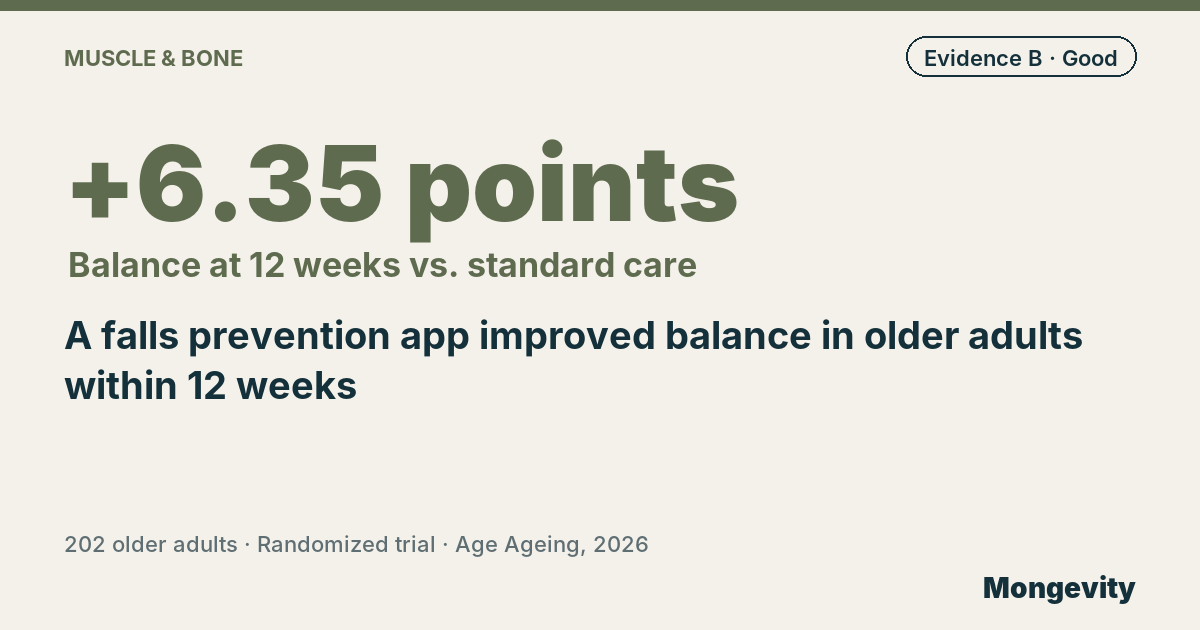
The Keep-On-Keep-Up digital exercise program improved balance by 6.35 points on a standard scale at 12 weeks in 202 older adults in England, in a randomized trial published in September 2026 in Age and Ageing. Apps can help prevent falls when classes aren’t an option.
Falls are a leading cause of injury-related hospital stays in older adults. Strength and balance exercises prevent many falls, but classes aren’t always available or convenient. Keep-On-Keep-Up, or KOKU, is a digital program approved by England’s National Health Service that offers progressive exercises and education on fall prevention.
What did the trial test?
202 community-dwelling adults aged 60 or older, with a mean age of 76.8 years and 72.8% women, were assigned by chance to use KOKU plus standard care (102) or standard care alone (100). Standard care meant advice on strength and balance exercise and a falls prevention leaflet. The main outcome was balance at 12 weeks, measured with the Berg Balance Scale.
What did the study find about falls?
- 89.1% of participants completed the 12 weeks.
- KOKU improved balance by 6.35 points more than standard care.
- KOKU was linked to lower falls-related costs, although the estimate was uncertain.
- It gave a small gain in quality-adjusted life years, 0.020.
Why does this matter?
Digital programs can reach many people at low cost, including those who can’t get to a class. A meaningful balance improvement in 12 weeks suggests apps can complement traditional falls prevention services.
How solid is this evidence?
It’s good. Mongevity rates it B on our A-to-E scale: a randomized trial with good retention. Limits: it lasted 12 weeks, participants couldn’t be blinded, the main outcome was balance rather than actual falls, and people who joined were likely comfortable with technology.
What are the open questions?
Longer studies are needed to see whether the balance gains translate into fewer falls and injuries, and whether people keep using the app over time.
What does this mean for you?
If you or an older relative feel unsteady, regular strength and balance exercises are one of the best ways to prevent falls. An app, a class or a physiotherapist can guide them. Also check vision, review medicines and remove tripping hazards at home.
How do I explain this at dinner?
Older adults who used an exercise app for falls prevention had better balance after 12 weeks than those who only got a leaflet. A phone or tablet can be a personal trainer for staying on your feet. A good question for the table: who in your family could use a balance routine?
In one sentence: the Keep-On-Keep-Up digital program improved balance in older adults within 12 weeks compared with standard care, with early signs of cost-effectiveness.
Questions and answers
- What is Keep-On-Keep-Up?
- A digital program with progressive strength and balance exercises and falls prevention education.
- Did it improve balance?
- Yes: by 6.35 points on the Berg Balance Scale at 12 weeks vs. standard care.
- Does it prevent falls?
- The trial measured balance; longer studies are needed to show fewer falls.