Adding nerve stimulation to exercise didn’t ease knee arthritis pain more than a sham
Knee osteoarthritisPart of a story we are following · 3 articles · See every update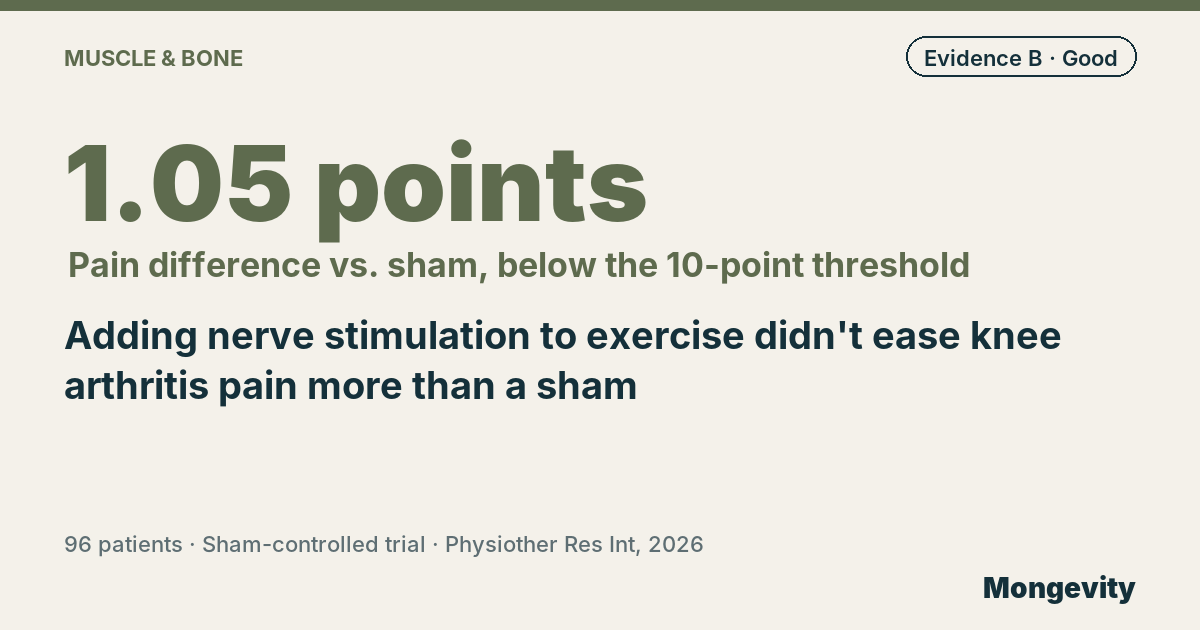
Adding high-frequency TENS to an exercise program didn’t improve pain more than sham stimulation in 96 people with knee osteoarthritis, in a randomized sham-controlled trial published in October 2026 in Physiotherapy Research International. Exercise remains the core treatment for knee osteoarthritis.
Exercise is the cornerstone of treatment for knee osteoarthritis, but pain during movement can make it hard to stick with. TENS, transcutaneous electrical nerve stimulation, uses a small device with skin pads to send mild electrical pulses that can dull pain.
What did the trial test?
96 people with knee osteoarthritis were assigned by chance to an exercise therapy program combined with active high-frequency TENS, or the same program with sham TENS, a device that looked the same but didn’t deliver effective stimulation. Outcome assessors didn’t know the group. The main outcome was the pain score on the Knee Injury and Osteoarthritis Outcome Score, measured after the program and 1 month later.
What did the study find about knee osteoarthritis?
- Active TENS didn’t reduce pain more than sham: the difference was 1.05 points after the program and 0.40 points at 1 month.
- The confidence intervals didn’t reach the 10-point difference considered clinically important.
- There were no differences in any other outcome, including function, strength and disability.
- No side effects were reported.
Why does this matter?
TENS devices are widely sold and used. This trial suggests that, when people are already doing a structured exercise program, adding TENS doesn’t bring extra benefit, so time and money may be better spent on the exercise itself.
How solid is this evidence?
It’s good. Mongevity rates it B on our A-to-E scale: a randomized, sham-controlled trial with blinded assessment and a registered protocol. Limits: blinding of participants wasn’t formally checked, follow-up was short, and there was no exercise-only group to compare.
What are the open questions?
It’s unclear whether TENS could help people who can’t exercise because of pain, or with different settings or longer use.
What does this mean for you?
If you have knee osteoarthritis, focus on regular strengthening and aerobic exercise, ideally with a physiotherapist’s guidance, and keep a healthy weight. If pain stops you from exercising, ask about pain relief options that make movement possible.
How do I explain this at dinner?
People with knee arthritis did an exercise program with either a real electrical pain-relief device or a fake one. Both groups did about the same, suggesting the exercise was doing the work. A good question for the table: why is exercise such a powerful treatment for joints?
In one sentence: adding high-frequency TENS to exercise didn’t reduce knee osteoarthritis pain more than sham stimulation, supporting exercise as the core treatment.
Questions and answers
- What is TENS?
- A small device that sends mild electrical pulses through skin pads to dull pain.
- Did it help knee arthritis pain?
- Not more than sham: the difference was 1.05 points, below the 10-point clinically important threshold.
- What helps knee osteoarthritis?
- Regular exercise, ideally guided by a physiotherapist, and a healthy weight.