Shrinking calves over three years were linked to more falls in older adults
FallsPart of a story we are following · 4 articles · See every update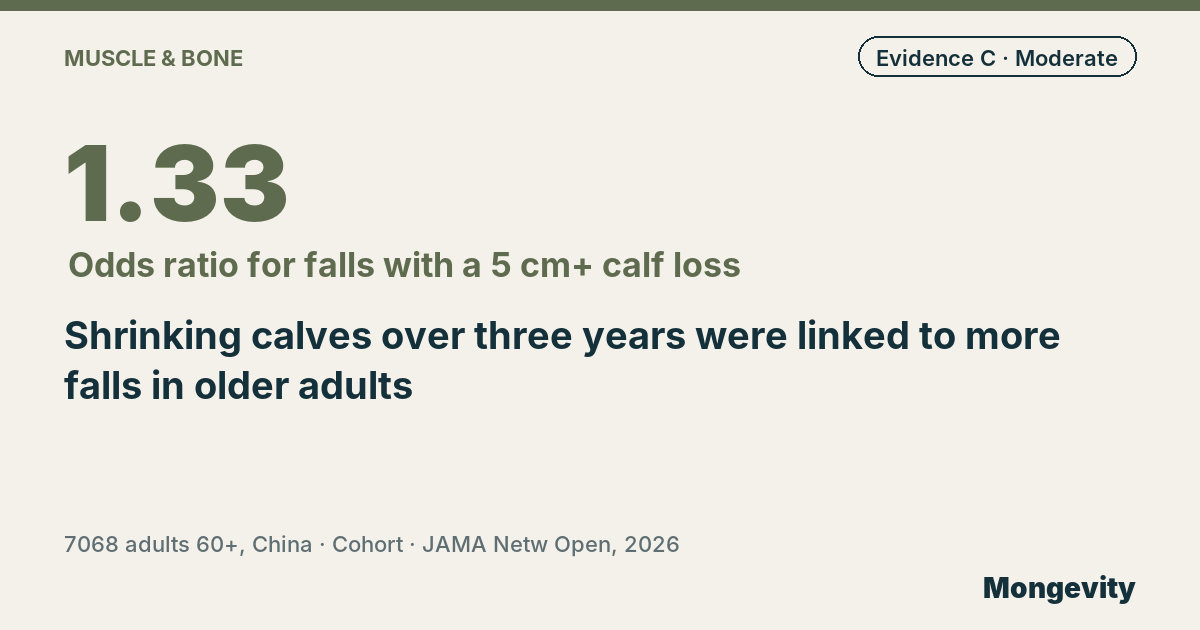
Older adults in China whose calf circumference shrank by 5 cm or more over three years had higher odds of falls (odds ratio 1.33), in a study of 7068 people published Oct. 1, 2026, in JAMA Network Open. A tape measure could help flag the risk of falls.
Losing muscle in the legs is one of the reasons older adults fall. Measuring muscle usually needs special scans, but a simple tape measure around the calf gives a rough idea.
What did the study look at?
Researchers used the Chinese Longitudinal Healthy Longevity Survey, a nationally representative study. They included 7068 people aged 60 or older whose calf circumference was measured in 2018 and again in 2021, and asked whether they had fallen. They adjusted for age, sex, past falls, habits, daily functioning and chronic diseases.
What did the study find about falls?
Over about three years, 23.64% of participants reported a fall.
| Change in calf circumference | Odds ratio for falling |
|---|---|
| Each 1 cm decrease | 1.03 |
| Each 10% decrease | 1.10 |
| Decrease of 5 cm or more | 1.33 |
| Decrease of 20% or more | 1.48 |
Compared with people whose calves didn’t shrink, bigger losses meant progressively higher odds of a fall.
Why does this matter?
A tape measure is cheap, quick and available everywhere. Tracking calf size at routine visits could help spot older adults who are losing leg muscle and may need strength training or a fall-prevention program, before a fall happens. Falls in older adults often lead to fractures, loss of confidence and moving out of home, so catching the warning signs early really matters. A shrinking calf could prompt a simple question: is this person still strong enough to get up from a chair?
How solid is this evidence?
It’s moderate. Mongevity rates it C on our A-to-E scale. The study is large and nationally representative and used methods to reduce bias from people who died or dropped out. But it’s observational, falls were self-reported, and calf size can also change with weight or swelling, not only muscle.
What does this mean for you?
If you’re older or care for an older person, keeping leg muscles strong is one of the best ways to prevent falls. Strength and balance exercises, enough protein and staying active help. If your calves are visibly thinner or you feel weaker, tell your doctor.
How do I explain this at dinner?
Scientists measured the calves of thousands of older people with a tape measure, three years apart. Those whose calves got much thinner were more likely to fall. A good question for the table: what helps keep leg muscles strong as we age?
In one sentence: a shrinking calf circumference over three years was linked to higher odds of falling in older adults, suggesting a simple tape measure could help flag risk.
Questions and answers
- Why measure calf circumference?
- It's a simple, cheap proxy for leg muscle mass.
- How much did calf loss raise fall risk?
- A decrease of 5 cm or more over three years was linked to an odds ratio of 1.33 for falling, and 20% or more to 1.48.
- How can I keep leg muscles strong?
- Strength and balance exercises, enough protein and staying active.