A doctor’s computer prompt for exercise modestly cut falls in older adults
FallsPart of a story we are following · 4 articles · See every update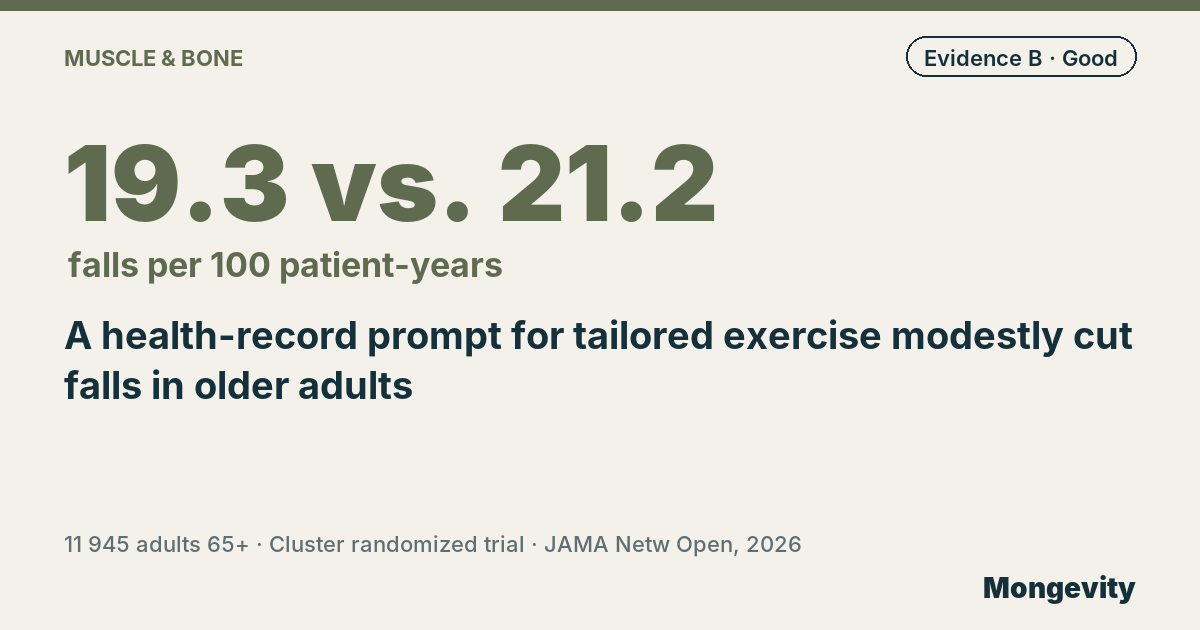
A decision tool in the electronic health record that recommended tailored exercise cut falls to 19.3 vs. 21.2 per 100 patient-years in the eSTEPS trial of 11 945 older adults in the US, published Oct. 1, 2026, in JAMA Network Open. The effect on falls was modest.
Falls are a leading cause of injury in older adults, and exercise that improves strength and balance is one of the best ways to prevent them. But busy primary care doctors don’t always prescribe it.
What did the trial test?
22 primary care practices in a US health system were paired and assigned by chance to use eSTEPS or not. eSTEPS appeared when a patient aged 65 or older screened positive for fall risk, and it offered tailored exercise recommendations, an optional physical therapy referral, and handouts, a website and an app. The trial included 11 945 older adults followed for 12 to 23 months.
What did the study find about falls?
| Per 100 patient-years | eSTEPS practices | Usual care |
|---|---|---|
| Patients with 1 or more falls | 19.3 | 21.2 |
| Fall-related injuries | 15.7 | 16.7 |
The rate ratio for falls was 0.91. There was no difference in deaths. Exercise prescriptions were issued for 22.1% of eligible patients, and 77.9% of clinicians used the tool at least once.
Why does this matter?
The reduction was modest, but it was achieved across thousands of patients with a tool that fits into routine visits. Even small reductions in falls matter at a population level, because falls can lead to fractures, hospital stays and loss of independence. The approach is also cheap to scale: once the tool is built into the record system, it can reach every practice without extra staff. Improving how often doctors actually prescribe the exercise could make the effect larger.
How solid is this evidence?
It’s good. Mongevity rates it B on our A-to-E scale: a large cluster randomized trial in real practices. Limits: falls were counted from medical record codes, which miss falls that aren’t reported, and only about a fifth of eligible patients got an exercise prescription.
What does this mean for you?
If you’re 65 or older and have fallen, feel unsteady or worry about falling, tell your doctor and ask for a balance and strength program or a physical therapy referral. Exercises like sit-to-stands, heel raises and tai chi help.
How do I explain this at dinner?
When older people see the doctor, a computer reminder told the doctor to suggest exercises for balance. Fewer people fell. A good question for the table: what simple exercise could help someone keep their balance?
In one sentence: a reminder in the health record that prompted tailored exercise modestly reduced falls among older primary care patients.
Questions and answers
- What is eSTEPS?
- A tool in the electronic health record that recommends tailored exercise, physical therapy referral and patient materials for older adults at risk of falling.
- How much did it reduce falls?
- Falls were 19.3 vs. 21.2 per 100 patient-years (rate ratio 0.91).
- What exercise helps prevent falls?
- Strength and balance training, such as sit-to-stands, heel raises and tai chi; ask your doctor for a program.