Feeling groggy on waking was linked to repeated falls in older adults
FallsPart of a story we are following · 4 articles · See every update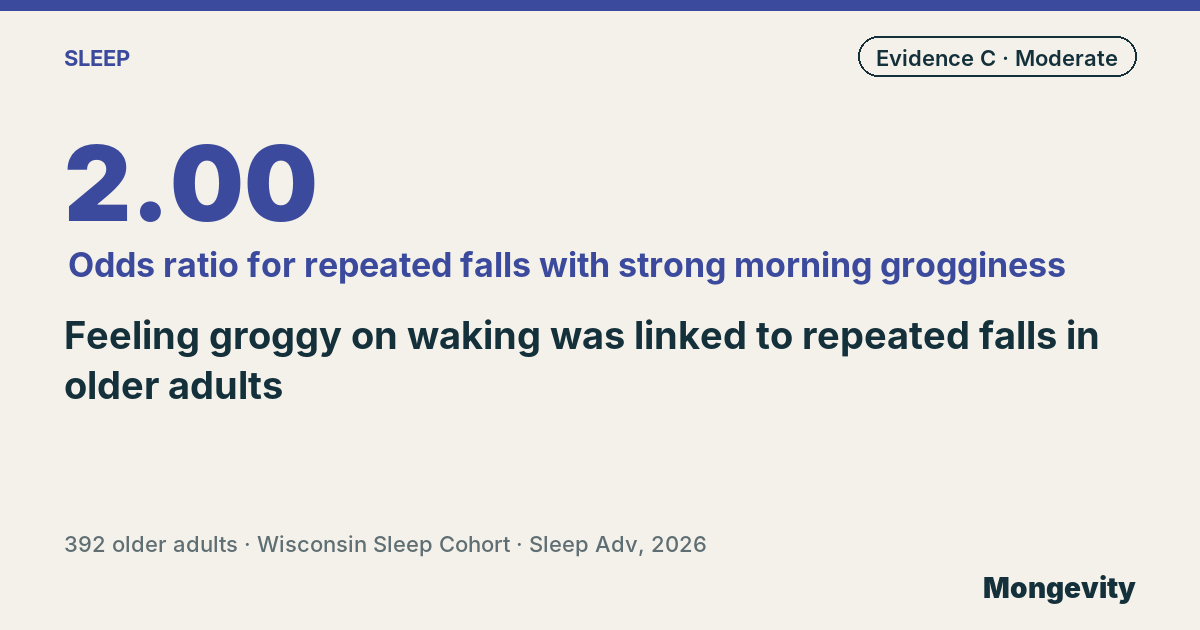
Strong grogginess after waking, called sleep inertia, was linked to higher odds of repeated falls (odds ratio 2.00) in 392 older adults in the Wisconsin Sleep Cohort, in a study published Sept. 29, 2026, in Sleep Advances. Getting up slowly may help prevent falls.
Sleep inertia is that groggy, slow, unsteady feeling right after waking up. Most people shake it off within minutes, but for some it lasts longer or is more intense. In older adults, a lot of falls happen at night or early in the morning, for example on the way to the bathroom.
What did the study do?
Researchers used data from the Wisconsin Sleep Cohort, a long-running study of sleep in adults. Participants filled in a sleep inertia questionnaire and a standard daytime sleepiness scale, and reported falls in the past year. The falls analysis included 392 older adults, with an average age of 74.5 years. “Elevated sleep inertia” meant being in the top quarter of scores.
What did the study find about falls?
| After full adjustment | Recurrent falls (2 or more) |
|---|---|
| Elevated sleep inertia | Odds ratio 2.00 |
| Each point higher on the sleep inertia questionnaire | Odds ratio 1.04 |
| Excessive daytime sleepiness | Not significant |
Sleep inertia was linked to injurious falls before, but not after, adjusting for other factors. Physical symptoms of sleep inertia were most strongly linked to repeated falls, and cognitive symptoms, such as feeling confused, to injurious falls.
Why does this matter?
Fall prevention usually focuses on muscles, balance, vision and medicines. This study suggests that how people feel in the minutes after waking might be an overlooked factor worth asking about.
How solid is this evidence?
It’s moderate. Mongevity rates it C on our A-to-E scale: a well-characterized cohort with careful adjustment for many factors, but a cross-sectional analysis based on self-reported falls and questionnaires. It can’t show that sleep inertia causes falls.
What are the open questions?
Researchers need to follow people over time and test whether managing sleep inertia, for example by adjusting sleep medicines or getting up more slowly, lowers falls.
What does this mean for you?
If you or an older relative feel very groggy when you wake, take a moment before standing: sit on the edge of the bed, wiggle your feet, then stand slowly. Use night lights on the way to the bathroom and keep the path clear. Ask your doctor whether any medicines might be adding to morning grogginess.
How do I explain this at dinner?
Some older people wake up feeling very foggy and unsteady. In a study, those with the strongest grogginess had higher odds of falling more than once in a year. A good question for the table: how do you feel in the first minutes after you wake up?
In one sentence: strong sleep inertia was linked to repeated falls in older adults, suggesting morning grogginess may be an under-recognized fall risk.
Questions and answers
- What is sleep inertia?
- The groggy, slow and unsteady feeling right after waking up.
- Was it linked to falls?
- Elevated sleep inertia was linked to higher odds of repeated falls (odds ratio 2.00).
- What about daytime sleepiness?
- It wasn't linked to falls after full adjustment.