In sleep apnea, heart deaths tracked classic risk factors more than low night oxygen
Sleep healthPart of a story we are following · 13 articles · See every update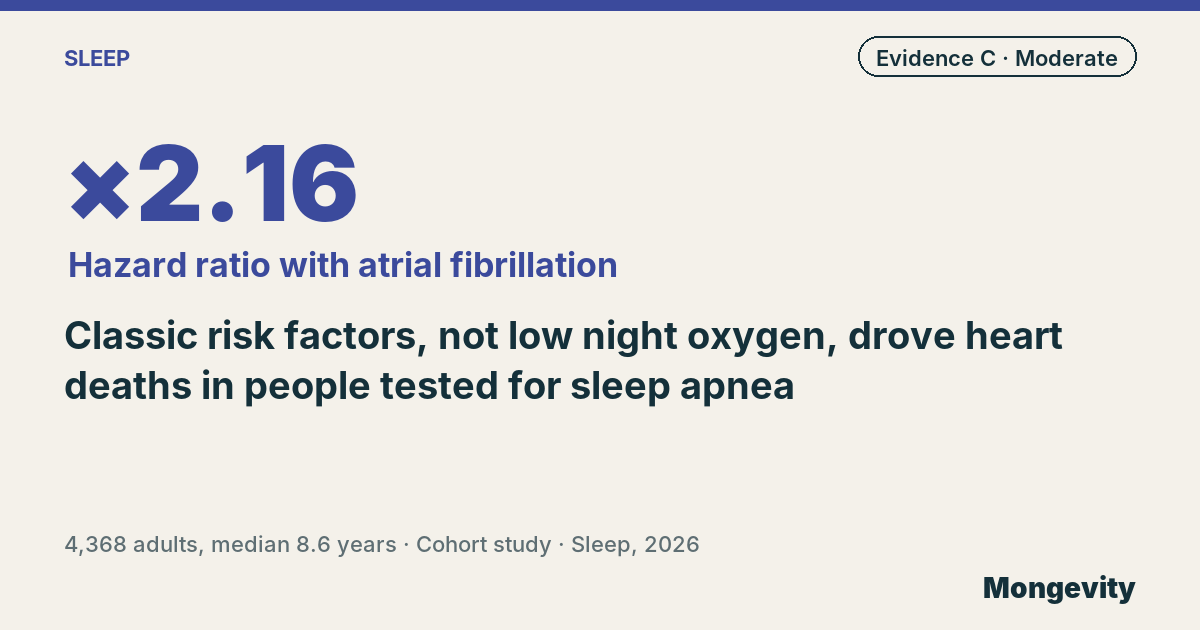
Cardiovascular deaths over a median 8.6 years were driven mainly by age, smoking, high blood pressure, atrial fibrillation, prior heart attack and diabetes, not by low oxygen at night, in 4,368 adults referred for sleep testing, in a study published Oct. 28, 2026, in Sleep. In sleep apnea, classic heart risks still matter most.
People with obstructive sleep apnea, who repeatedly stop breathing during sleep, have a higher risk of dying from heart disease. A common belief is that the drops in oxygen at night are what damage the heart.
Among 4,368 adults referred for a sleep study, cardiovascular deaths depended mostly on classic risk factors such as age, smoking, high blood pressure, atrial fibrillation, prior heart attack and diabetes. Low oxygen at night lost importance once those were taken into account.
What did the study look at?
Researchers followed consecutive adults who had a full sleep study (polysomnography) at one sleep center for up to 20 years, linking them to the national death registry. They used standard statistics and a machine learning model to see which factors best predicted death from heart disease.
What did the study find about sleep?
Over a median of 8.6 years, 335 people died of cardiovascular causes, most often heart failure. Factors linked to higher risk:
Among people with moderate to severe apnea (15 or more events per hour), a good response to CPAP, the mask that keeps the airway open, was linked to lower cardiovascular mortality, with a hazard ratio of 0.72. The model identified six groups of patients with cardiovascular mortality ranging from 2.9% to 14.4%.
Why does this matter?
It suggests that for people with sleep apnea, protecting the heart means treating the whole picture: blood pressure, heart rhythm, diabetes and smoking, not just the breathing pauses at night.
How solid is this evidence?
It’s moderate. Mongevity rates it C on our A-to-E scale. It was a large study with long follow-up, but it was retrospective, from a single center, and observational, so it shows associations, not causes.
What does this mean for you?
If you snore loudly, stop breathing during sleep or feel very sleepy during the day, ask about a sleep study. If you already have sleep apnea, keep using your CPAP if it helps you, and also make sure your blood pressure, blood sugar and heart rhythm are being checked.
How do I explain this at dinner?
Some people stop breathing for a few seconds again and again while they sleep. Scientists thought the missing oxygen was what hurt the heart most, but the usual suspects, like high blood pressure and smoking, mattered more. A good question for the table: why is it important to look at the whole picture and not just one clue?
In one sentence: in people tested for sleep apnea, heart deaths were driven mostly by classic risk factors, so treating those matters as much as treating the apnea itself.
Questions and answers
- Does low oxygen during sleep cause heart deaths in sleep apnea?
- In this study, nocturnal oxygen drops lost significance once classic risk factors were considered.
- Which factors mattered most?
- Atrial fibrillation, high blood pressure, prior heart attack, male sex, smoking, diabetes and age.
- Does CPAP help?
- Among people with moderate to severe apnea, a good response to CPAP was linked to lower cardiovascular mortality (hazard ratio 0.72), but this study can't prove cause.