In winter, young people’s daily light pattern, a sleep cue, tracked with mood
Sleep healthPart of a story we are following · 13 articles · See every update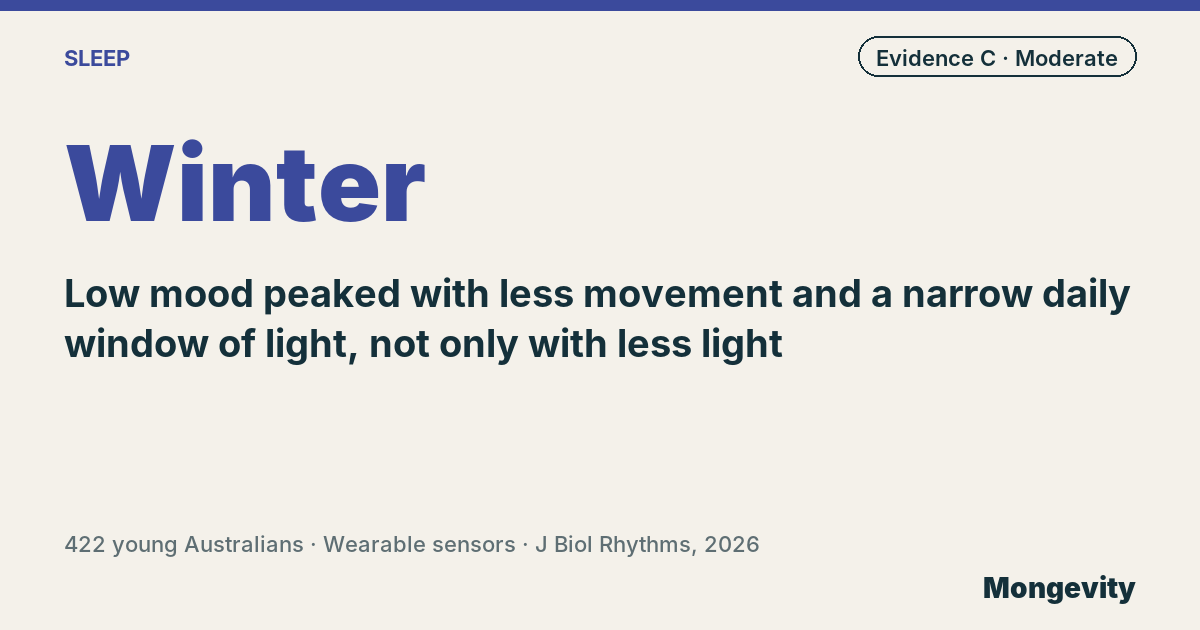
Depressive symptoms peaked in winter in 422 young Australians with emerging mood disorders, linked to less physical activity and to a narrow, very regular daily pattern of indoor light, in a study published Oct. 29, 2026, in Journal of Biological Rhythms. Light shapes both sleep and mood.
Many people feel lower in winter. Usually that’s blamed on getting less light.
What did the study look at?
Researchers studied 422 young Australians, with a mean age of 24.3, who attended early-intervention clinics for emerging mood disorders. In 733 observation periods, each clinical assessment was paired with at least 5 days of wrist-worn sensors measuring sleep, activity and light.
What did the study find about sleep?
Depressive symptoms and negative symptoms, like low motivation, peaked in winter, while manic symptoms peaked in autumn. Seasonal changes in mood were modest. In winter:
- Higher depressive symptoms were linked to lower overall physical activity.
- More negative symptoms were linked to longer sleep with delayed daily activity, and to a “constrained” light pattern: moderate-to-bright indoor light at very regular times, but within a narrow window of the day.
Time spent above a light threshold wasn’t itself linked to symptoms. What mattered was how light was arranged across the day.
Why does this matter?
It points to two things people can change: how active they are and when they get light. That may open new ways to prevent or ease seasonal mood dips in young people at risk.
How solid is this evidence?
It’s moderate. Mongevity rates it C on our A-to-E scale. Sensors gave objective measures, but the analysis was cross-sectional, so it shows associations, not causes. The sample was young people already attending mental health clinics in Australia, so results may not apply to everyone.
What does this mean for you?
In darker months, try getting outdoor light early in the day, spreading time near windows across the day, and keeping up physical activity. If low mood lasts or gets worse, talk to a health professional. Light therapy lamps exist, but they should be used with guidance, especially for people with bipolar symptoms, since bright light can sometimes trigger mood swings.
How do I explain this at dinner?
Scientists gave young people wristbands that measured light and movement. In winter, those who felt down tended to move less and got their light in a narrow slice of the day. A good question for the table: how could we get more daylight and movement on winter days?
In one sentence: in young people with emerging mood disorders, winter low mood was linked to less movement and a narrow daily window of light, not just to less light.
Questions and answers
- Does winter affect mood?
- In this study, depressive and negative symptoms peaked in winter, though seasonal changes were modest.
- Is it just about less light?
- Not only: how light was spread across the day and how active people were mattered more than time above a light threshold.
- What can I do?
- Get outdoor light early, spread light exposure through the day and stay active; seek help if low mood persists.