Online exercise eased chronic low back pain, whether live or pre-recorded
Back painPart of a story we are following · 3 articles · See every update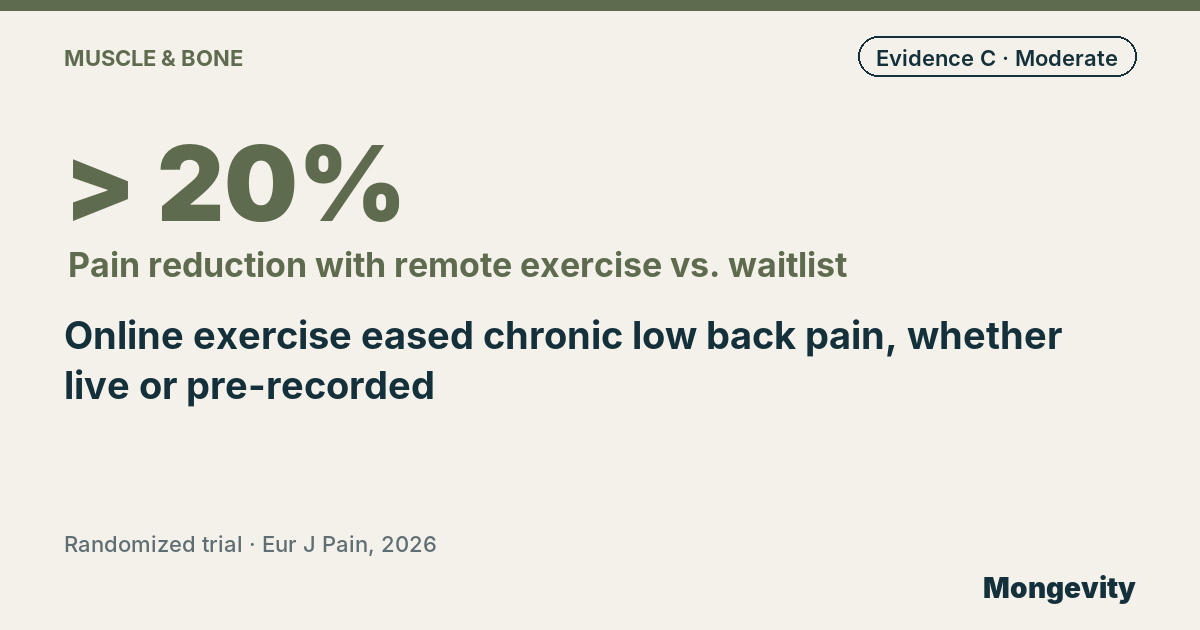
A 12-week remote exercise program for chronic low back pain reduced pain by a clinically worthwhile amount, with no difference between live videoconference and pre-recorded sessions, in a randomized trial published in October 2026 in European Journal of Pain. Online exercise can treat back pain at home.
Chronic low back pain is one of the most common causes of disability worldwide, and exercise is a first-line treatment. But getting to a clinic or gym several times a week isn’t always possible.
What did the trial test?
Ninety-four people with chronic low back pain were assigned by chance to a waitlist or to a 12-week general exercise program led by a certified kinesiologist, delivered either live through videoconference or as pre-recorded video sessions. Training was three one-hour sessions a week, with intensity adapted to each person’s fitness. 57 people, with an average age of 48.4 years, completed the study.
What did the study find about back pain?
- People who exercised, in either format, had clinically worthwhile reductions in pain intensity, more than 20%, compared with the waitlist.
- Exercise also reduced pain triggered by movement.
- There were no differences between live and pre-recorded sessions in pain, perceived effort, fatigue, satisfaction or pain during the sessions.
- Women reported less pain relief than men.
- The benefits seemed to work through better self-rated health, more physical activity and faster walking speed.
Why does this matter?
Pre-recorded sessions are cheaper and more flexible than live classes. If they work just as well, remote exercise could reach many more people with back pain, including those with limited time or far from clinics.
How solid is this evidence?
It’s moderate. Mongevity rates it C on our A-to-E scale: a randomized trial with a waitlist control, but small, and only 57 participants completed it, which can bias results. Participants weren’t blinded, and the trial lasted 12 weeks.
What are the open questions?
Larger trials with better retention are needed to confirm the results, understand why women benefited less and see whether gains last.
What does this mean for you?
If you have chronic low back pain, regular exercise is one of the best treatments, and it can be done at home. Look for a structured program, live or recorded, ideally designed by a physiotherapist or kinesiologist, and build up gradually. See a doctor if you have numbness, weakness or bladder problems.
How do I explain this at dinner?
People with chronic back pain did a 12-week exercise program online. Whether they followed a live class or a recorded video, their pain dropped more than in people who waited. A good question for the table: what helps you stick with exercise at home?
In one sentence: remote exercise, live or pre-recorded, reduced chronic low back pain compared with a waitlist, with no difference between formats.
Questions and answers
- Does online exercise help back pain?
- Yes: in this trial, pain fell by a clinically worthwhile amount, over 20%, vs. waitlist.
- Is live better than recorded?
- No differences were found between live and pre-recorded sessions.
- Who benefited less?
- Women reported less pain relief than men.