For new back pain, starting with opioids was linked to more addiction risk than therapy
Back painPart of a story we are following · 3 articles · See every update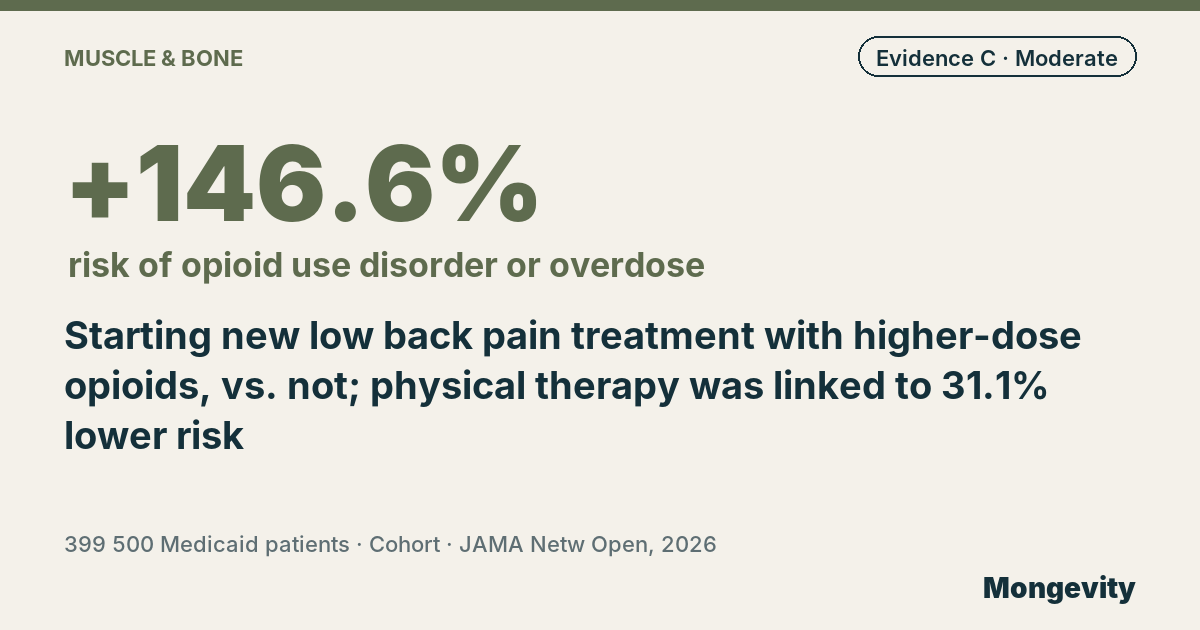
Starting with higher-dose opioids or gabapentinoids was linked to higher risk of opioid use disorder or overdose, while chiropractic care and physical therapy were linked to lower risk, in a study of 399 500 US Medicaid patients with new low back pain published Oct. 1, 2026, in JAMA Network Open. The first treatment for back pain matters.
Acute low back pain is one of the most common reasons people see a doctor. Guidelines recommend starting with non-drug treatments, such as physical therapy, heat or manual therapy, but many people still get opioids.
What did the study look at?
Researchers used Medicaid records from 25 US states, from 2016 to 2019, for 399 500 adults under 65 who had never used opioids and started treatment for newly diagnosed acute low back pain. They tracked new diagnoses of opioid use disorder or overdose over the following year, comparing different first treatments.
What did the study find about back pain?
The overall risk of opioid use disorder or overdose was 1.4% at 7 months and 2.3% at 13 months. Compared with not using each treatment:
| First treatment | Change in risk vs. not using it |
|---|---|
| Higher-dose opioids | 146.6% higher |
| Lower-dose opioids for more than 7 days | 105.2% higher |
| Gabapentinoids | 101.6% higher |
| Chiropractic care | 32.8% lower |
| Physical therapy | 31.1% lower |
Why does this matter?
The first treatment for a common problem can shape what happens months later. These results support guidelines that favor non-drug treatments first, and they raise concern about gabapentinoids, which are sometimes seen as a safer alternative to opioids.
How solid is this evidence?
It’s moderate. Mongevity rates it C on our A-to-E scale. The study is very large and focused on new users, but it’s observational: people who got opioids may have had more severe pain or other differences. It included only Medicaid patients under 65, and diagnoses came from billing records.
What does this mean for you?
If you have new low back pain, staying gently active, heat, and seeing a physical therapist or other manual therapist are good first steps for most people. If an opioid is prescribed, ask whether there are alternatives, and if you take one, use the lowest dose for the shortest time. Seek care urgently for red flags such as leg weakness, numbness in the groin or trouble controlling bladder or bowels.
How do I explain this at dinner?
When people’s backs start hurting, doctors can offer pills or therapy that moves the body. People who started with strong pain pills were more likely to get hooked on them later. A good question for the table: what helps your back when it hurts?
In one sentence: for new low back pain, starting with opioids or gabapentinoids was linked to higher risk of opioid addiction, while physical therapy and chiropractic care were linked to lower risk.
Questions and answers
- Is it risky to start with opioids for back pain?
- In this study, higher-dose opioids as a first treatment were linked to a 146.6% higher risk of opioid use disorder or overdose.
- Are gabapentinoids safer?
- Not in this study: starting them was linked to a 101.6% higher risk.
- What first treatments were linked to lower risk?
- Chiropractic care (32.8% lower) and physical therapy (31.1% lower).