Older dogs’ minds age at different speeds, a long-term study finds
Senior dogsPart of a story we are following · 6 articles · See every update
Thinking skills declined with age overall in 92 senior companion dogs, but individual dogs followed very different paths, in a longitudinal study published Sept. 29, 2026, in Journal of Alzheimer’s Disease. Not every senior dog’s mind ages the same way.
Like people, dogs can lose some thinking ability as they age, and some develop canine cognitive dysfunction, which resembles dementia. In people, aging ranges from staying sharp to early Alzheimer’s. Do dogs show the same variety?
What did the study do?
Researchers followed 92 senior dogs, aged 8 years or older, living in homes. Every 6 months, from enrollment until they left the study or died, the dogs completed 5 cognitive tests and their caregivers filled in 2 questionnaires. The team combined all 7 measures into a single global cognitive score and modeled how it changed with age.
What did the study find about senior dogs?
- All seven measures pointed in the same direction, so the combined score captured overall thinking ability well.
- The global score declined significantly with age, with a coefficient of -0.60.
- But individual rates of change varied widely, from -0.20 to 0.15: some dogs declined, while others stayed stable or even improved slightly.
- A cluster analysis separated two groups with different trajectories.
Why does this matter?
Not every old dog is destined to become confused. Some keep learning and solving problems well into their senior years. Studying why some dogs stay sharp while others decline could reveal biological drivers of brain aging, in dogs and possibly in people, since dogs share our homes, diets and environments.
How solid is this evidence?
It’s moderate. Mongevity rates it C on our A-to-E scale: a careful long-term study with repeated tests, but small, with dogs that could leave the study over time, and caregiver questionnaires that can be subjective.
What are the open questions?
It’s unclear what explains the different paths: genetics, diet, exercise, disease or mental stimulation. Larger studies could find factors that keep dogs sharp.
What does this mean for you?
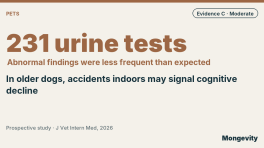
Keep your older dog’s mind and body busy: daily walks with new smells, puzzle feeders, short training sessions and play. Tell your vet about changes such as getting lost at home, changes in sleep, accidents indoors or not recognizing people.
How do I explain this at dinner?
Researchers tested older pet dogs every six months. On average, their thinking slowed with age, but some dogs stayed just as sharp, much like people. A good question for the table: what keeps an old dog’s mind young?
In one sentence: senior dogs showed an overall decline in thinking skills with age, but individual trajectories varied widely, opening a window into healthy brain aging.
Questions and answers
- Do dogs lose thinking skills with age?
- On average yes: the global cognitive score declined significantly with age.
- Do all old dogs decline?
- No: individual rates of change ranged from -0.20 to 0.15, and some stayed stable.
- How can I keep my dog sharp?
- Daily walks, puzzle toys, training and play help keep mind and body active.