Small and mixed-breed dogs lived longer, first results from 41,047 dogs show
Senior dogsPart of a story we are following · 6 articles · See every update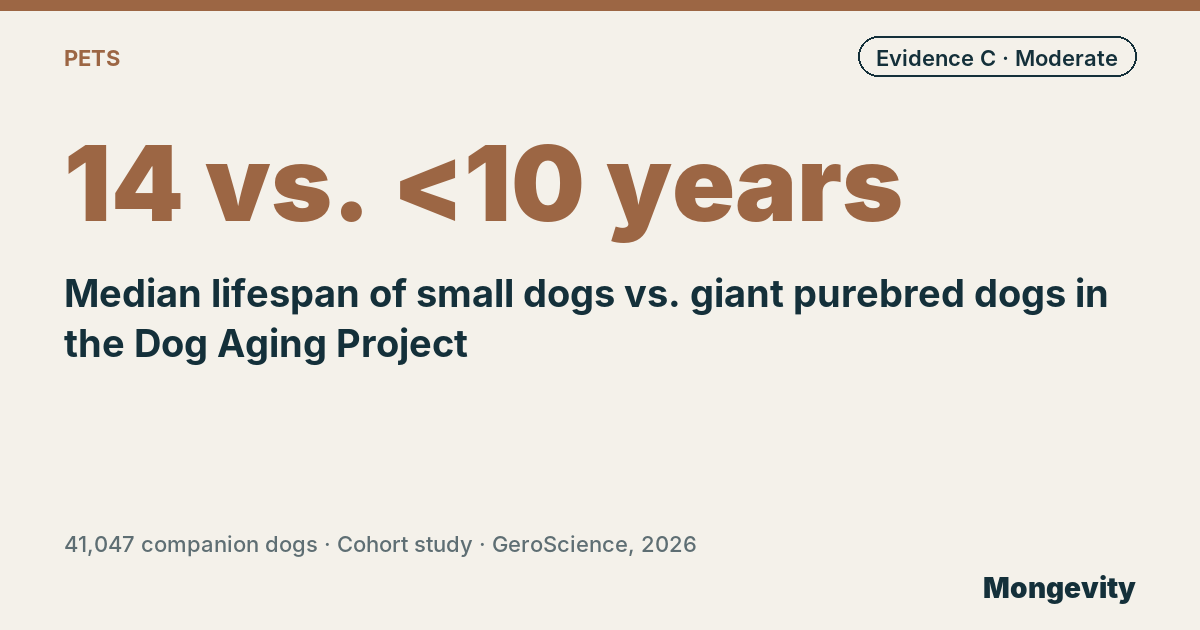
Median lifespan ranged from 14 years in small dogs to less than 10 in giant purebreds among 41,047 US companion dogs, in a Dog Aging Project study published Oct. 27, 2026, in GeroScience, which linked 72 owner-reported factors to survival. Mixed-breed dogs and females lived slightly longer, useful clues for senior dogs.
Dogs share our homes, our neighborhoods and often our habits, and they develop many of the same age-related diseases, only faster. That makes them a valuable model for studying aging, and of course, many people simply want their dog to live longer.
Among 41,047 dogs, size, breed background and sex were strongly linked to how long they lived.
What is the Dog Aging Project?
It’s a long-term study that follows tens of thousands of pet dogs. Owners fill out a detailed survey about their dog’s health, activity, behavior, environment and diet, and report when the dog dies.
What did the study look at?
Researchers analyzed the dogs’ baseline surveys and deaths reported through 2024. They compared survival by size, by whether the dog was a recognized purebred or a mixed breed, by sex and by region. They also screened 804 survey questions to see which were linked to mortality.
What did the study find about senior dogs?
| Finding | Result |
|---|---|
| Median lifespan, small dogs | 14 years |
| Median lifespan, giant purebreds | less than 10 years |
| Purebred vs. mixed breed (same size and sex) | purebreds lived modestly shorter lives |
| Females vs. males | females lived slightly longer |
| Survey factors linked to mortality | 72 |
Differences between rural, suburban and urban dogs disappeared after adjusting for demographics, but dog lifespans varied by region and state, and those patterns lined up with human mortality in the same places. The factors linked to survival came mostly from health status, physical activity, behavior, environment and diet, and many showed a dose-response pattern.
Why does this matter?
The fact that dogs and people in the same places show similar patterns suggests shared influences, such as environment or access to care. Understanding what helps dogs age well could help both pets and, eventually, people.
How solid is this evidence?
It’s moderate. Mongevity rates it C on our A-to-E scale. The study is very large, but it’s observational and relies on what owners report. It shows associations, not causes, and the authors call for studies designed to test which factors truly matter.
What does this mean for you?
You can’t change your dog’s size or breed, but you can keep up with vet checkups, regular activity and a good diet, the same areas this study flagged. If your dog is a large or giant breed, ask your vet how to watch for age-related problems earlier.
How do I explain this at dinner?
Scientists asked the families of more than forty thousand dogs about their pets’ lives. Small dogs usually lived longer than giant ones, and mixed-breed dogs a bit longer than purebreds. A good question for the table: what do you think helps a dog stay healthy as it gets older?
In one sentence: in the Dog Aging Project, size, breed background and sex shaped how long dogs lived, and dozens of health and lifestyle factors were linked to survival.
Questions and answers
- How long do dogs live?
- In this study, median lifespan ranged from 14 years in small dogs to less than 10 years in giant purebred dogs.
- Do mixed-breed dogs live longer?
- Within the same size and sex, recognized purebreds lived modestly shorter lives than mixed-breed dogs.
- What factors were linked to survival?
- 72 survey variables, mostly about health status, physical activity, behavior, environment and diet.