A shot every three months eased arthritis pain in older cats
Arthritis in dogs and catsPart of a story we are following · 3 articles · See every update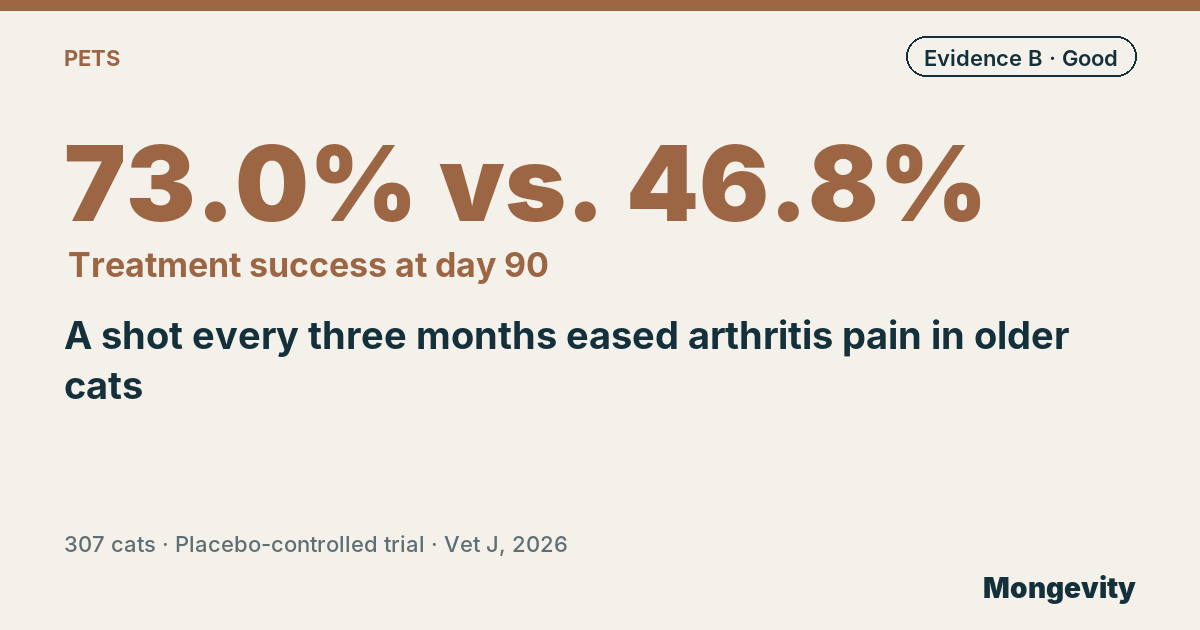
Relfovetmab, an anti-NGF antibody given every three months, led to treatment success in 73.0% of cats with osteoarthritis vs. 46.8% with placebo at day 90, in a trial of 307 cats at veterinary clinics published Oct. 2, 2026, in The Veterinary Journal. It is a new option for arthritis in pets.
Osteoarthritis is very common in older cats, but it often goes unnoticed: cats hide pain, and signs such as jumping less, sleeping more or skipping grooming are easy to mistake for normal aging. Antibodies that block nerve growth factor, a key pain signal, are one way to treat this pain.
What did the trial test?
At several clinics, 307 client-owned cats with osteoarthritis, with a median age of 11.0 years, were assigned by chance to relfovetmab (153 cats) or a saline placebo (154 cats), given as an injection under the skin every three months for three doses. Neither owners nor vets knew which. Owners rated their cat’s specific problem activities, and success meant a meaningful improvement at day 90.
What did the study find about arthritis in pets?
| Any side effect, relfovetmab | 44.4% |
|---|---|
| Any side effect, placebo | 39.6% |
| Pain at injection, relfovetmab | 7.2% |
| Pain at injection, placebo | 1.3% |
The odds ratio for success was 3.08. Benefits appeared as early as day 3 and lasted through the nine-month study, including better owner-rated quality of life, temperament and happiness. Antibodies against the drug were rare and didn’t affect safety.
Why does this matter?
For cats that are hard to handle or stressed by vet visits, an injection only every three months could make pain control easier to keep up.
How solid is this evidence?
It’s good. Mongevity rates it B on our A-to-E scale: a large, double-masked, placebo-controlled trial. Limits: success was judged mainly by owners, the placebo group also improved, which is common in pet trials, and long-term safety beyond nine months isn’t known.
What are the open questions?
Researchers need longer follow-up on safety, since some concerns have been raised about anti-NGF drugs in dogs, and comparisons with other pain treatments.
What does this mean for you?
If your older cat jumps less, uses the litter box awkwardly or seems grumpy when touched, ask your vet to check for arthritis. Soft beds, ramps and low-sided litter boxes help, and pain treatment can improve their quality of life.
How do I explain this at dinner?
Many older cats quietly suffer from arthritis. A new antibody shot given every three months helped most treated cats move and behave more comfortably than a fake shot. A good question for the table: what signs would tell you your cat is in pain?
In one sentence: relfovetmab given every three months improved osteoarthritis pain in cats compared with placebo, with similar overall side effects.
Questions and answers
- What is relfovetmab?
- An antibody for cats that blocks nerve growth factor, a pain signal, given every three months.
- How well did it work?
- 73.0% of cats had treatment success at day 90 vs. 46.8% with placebo.
- Is it safe?
- Side effects were similar to placebo, except more pain at injection (7.2% vs. 1.3%).