Oral probiotics after a dental cleaning reduced plaque and gum bleeding in dogs
Dental health in petsPart of a story we are following · 2 articles · See every update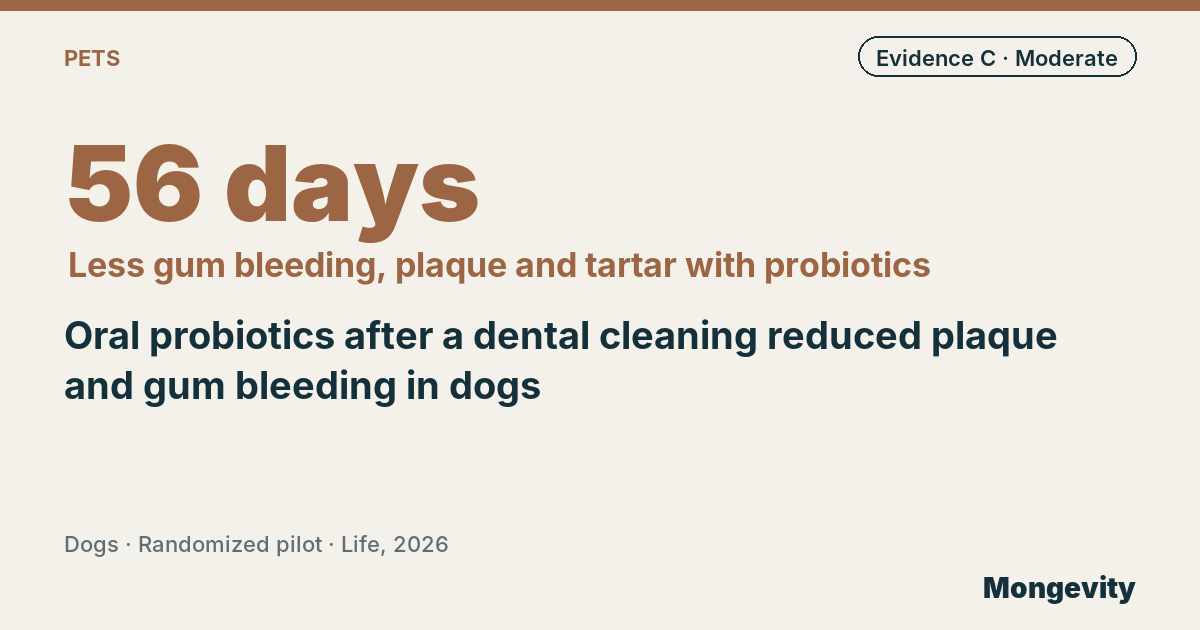
Dogs given a probiotic for 56 days after a dental procedure had less gum bleeding, plaque and tartar than dogs in the control group, in a small randomized pilot study published Sept. 8, 2026, in Life. Daily brushing remains the base of dental health in dogs.
Periodontal disease, the infection and inflammation of the gums and the structures around the teeth, is one of the most common health problems in dogs. After a professional cleaning, plaque starts building up again within days. Probiotics, live beneficial bacteria, might help by competing with the bacteria that form plaque.
What did the trial test?
Dogs were assigned by chance to receive a probiotic preparation or to a control group after a dental procedure. After 56 days, veterinarians compared oral health using standard scores for gum bleeding, dental plaque and dental calculus (tartar).
What did the study find about dental health in dogs?
- Gum bleeding scores were considerably lower in dogs that received the probiotic.
- Dental plaque scores were also lower.
- Tartar scores were lower as well.
- Overall, dogs given the probiotic had noticeably better oral health after 56 days.
Why does this matter?
Brushing a dog’s teeth every day is the gold standard, but many owners find it hard. Simple add-ons that slow plaque after a cleaning could help keep dogs’ mouths healthier between visits and reduce pain, tooth loss and infections.
How solid is this evidence?
It’s limited. Mongevity rates it C on our A-to-E scale: a randomized pilot study, but small and short. Limits: the abstract doesn’t report the number of dogs or how big the differences were, it doesn’t say whether evaluators were masked, and the study did not measure changes in mouth bacteria directly.
What are the open questions?
Larger, longer and masked trials are needed to confirm the benefit, find out how long it lasts and whether it prevents periodontal disease over time.
What does this mean for you?
Daily tooth brushing with a dog toothpaste and regular veterinary dental checks remain the most effective steps. Ask your veterinarian whether any additional product makes sense for your dog. Mongevity does not recommend specific brands or products.
How do I explain this at dinner?
After a dental cleaning, some dogs got a probiotic with good bacteria for eight weeks. Their gums bled less and they had less plaque and tartar than dogs without it. It’s a small, early study, but it’s a promising extra. A good question for the table: who brushes the dog’s teeth at home?
In one sentence: in a randomized pilot, probiotic supplementation for 56 days after a dental procedure was linked to less gum bleeding, plaque and tartar in dogs.
Questions and answers
- What is periodontal disease in dogs?
- Infection and inflammation of the gums and tooth-supporting tissues, very common in dogs.
- Did the probiotic help?
- Dogs that got it had lower gum bleeding, plaque and tartar scores after 56 days.
- How strong is the evidence?
- Limited: a small pilot without reported sample size or effect sizes.
- Can it replace brushing?
- No. Daily brushing and veterinary dental checks remain the most effective steps.