A drug that helped diabetic kidneys in animals didn’t reduce protein in human urine
Type 1 diabetesPart of a story we are following · 3 articles · See every update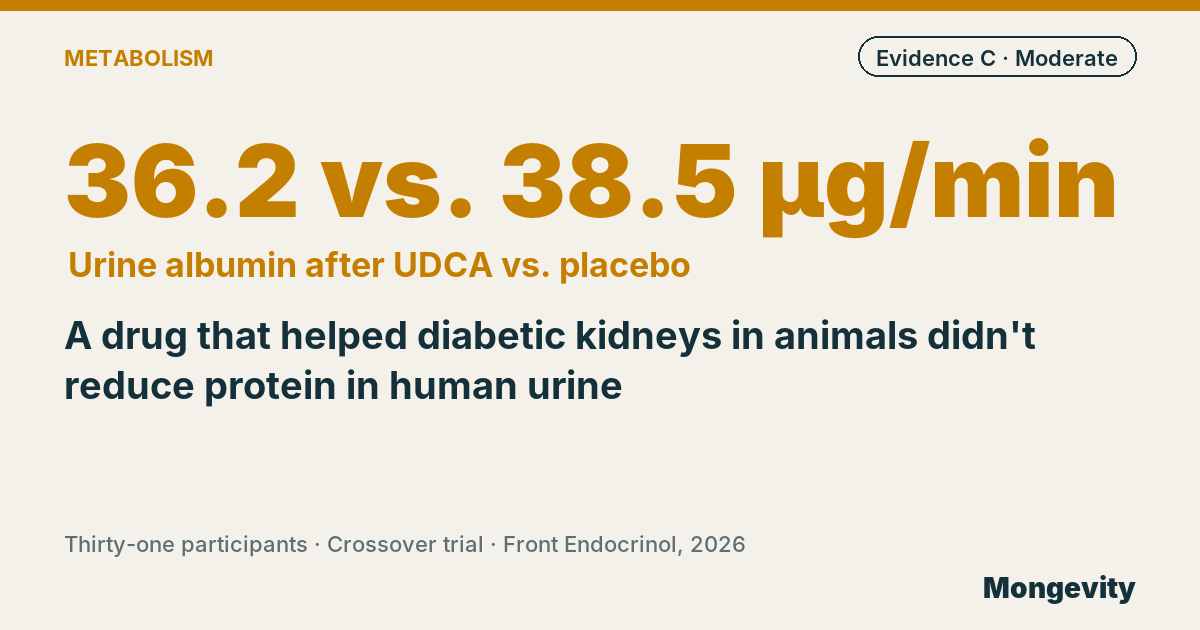
Ursodeoxycholic acid taken for 24 weeks did not reduce urine albumin compared with placebo in thirty-one people with type 1 diabetes and kidney disease, in a double-blind crossover trial at one center published Sept. 24, 2026, in Frontiers in Endocrinology. Promising animal results didn’t carry over to people with type 1 diabetes.
Diabetic kidney disease is one of the most serious long-term complications of type 1 diabetes. Even with blood pressure medicines that protect the kidneys, many people still lose protein (albumin) in their urine, a sign of ongoing damage. Ursodeoxycholic acid (UDCA), a bile acid used for some liver diseases, reduced albuminuria in animal models.
What did the trial test?
This was a double-blind, placebo-controlled crossover trial at one center: each participant took UDCA (500 mg twice daily) for 24 weeks and placebo for 24 weeks, in random order, with a 4-week break in between. Participants had type 1 diabetes, diabetic kidney disease and remaining albuminuria despite the maximum tolerated dose of kidney-protecting blood pressure medicines. The main outcome was the change in urine albumin excretion.
What did the study find about type 1 diabetes?
- Thirty-one participants were included; 21 were men.
- After treatment, median urine albumin excretion was 36.2 μg/min with UDCA and 38.5 μg/min with placebo.
- There was no significant difference between treatments.
Why does this matter?
Many treatments that work in animals fail in people. This small but well-designed trial shows that UDCA, at least at this dose and duration, is unlikely to be a useful add-on to protect the kidneys in type 1 diabetes. Negative results like this help direct research toward more promising options.
How solid is this evidence?
It’s moderate for a negative result. Mongevity rates it C on our A-to-E scale: a double-blind, placebo-controlled crossover trial, but small and at a single center. Limits: albuminuria varied widely between participants, the study may have been too small to detect a modest effect, and it measured a marker rather than kidney failure.
What are the open questions?
It’s unclear whether higher doses, longer treatment or specific subgroups might respond, and the authors call for further studies.
What does this mean for you?
If you have type 1 diabetes, a yearly urine albumin test helps detect kidney damage early. Proven ways to protect the kidneys include good blood sugar and blood pressure control, kidney-protecting blood pressure medicines and not smoking. Don’t take UDCA for your kidneys outside a trial.
How do I explain this at dinner?
A bile acid medicine that protected the kidneys of diabetic animals was tested in people with type 1 diabetes and kidney damage. After six months, it didn’t reduce the protein leaking into their urine compared with a placebo. A good question for the table: why do so many treatments that work in animals fail in humans?
In one sentence: in people with type 1 diabetes and diabetic kidney disease, 24 weeks of ursodeoxycholic acid did not significantly reduce urine albumin excretion compared with placebo.
Questions and answers
- What is ursodeoxycholic acid?
- A bile acid medicine used for some liver diseases.
- Did it reduce urine albumin?
- No: 36.2 vs. 38.5 μg/min with placebo, not significantly different.
- Why test it?
- It had reduced albuminuria in animal models of diabetic kidney disease.
- Should I take it for my kidneys?
- No; there's no evidence of benefit in people.