After a 2019 guideline, specialists prescribed more SGLT2 inhibitors to targeted patients
SGLT2 inhibitors: beyond blood sugarPart of a story we are following · 3 articles · See every update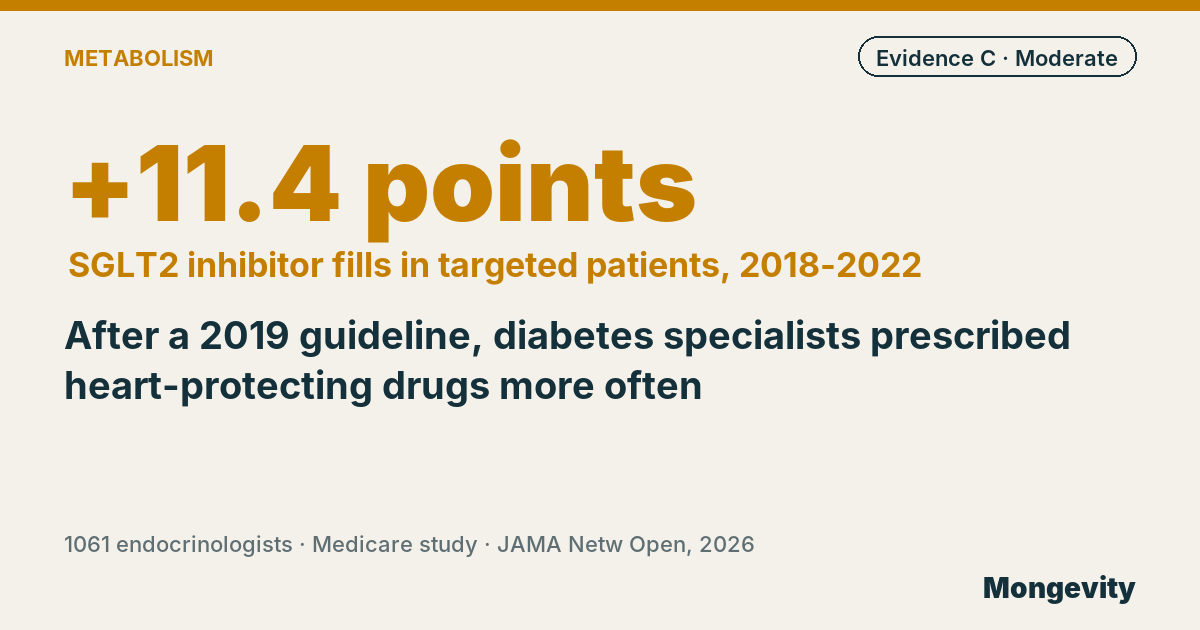
After the 2019 diabetes guideline update, SGLT2 inhibitor fills rose 11.4 percentage points in the patients it targeted, more among endocrinologists with higher knowledge scores, in a US Medicare study published Oct. 1, 2026, in JAMA Network Open. Guidelines can change how specialists prescribe.
SGLT2 inhibitors and GLP-1 receptor agonists are diabetes medicines that also lower the risk of heart and kidney problems in people who already have heart disease, heart failure or chronic kidney disease. In 2019, the American Diabetes Association updated its guidelines to recommend them for these patients. Yet they have remained underused.
What did the study do?
Researchers used Medicare claims from 2017 to 2022 for 177 284 people with type 2 diabetes treated by 1061 endocrinologists. They compared how often prescriptions were filled for patients the guideline targeted, those with heart or kidney disease, vs. other patients, before and after 2019. They also looked at whether results differed by the doctors’ later scores on a board knowledge assessment.
What did the study find about SGLT2 inhibitors?
| From 2018 to 2022, targeted vs. other patients | Increase |
|---|---|
| SGLT2 inhibitors | 11.4 percentage points |
| GLP-1 receptor agonists | 2.4 percentage points |
The SGLT2 inhibitor increase was 3.9 percentage points larger among endocrinologists in the top quarter of knowledge scores than among those in the bottom quarter. For GLP-1 drugs, the difference by score was not significant.
Why does this matter?
Guidelines only help if they change what happens in the clinic. This study suggests the 2019 update did shift prescribing, especially for SGLT2 inhibitors, and that doctors who keep their knowledge up to date may adopt new evidence faster.
How solid is this evidence?
It’s moderate. Mongevity rates it C on our A-to-E scale: a large study using real prescribing data, but observational. It can show changes over time but not prove that the guideline caused them, and it only included endocrinologists and people with traditional Medicare. Costs and insurance coverage, which also shape prescribing, weren’t the focus.
What are the open questions?
It’s not clear why GLP-1 drugs rose less. Cost, injections and supply may play a part. Studies in primary care, where most people with diabetes are treated, would also help.
What does this mean for you?
If you have type 2 diabetes and also heart disease, heart failure or kidney disease, ask your doctor whether an SGLT2 inhibitor or a GLP-1 drug is right for you, and why or why not.
How do I explain this at dinner?
Some diabetes pills also protect the heart and kidneys. After experts recommended them in 2019, diabetes specialists prescribed them more, and the doctors who scored best on knowledge tests changed fastest. A good question for the table: how do doctors keep up with new evidence?
In one sentence: after the 2019 diabetes guideline update, SGLT2 inhibitors were prescribed more often to the patients who benefit most, especially by endocrinologists with higher knowledge scores.
Questions and answers
- What are SGLT2 inhibitors and GLP-1 drugs?
- Diabetes medicines that also lower heart and kidney risk in people with those conditions.
- Did the 2019 guideline change prescribing?
- Fills rose 11.4 percentage points for SGLT2 inhibitors and 2.4 for GLP-1 drugs in targeted patients.
- Did doctor knowledge matter?
- Yes for SGLT2 inhibitors: the increase was 3.9 points larger among top-scoring endocrinologists.