With diabetes, 8 smoke-free years were linked to fewer eye, kidney and nerve problems
Tools for living with diabetesPart of a story we are following · 3 articles · See every update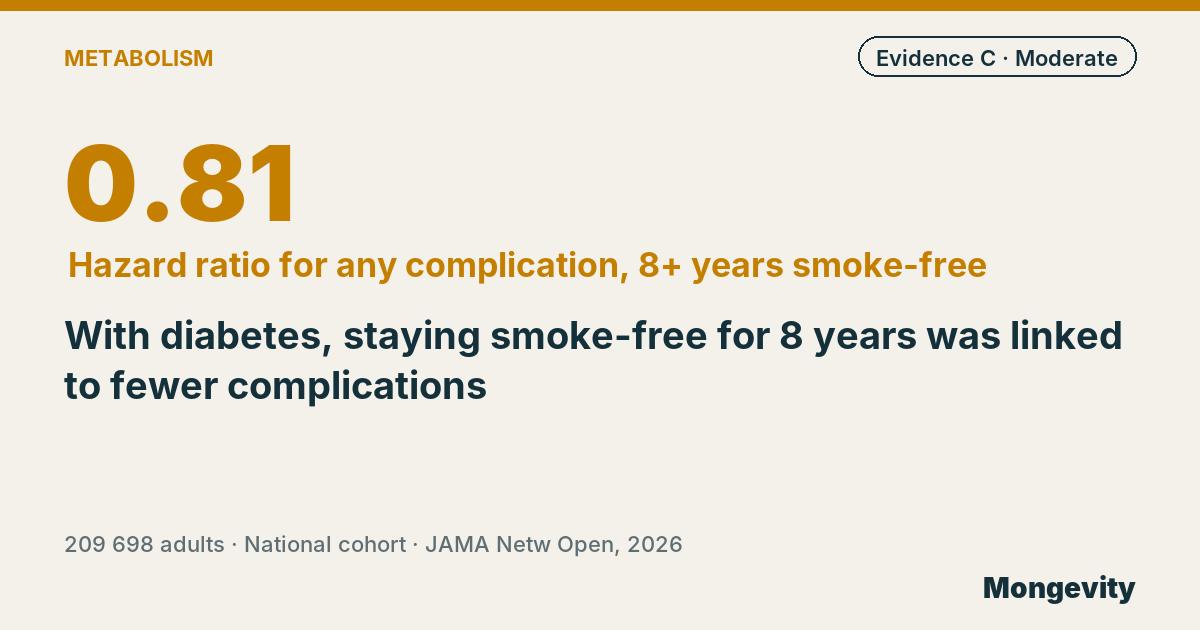
Quitting smoking for 8 or more years was linked to a lower risk of diabetic eye, kidney and nerve damage than continuing to smoke in 209 698 adults with type 2 diabetes in Korea, in a nationwide study published Oct. 1, 2026, in JAMA Network Open. Stopping smoking is part of diabetes care.
Diabetes can damage small blood vessels over time, harming the kidneys (nephropathy), the eyes (retinopathy) and the nerves (neuropathy). Smoking raises the risk. But how long after quitting does the risk start to fall?
What did the study do?
Researchers used Korea’s national health data on people first diagnosed with type 2 diabetes between 2003 and 2013 whose smoking status was recorded at least 4 times. They compared people who quit and stayed quit, grouped by how long they’d been smoke-free, with people who kept smoking. A total of 209 698 adults were included.
What did the study find about diabetes care?
Compared with continuing to smoke, being smoke-free for 8 or more years was linked to lower risk of:
| Complication | Adjusted hazard ratio |
|---|---|
| Any microvascular complication | 0.81 |
| Kidney damage | 0.79 |
| Eye damage | 0.59 |
| Nerve damage | 0.80 |
Quitting for 6 to 7 years was also linked to lower risk of nerve damage (0.76). In analyses by sex, the links were significant mainly in men.
Why does this matter?
Quitting smoking is one of the most powerful things people with diabetes can do. This study suggests the benefit for small blood vessels builds up over years, which is a reason to quit as early as possible and stay quit.
How solid is this evidence?
It’s moderate. Mongevity rates it C on our A-to-E scale: a very large national cohort with repeated smoking data, but observational, with complications identified from diagnosis codes. Few women smoked, which may explain why links were clearer in men.
What are the open questions?
It’s unclear why benefits took years to appear and whether quitting earlier after a diabetes diagnosis gives larger gains.
What does this mean for you?
If you have diabetes and smoke, quitting protects your heart, kidneys, eyes and nerves, and the benefit grows the longer you stay smoke-free. Ask your doctor about support, such as nicotine replacement, medicines or a quitline. Keep up yearly eye exams, kidney tests and foot checks.
How do I explain this at dinner?
In people with diabetes, those who quit smoking and stayed quit for 8 years or more had fewer problems with their eyes, kidneys and nerves than those who kept smoking. The benefit seems to take time to build. A good question for the table: what helps someone stay smoke-free?
In one sentence: in people with type 2 diabetes, staying smoke-free for 8 or more years was linked to fewer microvascular complications than continuing to smoke.
Questions and answers
- What are microvascular complications?
- Diabetes damage to small blood vessels in the kidneys, eyes and nerves.
- How long after quitting does risk fall?
- In this study, 8 or more years smoke-free was linked to lower risk of all three.
- Did it apply to women?
- Links were significant mainly in men, possibly because few women smoked.