SGLT2 inhibitors slightly raise hemoglobin, an analysis of 85 trials confirms
SGLT2 inhibitors: beyond blood sugarPart of a story we are following · 3 articles · See every update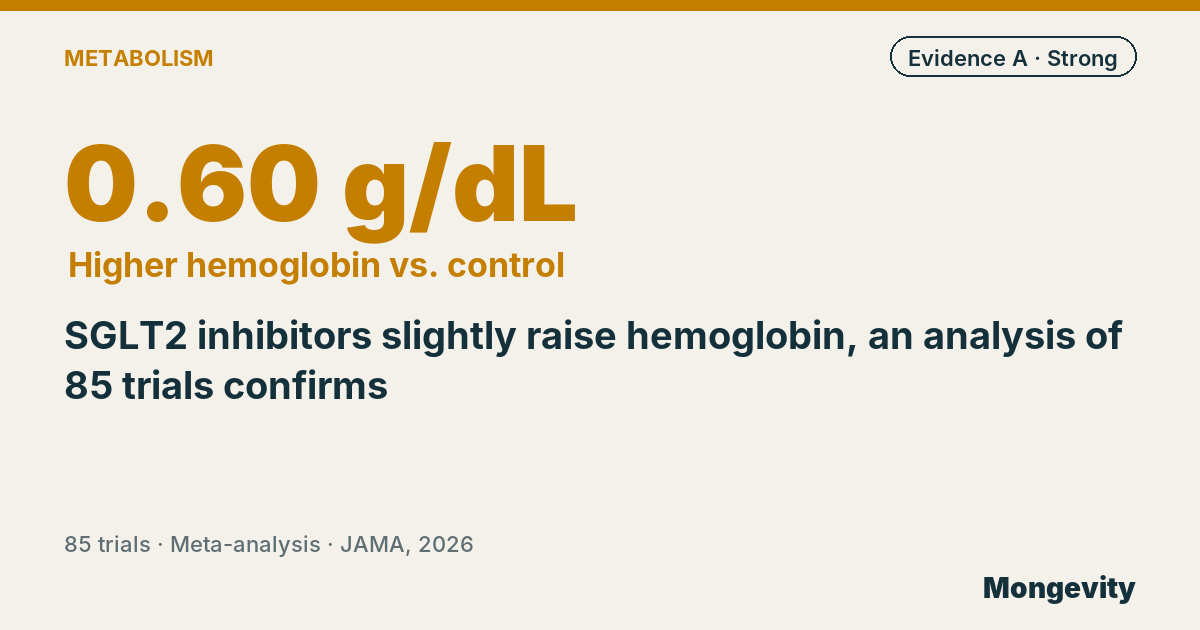
SGLT2 inhibitors raised hemoglobin by 0.60 g/dL more than control, according to a meta-analysis of 85 randomized trials published Oct. 24, 2026, in JAMA. The clinical meaning of this small rise is still unclear.
SGLT2 inhibitors, such as empagliflozin and dapagliflozin, are pills first used for type 2 diabetes that now also protect the heart and kidneys. In trials, people taking them often had higher hemoglobin, the protein in red blood cells that carries oxygen. How big is that effect, and why does it happen?
What did the study do?
Researchers searched medical databases up to July 22, 2026, for double-blind randomized trials that compared SGLT2 inhibitors with placebo or another drug in people with heart disease, diabetes, heart failure or chronic kidney disease. They found 85 trials, with a median length of 24 weeks. Average hemoglobin at the start was 13.6 g/dL.
What did the study find about SGLT2 inhibitors?
| Difference with SGLT2 inhibitors vs. control | |
|---|---|
| Hemoglobin | 0.60 g/dL higher |
| Hematocrit (share of blood made of red cells) | 2.36% higher |
| Erythropoietin (hormone that drives red cell production) | 2.11 mIU/mL higher |
| Transferrin saturation (iron available for red cells) | 0.84% lower |
Of 6 secondary outcomes, 4 showed significant links with SGLT2 inhibitors.
Why does this matter?
The pattern, higher erythropoietin and more iron being used, suggests the drugs actually stimulate red blood cell production, not just concentrate the blood by removing fluid. Some researchers think this may help explain part of their heart and kidney benefits. For people with anemia, especially with kidney disease, it could matter too, but that wasn’t tested here.
How solid is this evidence?
The evidence for the effect itself is strong. Mongevity rates it A on our A-to-E scale: a meta-analysis of double-blind randomized trials. Limits: the increases are small, the trials were short, and the authors say the clinical significance is unclear.
What does this mean for you?
If you take an SGLT2 inhibitor and your blood test shows slightly higher hemoglobin, it’s an expected effect of the drug. Mention it to your doctor if you have unusual symptoms, but don’t stop the medicine on your own. If you have anemia, ask whether this matters for you.
How do I explain this at dinner?
A family of diabetes pills that also protects the heart and kidneys slightly raises the amount of red blood cells. Pooling 85 trials confirmed it, and it seems the body really makes more of them. A good question for the table: could a side effect be part of why a drug works?
In one sentence: SGLT2 inhibitors slightly raise hemoglobin and hematocrit, likely by stimulating red blood cell production, with unclear clinical significance.
Questions and answers
- What are SGLT2 inhibitors?
- Pills such as empagliflozin and dapagliflozin used for diabetes, heart failure and kidney disease.
- How much do they raise hemoglobin?
- By 0.60 g/dL more than control, on average, across 85 trials.
- Is this good or bad?
- It's unclear: the increase is small, and the authors say its clinical significance is unknown.