In type 1 diabetes, neck artery plaques on ultrasound flagged higher heart risk
Type 1 diabetesPart of a story we are following · 3 articles · See every update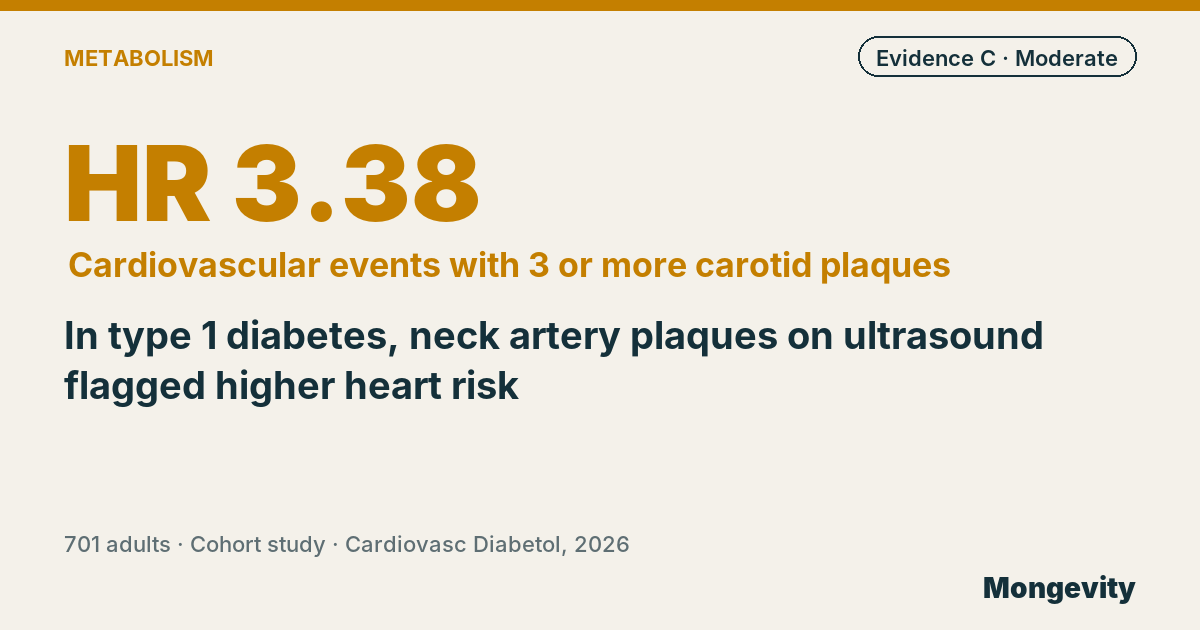
Carotid plaques showed up on ultrasound in 40.4% of 701 adults with type 1 diabetes and no prior heart disease, and three or more plaques were linked to a higher risk of heart or vascular events (hazard ratio 3.38), in a study published July 23, 2026, in Cardiovascular Diabetology. A neck scan could help guide prevention in type 1 diabetes.
People with type 1 diabetes have a higher risk of heart disease, often at younger ages, and standard risk calculators don’t work well for them. A carotid ultrasound, a painless scan of the neck arteries, can show plaques before any symptoms.
What did the study look at?
Researchers followed adults with type 1 diabetes in a cardiovascular risk program that included carotid ultrasound. Participants were aged 40 or older, had diabetic kidney disease, or had diabetes for at least 10 years plus another risk factor. 701 people were followed for a mean of 5.85 years. Their mean age was 48.5 years and they had had diabetes for 27 years on average.
What did the study find about type 1 diabetes?
- Carotid plaques were found in 40.4% of participants.
- During follow-up, there were 45 cardiovascular events, including heart disease, leg artery disease and stroke.
- Event-free survival dropped steadily as the number of plaques increased.
- After adjusting for age, metabolic and other factors, having 3 or more plaques was linked to a higher risk of cardiovascular events (hazard ratio 3.38).
- It was also linked to the combination of events and death from any cause (hazard ratio 2.64).
Why does this matter?
Identifying people with type 1 diabetes at high risk early allows stronger prevention, such as earlier or more intensive cholesterol and blood pressure treatment. A carotid ultrasound is safe, widely available and relatively cheap.
How solid is this evidence?
It’s moderate. Mongevity rates it C on our A-to-E scale: a cohort with years of follow-up and careful adjustment. Limits: the number of events was modest, which makes estimates imprecise, participants came from one risk program, and the study doesn’t show that acting on ultrasound results improves outcomes.
What are the open questions?
Studies are needed to see whether using carotid ultrasound to guide treatment in type 1 diabetes actually prevents heart attacks and strokes.
What does this mean for you?
If you have lived with type 1 diabetes for many years, ask your doctor about your cardiovascular risk and whether a carotid ultrasound could help decide on treatment. Keeping blood sugar, blood pressure and cholesterol in range and not smoking remain the foundations.
How do I explain this at dinner?
People with type 1 diabetes had a simple ultrasound of their neck arteries. Those with three or more plaques were much more likely to have a heart or blood vessel problem in the next six years. A good question for the table: why might a picture of the neck tell us about the heart?
In one sentence: in adults with type 1 diabetes in primary prevention, carotid plaque burden on ultrasound was independently linked to future cardiovascular events and mortality.
Questions and answers
- What is a carotid ultrasound?
- A painless scan of the neck arteries that can show plaques before symptoms.
- How common were plaques?
- They were found in 40.4% of participants.
- How much higher was the risk?
- With 3 or more plaques, a hazard ratio of 3.38 for cardiovascular events.
- Should everyone with type 1 diabetes get one?
- Ask your doctor; it may help guide treatment in those at higher risk.