Type 1 diabetes that starts in adulthood comes in at least three types, a study finds
Type 1 diabetesPart of a story we are following · 3 articles · See every update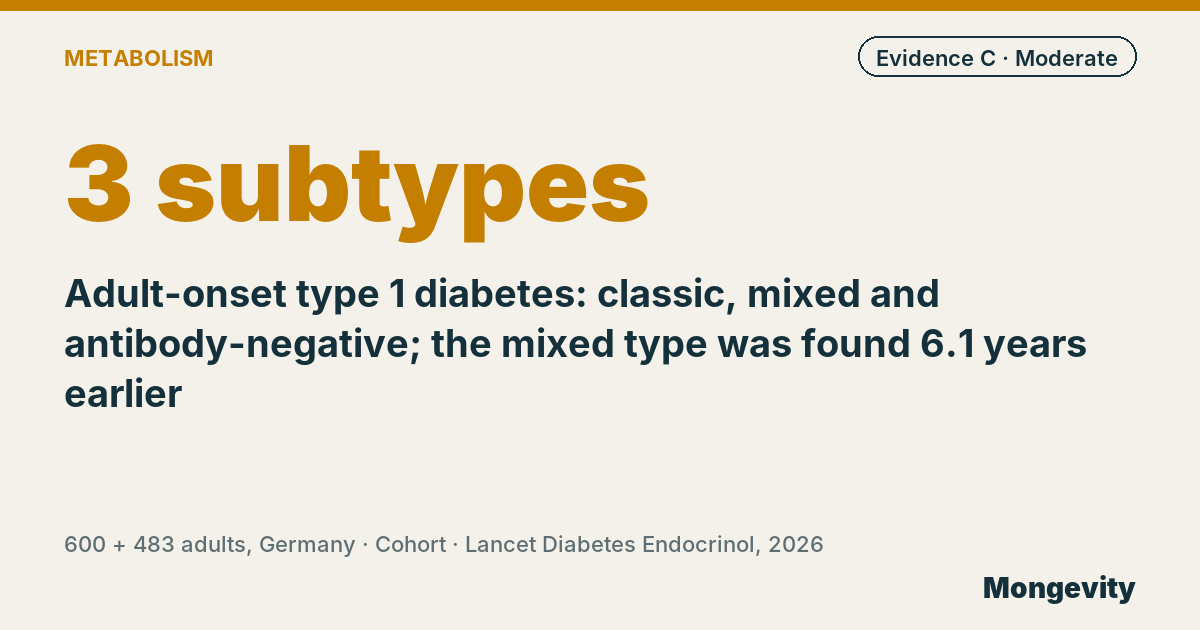
Adults recently diagnosed with type 1 diabetes fell into three subtypes in a German cohort published Oct. 30, 2026, in The Lancet Diabetes & Endocrinology, and a ‘mixed’ subtype was diagnosed 6.1 years earlier in its insulin decline. Type 1 diabetes that starts in adulthood may need more tailored follow-up.
Type 1 diabetes is often thought of as a childhood disease, but many people are diagnosed as adults, and their disease can look very different from person to person.
Using machine learning on data from adults diagnosed within the previous 12 months, researchers found three subtypes.
What did the study look at?
The German Diabetes Study followed 600 adults aged 18-69 with recent type 1 diabetes, plus people with GAD antibodies who had first been labeled as type 2, for a mean of 6.1 years. An algorithm grouped them using GAD antibodies, fasting C-peptide (a marker of the body’s own insulin), glucose, triglycerides and HDL cholesterol. The results were checked in a second German registry of 483 people.
What did the study find about type 1 diabetes?
| Subtype | Main features |
|---|---|
| Classic type 1 | GAD antibodies, lower weight, higher insulin sensitivity, severe loss of insulin-making cells |
| Mixed type 1 | GAD antibodies, higher weight, lower insulin sensitivity, better remaining insulin production |
| Antibody-negative | No GAD antibodies, lower genetic risk of type 1 diabetes |
The mixed group was diagnosed 6.1 years earlier along the path of insulin-cell decline than the classic group. It also had a higher risk of eye damage (retinopathy), with a hazard ratio of 4.93. Risks of low blood sugar and nerve damage affecting heart rate also differed between groups.
Why does this matter?
If some adults are diagnosed earlier in the disease process, there may be a window to try treatments that slow the loss of insulin-making cells. Recognizing subtypes could also help tailor monitoring for complications.
How solid is this evidence?
It’s moderate. Mongevity rates it C on our A-to-E scale. It’s a well-characterized prospective cohort with a second cohort for confirmation, but the subtypes come from an algorithm, the groups are modest in size, and the findings need testing in other populations before they change care.
What does this mean for you?
If you were diagnosed with diabetes as an adult and your treatment doesn’t seem to fit, ask whether antibody and C-peptide tests were done. Regular eye exams matter for everyone with diabetes.
How do I explain this at dinner?
Some grown-ups get type 1 diabetes, and it doesn’t look the same in each of them. Scientists sorted them into three groups, which may help doctors choose the right care at the right time. A good question for the table: why might the same illness look different in different people?
In one sentence: type 1 diabetes that starts in adulthood came in three subtypes, one caught earlier in its course and with a higher risk of eye damage.
Questions and answers
- Is adult-onset type 1 diabetes the same as childhood type 1?
- Not always. This study found three adult subtypes: classic, mixed and antibody-negative.
- What is mixed type 1 diabetes?
- A subtype with GAD antibodies, higher weight, lower insulin sensitivity and better remaining insulin production, diagnosed earlier in the disease.
- Why does the subtype matter?
- Subtypes differed in risks of complications such as retinopathy and may need different monitoring.