Gut bacteria in depression showed small but consistent changes in what they can do
The gut-brain connectionPart of a story we are following · 3 articles · See every update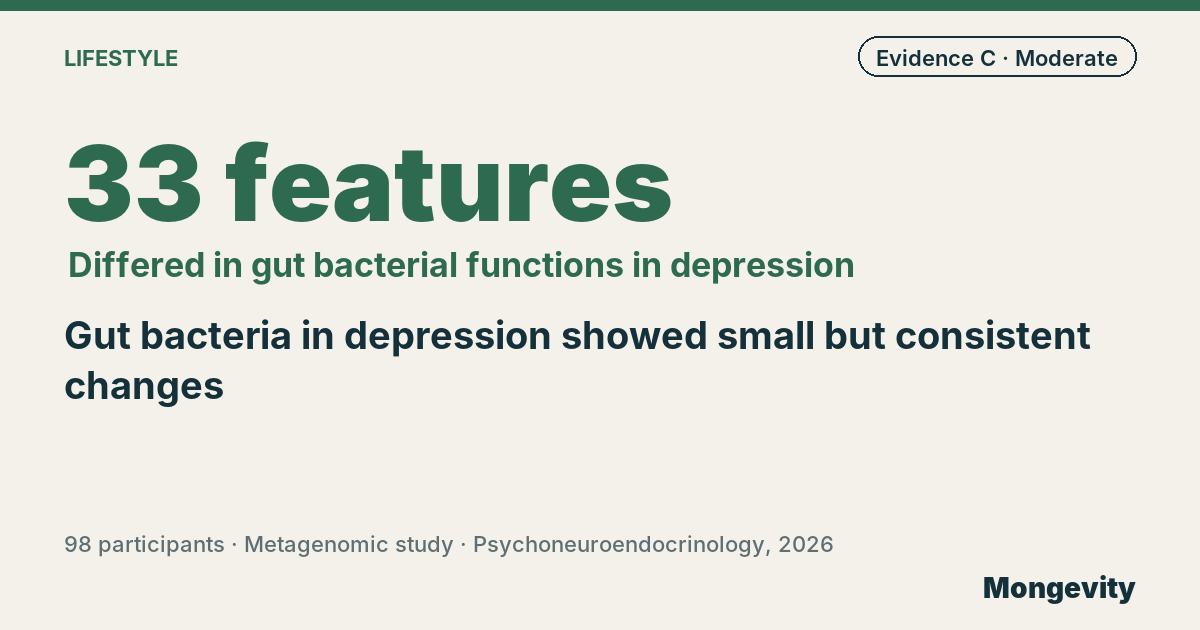
People with major depression in Xinjiang, China, showed mild but consistent differences in what their gut bacteria can do, including pathways for short-chain fatty acids, in a study of 98 people published Oct. 23, 2026, in Psychoneuroendocrinology. It adds a piece to the gut-brain connection.
The gut is home to trillions of bacteria that digest food, produce chemicals and talk to the brain through nerves, hormones and the immune system. Many studies have linked depression to changes in which bacteria live in the gut, but results often conflict, partly because diet, age and other habits also shape the microbiome.
What did the study do?
Researchers studied 98 Indigenous residents of Xinjiang, China, whose families had lived there for three or more generations: 49 with major depressive disorder and 49 healthy controls. Sequencing all the DNA in stool samples, they mapped the bacteria’s functional potential, the genes and pathways they carry. They adjusted for 10 factors, including age, sex, body mass index, diet, bowel habits, smoking, alcohol, physical activity and sleep.
What did the study find about the gut-brain connection?
- The overall functional profile didn’t differ significantly between groups.
- But 33 specific features differed after statistical correction.
- People with depression had less potential for an enzyme involved in producing propionate, a short-chain fatty acid made when bacteria ferment fiber.
- Pathways related to the cell walls of a group of bacteria called Gram-positive bacteria and to certain cofactors also differed.
The authors describe the shift as mild but consistent in direction.
Why does this matter?
Short-chain fatty acids such as propionate help keep the gut lining healthy and may influence inflammation and brain function. Finding lower potential to make them in depression fits with ideas that diet, fiber and gut bacteria might play a part in mood.
How solid is this evidence?
It’s limited. Mongevity rates it C on our A-to-E scale: a careful study that controlled for many confounders, but small, from one specific population, at one point in time. It measured genetic potential, not the chemicals actually produced, and the authors say it needs confirmation with metabolomics.
What are the open questions?
It’s unknown whether these changes cause depression, result from it or from its treatment, and whether changing the microbiome, through diet or probiotics, could help.
What does this mean for you?
A diet rich in fiber, from vegetables, fruits, legumes and whole grains, feeds the gut bacteria that make short-chain fatty acids and is good for overall health. But it isn’t a treatment for depression. If you feel down most days for two weeks or more, talk to a health professional.
How do I explain this at dinner?
Gut bacteria make chemicals that might talk to the brain. In people with depression, the bacteria seemed a bit less equipped to make one helpful chemical from fiber. It’s an early clue, not a cure. A good question for the table: how much fiber did you eat today?
In one sentence: gut bacteria in people with major depression showed mild but consistent functional differences, including in short-chain fatty acid production, a finding that needs confirmation.
Questions and answers
- What is the gut microbiome?
- The community of bacteria and other microbes living in the gut.
- What was different in depression?
- Mild but consistent changes in bacterial functions, including less potential to make propionate.
- Can probiotics treat depression?
- This study didn't test that; it's not a proven treatment.