More ultraprocessed food was linked to more body fat and silent brain damage in midlife
Food and the brainPart of a story we are following · 3 articles · See every update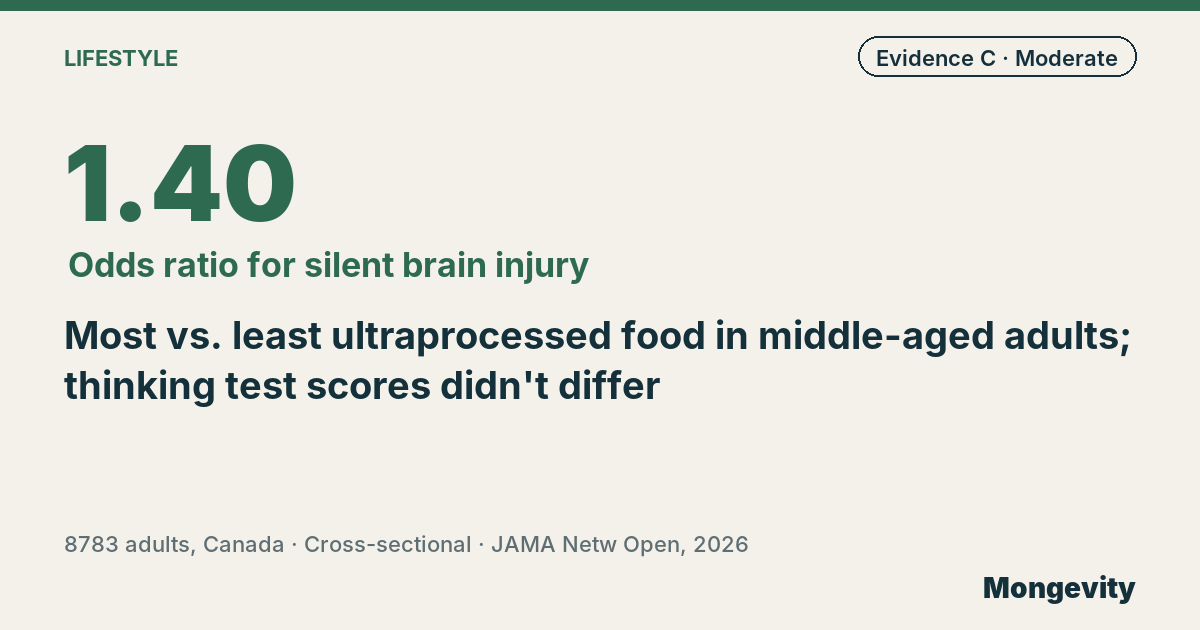
Middle-aged adults in Canada who ate the most ultraprocessed food had more body fat and higher odds of silent brain injury on MRI (odds ratio 1.40), but no difference in thinking tests, in a study of 8783 people published Oct. 1, 2026, in JAMA Network Open. Diet may affect the brain before memory changes appear.
Ultraprocessed foods, such as packaged snacks, sugary drinks and ready meals, make up a large share of what many people eat. They’re linked to weight gain and heart disease, but what about the brain?
What did the study look at?
8783 adults aged 35 to 69 without heart disease filled out food questionnaires and had body fat measured and brain MRI scans. Researchers looked for silent (covert) brain infarcts and changes in white matter, together called vascular brain injury, and tested thinking with standard tests.
What did the study find about diet and the brain?
Compared with the lowest quarter of ultraprocessed food intake, the highest quarter had:
| Measure | Result |
|---|---|
| Body fat | 1.7 percentage points higher |
| Visceral (belly) fat volume | 5.7 mL greater |
| Liver fat | no significant difference |
| Odds of vascular brain injury | odds ratio 1.40 |
| Thinking test scores | no significant difference |
The link with brain injury depended on how ultraprocessed food was defined.
Why does this matter?
Silent brain injuries don’t cause obvious symptoms but are linked to later stroke and dementia. Finding them more often in people who eat more ultraprocessed food, already in midlife, adds a possible reason to cut back. It also fits with what we know about blood vessels: the same habits that harm the heart’s arteries can harm the small vessels in the brain. Body fat, especially around the belly, may be part of the link, since it’s tied to high blood pressure and inflammation.
How solid is this evidence?
It’s moderate. Mongevity rates it C on our A-to-E scale. The study is large and used brain MRI, but it’s a snapshot in time: it can’t show which came first or rule out other differences between people who eat more or less ultraprocessed food. The results were sensitive to how these foods were defined.
What does this mean for you?
Replacing some ultraprocessed foods with whole foods, such as vegetables, fruit, legumes, whole grains and home-cooked meals, is good for the heart and may help the brain. Keeping blood pressure under control also protects against silent brain injury.
How do I explain this at dinner?
Scientists took brain pictures of thousands of adults. Those who ate the most factory-made packaged food had more tiny, silent spots of damage in the brain, though their memory tests were similar. A good question for the table: what homemade snack could we swap in this week?
In one sentence: in middle-aged Canadians, more ultraprocessed food was linked to more body fat and silent brain injury, though not to worse thinking.
Questions and answers
- Are ultraprocessed foods bad for the brain?
- In this study, the highest intake was linked to higher odds of silent brain injury (odds ratio 1.40), but not to worse thinking test scores.
- What is silent brain injury?
- Small areas of damage seen on MRI, such as covert infarcts or white matter changes, that don't cause obvious symptoms.
- Does this prove ultraprocessed food causes brain damage?
- No. It's a cross-sectional study that shows associations.