A strong sweet tooth in the diet was linked to dementia risk and older-looking biology
Food and the brainPart of a story we are following · 3 articles · See every update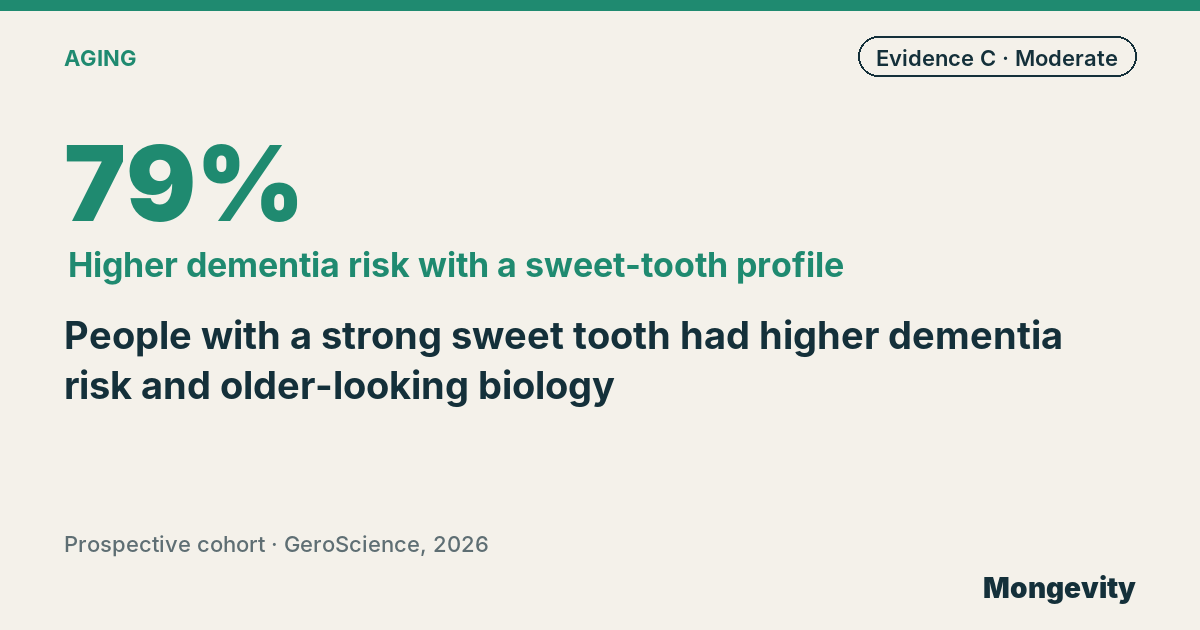
People whose food preferences leaned strongly toward sweets had a 79% higher risk of dementia than those with health-aligned preferences, along with signs of faster biological aging, in a cohort study published Oct. 7, 2026, in GeroScience. Diet and the brain are closely linked.
We usually study diet by asking what people eat. But food preferences, what people like, may also say something about long-term health.
What did the study do?
Participants filled in a food preferences questionnaire. Using a statistical method that groups people with similar answers, researchers identified three profiles: “health-aligned,” preferring foods such as vegetables and whole grains; “broad-preference,” liking a wide range of foods; and “sweet-tooth,” with a strong preference for sweet foods. They followed participants for dementia and measured three markers of biological aging: two blood-based biological age scores and telomere length, the protective caps on chromosomes.
What did the study find about diet and the brain?
Compared with the health-aligned group, the sweet-tooth group had:
The sweet-tooth profile was also linked to older biological age scores and shorter telomeres. People with both a sweet-tooth profile and high genetic risk had an even greater dementia risk than expected from each alone. Biological aging markers explained only a small part of the link, 2.28-4.82%.
Why does this matter?
Food preferences shape what we eat over decades. If a strong preference for sweets marks higher dementia risk, it could help target diet advice, especially for people with a family history of dementia.
How solid is this evidence?
It’s moderate. Mongevity rates it C on our A-to-E scale: a prospective study with long follow-up and several aging markers, but observational. Liking sweets may go with other habits, such as less exercise, more weight or diabetes, and the abstract doesn’t report the number of participants. Preferences aren’t the same as actual intake.
What are the open questions?
It’s still unclear whether changing food preferences or reducing sugar intake lowers dementia risk, and why vascular dementia showed the strongest link.
What does this mean for you?
You don’t need to give up sweets entirely, but making them an occasional treat rather than a daily habit is reasonable. Favor fruit for sweetness, choose water over sugary drinks and build meals around vegetables, legumes, whole grains and fish. Keeping blood pressure and blood sugar under control also protects the brain.
How do I explain this at dinner?
Researchers grouped people by the foods they like. Those with the strongest sweet tooth had a higher risk of dementia and bodies that looked older on blood tests, especially if dementia ran in their genes. A good question for the table: are you a sweet or savory person?
In one sentence: a strong preference for sweet foods was linked to higher dementia risk and faster biological aging, particularly in people at high genetic risk.
Questions and answers
- What is a sweet-tooth profile?
- A pattern of food preferences leaning strongly toward sweet foods, identified from a questionnaire.
- How much higher was dementia risk?
- 79% higher for all-cause dementia vs. the health-aligned group.
- Does sugar cause dementia?
- This study can't show that; it found a link, not cause.