Stopping blood-thinning medicines in nursing home AFib was linked to higher mortality
Medicines in old agePart of a story we are following · 3 articles · See every update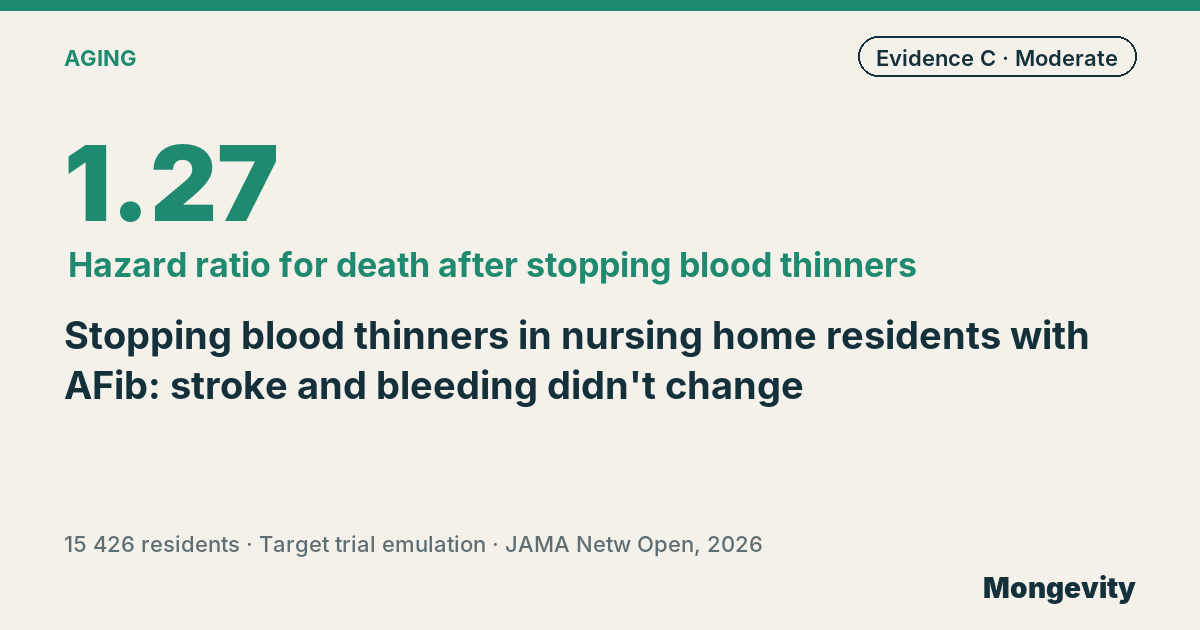
Stopping blood thinners on entry to a nursing home was not linked to more strokes or fewer bleeds, but was linked to higher mortality (hazard ratio 1.27), in a US Medicare study of residents with atrial fibrillation published Oct. 1, 2026, in JAMA Network Open. Decisions about these medicines in older adults deserve care.
Atrial fibrillation, or AFib, is an irregular heartbeat that raises the risk of stroke. Blood thinners, or anticoagulants, prevent many of those strokes but raise the risk of bleeding. When older adults move into a nursing home, doctors and families often wonder whether to stop them.
What did the study do?
Researchers used Medicare claims for 15 426 residents with AFib who were taking a blood thinner when they entered long-term care in 2020. Their average age was 82.6 years, and 62.6% were women. Using a method called target trial emulation, which mimics a randomized trial with real-world data, they compared what happened if residents stopped the blood thinner or continued it.
What did the study find about medicines in older adults?
| Stopping vs. continuing blood thinners | Result |
|---|---|
| Stroke | Similar risk (hazard ratio 1.07) |
| Bleeding | Similar risk (hazard ratio 1.02) |
| Death | Higher risk (hazard ratio 1.27) |
Both groups had many deaths during follow-up, which reflects how frail nursing home residents often are.
How should we read this?
Carefully. Stopping blood thinners didn’t seem to raise stroke risk or lower bleeding risk in this group, perhaps because so many people died within months. The higher death rate among those who stopped may reflect that blood thinners are often stopped in people who are already sicker, something the authors couldn’t fully account for.
Why does this matter?
Deciding whether to keep a blood thinner near the end of life is a common, difficult decision. This study gives families and doctors some real-world data, but it doesn’t give a single answer.
How solid is this evidence?
It’s moderate. Mongevity rates it C on our A-to-E scale: a large study with an advanced method, but not randomized. The authors note very high mortality, unmeasured differences between groups and reliance on billing codes for strokes and bleeds.
What does this mean for you?
If an older relative with AFib is entering a nursing home, ask the doctor to review each medicine, including the blood thinner, with their goals, life expectancy and bleeding risk in mind. Don’t stop it without talking to the care team.
How do I explain this at dinner?
Many older people with an irregular heartbeat take blood thinners to prevent strokes. In nursing homes, stopping them didn’t change strokes or bleeding much, but people who stopped died more often, likely because they were sicker. A good question for the table: how should families decide when to stop a medicine?
In one sentence: in nursing home residents with AFib, stopping blood thinners was not linked to more strokes or fewer bleeds, but was linked to higher mortality, likely reflecting frailty.
Questions and answers
- What is atrial fibrillation?
- An irregular heartbeat that raises the risk of stroke; blood thinners lower that risk.
- Did stopping blood thinners raise stroke risk?
- Not in this study: the hazard ratio for stroke was 1.07, not significantly different.
- Why was mortality higher?
- Possibly because blood thinners are more often stopped in people who are already sicker.