In Japan, eating more fish and omega-3 wasn’t linked to better hearing with age
Hearing and healthPart of a story we are following · 3 articles · See every update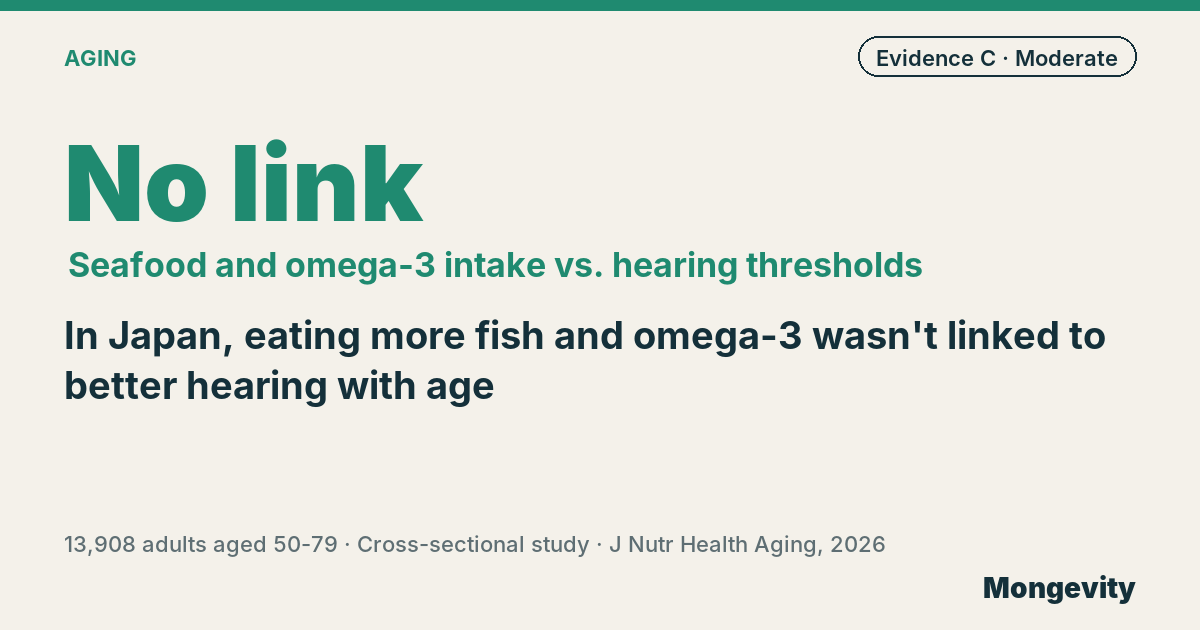
Seafood and omega-3 intake were not linked to hearing thresholds in 13,908 Japanese adults aged 50 to 79, in a study in Japan published Sept. 4, 2026, in Journal of Nutrition, Health and Aging. Eating more fish didn’t seem to protect against hearing loss in a population that already eats a lot of it.
Age-related hearing loss is common and has been linked to dementia, isolation and lower quality of life. Omega-3 fatty acids, found mainly in fish and seafood, have been proposed as a way to protect the inner ear because of their anti-inflammatory effects.
What did the study look at?
Researchers included 13,908 adults aged 50 to 79 from the Tohoku Medical Megabank cohort. Each person had a hearing test at four frequencies (500, 1,000, 2,000 and 4,000 Hz) and filled out a validated food frequency questionnaire. The team compared hearing thresholds across four levels of intake of seafood, omega-3 fats and saturated fats, adjusting for other factors.
What did the study find about hearing loss?
- Seafood and omega-3 intake were not significantly linked to hearing thresholds in men or women.
- In men, those with the highest saturated fat intake had slightly lower (better) thresholds than those with the lowest: 2.23 decibels at 1,000 Hz and 1.704 decibels on the average across frequencies.
- In women, no significant links were found.
Why does this matter?
Fish oil and omega-3 supplements are often marketed for many aspects of healthy aging. In a population that already eats a lot of fish, more seafood did not mean better hearing. The saturated fat finding in men was unexpected, small and may reflect other differences in diet or life, so it should not be read as advice to eat more saturated fat.
How solid is this evidence?
It’s moderate. Mongevity rates it C on our A-to-E scale: a large study with real hearing tests. Limits: it measured diet and hearing at one point in time, so it can’t show cause and effect; diet was self-reported; and the results may not apply to populations that eat little fish.
What are the open questions?
It’s unclear whether omega-3 helps hearing in people with low fish intake, and whether the link with saturated fat in men holds up in other studies or follows people over time.
What does this mean for you?
Fish is part of a healthy diet for many reasons, but don’t count on it or on omega-3 pills to protect your hearing. Proven steps include avoiding loud noise, using ear protection and getting your hearing checked if you notice changes.
How do I explain this at dinner?
In Japan, where people eat lots of fish, researchers checked whether eating even more fish or omega-3 meant better hearing in older adults. It didn’t. A small, odd link with saturated fat showed up only in men. A good question for the table: what’s the loudest place you go to regularly?
In one sentence: among Japanese adults aged 50 to 79 with high seafood intake, seafood and omega-3 intake were not linked to hearing thresholds.
Questions and answers
- Does eating fish protect hearing?
- In this Japanese population with high seafood intake, seafood and omega-3 were not linked to hearing.
- What about saturated fat?
- In men, higher intake was linked to slightly better thresholds, but the finding is small and may reflect other factors.
- Did women show any link?
- No significant links were found in women.
- Should I take omega-3 for my ears?
- This study gives no reason to; protecting your ears from noise is a better-proven step.