Hearing loss nearly doubled in six years in middle age, faster with smoking and noise
Hearing and healthPart of a story we are following · 3 articles · See every update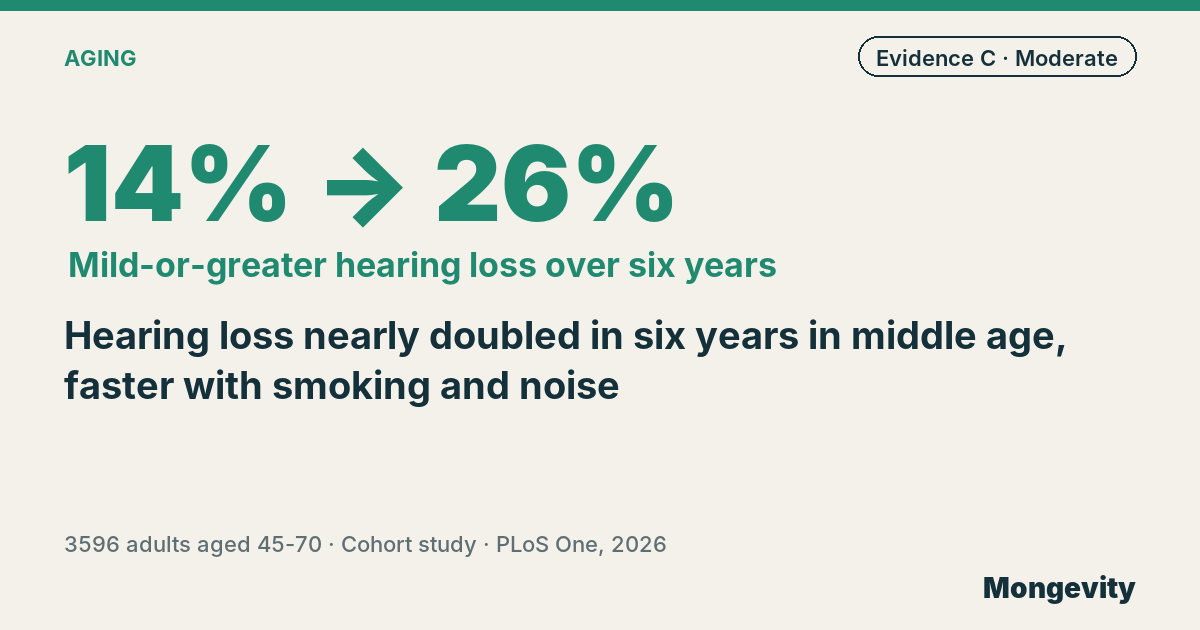
Mild-or-greater hearing loss rose from 14% to 26% over six years in 3596 Australians aged 45 to 70 in the Busselton Healthy Ageing Study, published Oct. 15, 2026, in PLoS One. Smoking, higher weight, high blood pressure, prediabetes and noisy workplaces were linked to faster hearing loss.
Hearing loss is often seen as a problem of old age, but it starts earlier. Losing hearing has been linked to isolation and to a higher risk of dementia.
What did the study look at?
The Busselton Healthy Ageing Study, in Western Australia, enrolled adults aged 45 to 70 between 2010 and 2015. Participants had hearing tests and health checks at the start and again six years later. The analysis included 3596 people with reliable hearing tests at both points, with a mean age of 57.9 years; 55% were women.
What did the study find about hearing loss?
- Mild-or-greater hearing loss, measured across the main speech frequencies, rose from 14% to 26% in six years.
- At high frequencies, it rose from 53% to 71%.
- Hearing worsened in every age group, more in men and at higher frequencies.
- Older age, male sex, higher body mass index, smoking, ringing in the ears, chronic ear infection, noisy workplaces (especially without consistent hearing protection), high blood pressure and prediabetes were linked to faster decline.
Why does this matter?
Several of these factors can be changed. Smoking, weight, blood pressure, blood sugar and noise exposure are already targets for heart and metabolic health. This study suggests they may matter for the ears too, and that midlife is a good time to act.
How solid is this evidence?
It’s moderate. Mongevity rates it C on our A-to-E scale: a population cohort with real hearing tests, not questionnaires, at two points. Limits: the links with health factors came from analyses adjusted only for age and sex, so they can be influenced by other differences; it is observational; and it covers one region of Australia.
What are the open questions?
It’s unclear whether quitting smoking, controlling blood pressure or blood sugar, or losing weight actually slows hearing loss, and how much of the decline can be prevented.
What does this mean for you?
Protect your ears from loud noise at work and leisure, with earplugs or earmuffs when needed. Not smoking and keeping blood pressure and blood sugar in check help your heart and may help your hearing. If you notice you’re asking people to repeat themselves, get a hearing test: hearing aids work better the earlier they start.
How do I explain this at dinner?
Researchers tested the hearing of middle-aged Australians and tested it again six years later. The share with hearing loss nearly doubled, and it got worse faster in smokers, people with high blood pressure or prediabetes, and those who worked in noise without protection. A good question for the table: when did you last have your hearing tested?
In one sentence: in middle-aged Australians followed for six years, hearing loss grew from 14% to 26%, with faster decline linked to smoking, noise, weight, high blood pressure and prediabetes.
Questions and answers
- How fast did hearing loss grow?
- Mild-or-greater hearing loss rose from 14% to 26% in six years.
- What sped up the decline?
- Older age, male sex, higher weight, smoking, tinnitus, chronic ear infection, workplace noise, high blood pressure and prediabetes.
- Does this prove these factors cause hearing loss?
- No. It is an observational study with limited adjustment.
- When should I get a hearing test?
- If you often ask people to repeat themselves or struggle in noisy places.