In binge-eating disorder, a weight-loss program got more people moving, and it lasted
Eating disordersPart of a story we are following · 3 articles · See every update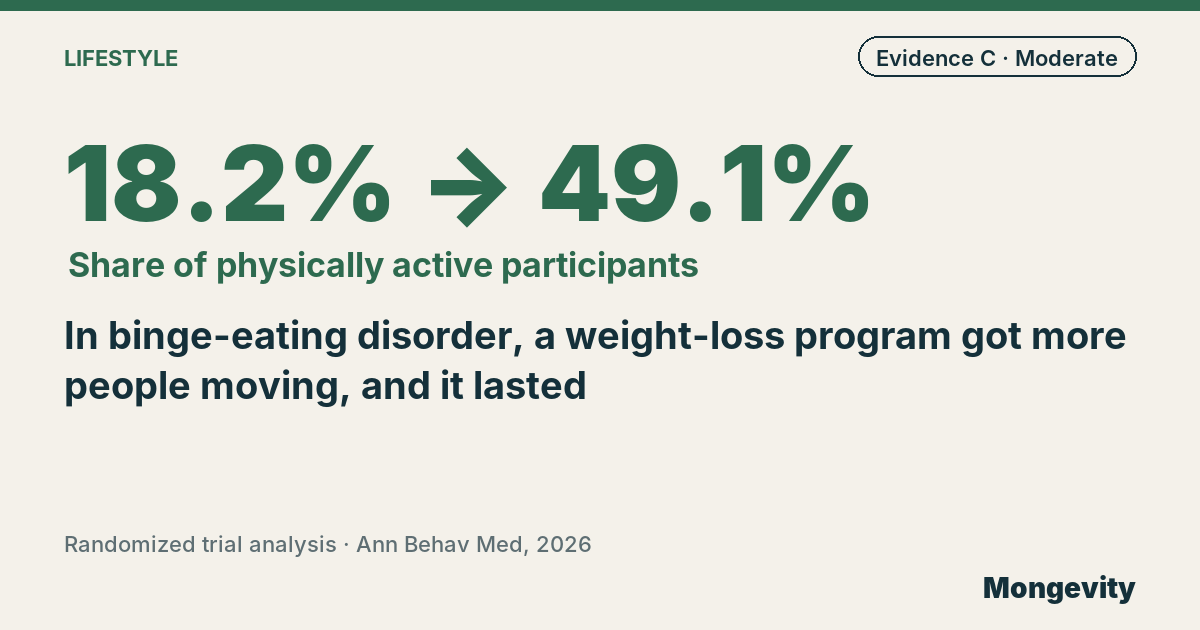
The share of physically active people with binge-eating disorder and obesity rose from 18.2% to 49.1% after a lifestyle weight-loss program and stayed at 48.0% a year later, in a randomized trial analysis published in January 2026 in Annals of Behavioral Medicine. Activity was linked to weight loss and fewer symptoms of these eating disorders.
Binge-eating disorder involves repeated episodes of eating large amounts of food with a sense of loss of control. It often comes with obesity, inactivity and a higher risk of heart disease and diabetes.
What did the study look at?
This was a secondary analysis of a randomized trial in adults with binge-eating disorder and obesity. Participants received a 6-month lifestyle behavioral weight-loss program, either standard or with additional steps for those who didn’t respond. Researchers measured physical activity, weight, heart risk factors and eating-disorder symptoms at the start, at the end of treatment and 12 months later, 18 months after the start.
What did the study find about eating disorders?
- At the start, only 18.2% of participants were “active”.
- At the end of treatment, 49.1% were active, and 48.0% remained active 12 months later.
- People who were moderately active or active lost more weight than sedentary people.
- A year later, the active group had a lower body mass index and greater weight loss than the sedentary group.
- Active people had fewer eating-disorder symptoms after treatment, while sedentary people were less likely to stop binge eating.
- Heart risk factors improved with weight loss, but physical activity itself was linked to few of them.
Why does this matter?
People with binge-eating disorder and obesity often find it hard to lose weight and become active. This study shows that a structured program can more than double the share who are active, and that the change can last. Activity seems to help with weight and with the eating disorder itself.
How solid is this evidence?
It’s moderate. Mongevity rates it C on our A-to-E scale: it comes from a randomized trial, but this analysis of physical activity is observational. Limits: activity was likely self-reported, people who became active may differ in motivation, and the abstract doesn’t give the number of participants.
What are the open questions?
Trials that add specific exercise programs could test whether activity itself improves binge eating and heart health in this group.
What does this mean for you?
If you struggle with binge eating, it is a treatable condition: seek help from a professional who specializes in eating disorders. Moving more, in ways you enjoy, can be part of recovery, alongside therapy and support, without focusing only on weight.
How do I explain this at dinner?
People with binge-eating disorder joined a program to lose weight. Before, fewer than one in five were active; after, about half were, and they stayed active a year later. Moving more went along with losing weight and bingeing less. A good question for the table: what kind of movement do you actually enjoy?
In one sentence: in adults with binge-eating disorder and obesity, lifestyle weight-loss treatment increased physical activity, which was sustained a year later and linked to weight loss and fewer eating-disorder symptoms.
Questions and answers
- What is binge-eating disorder?
- Repeated episodes of eating large amounts of food with a sense of loss of control.
- Did activity increase?
- Yes: from 18.2% active at the start to 49.1% after treatment and 48.0% a year later.
- Was activity linked to weight loss?
- Yes; active people lost more weight than sedentary ones.
- Did it help the eating disorder?
- Active people had fewer eating-disorder symptoms after treatment.