After a stent, a moderate statin plus ezetimibe protected as well with less diabetes
Stents and blocked heart arteriesPart of a story we are following · 3 articles · See every update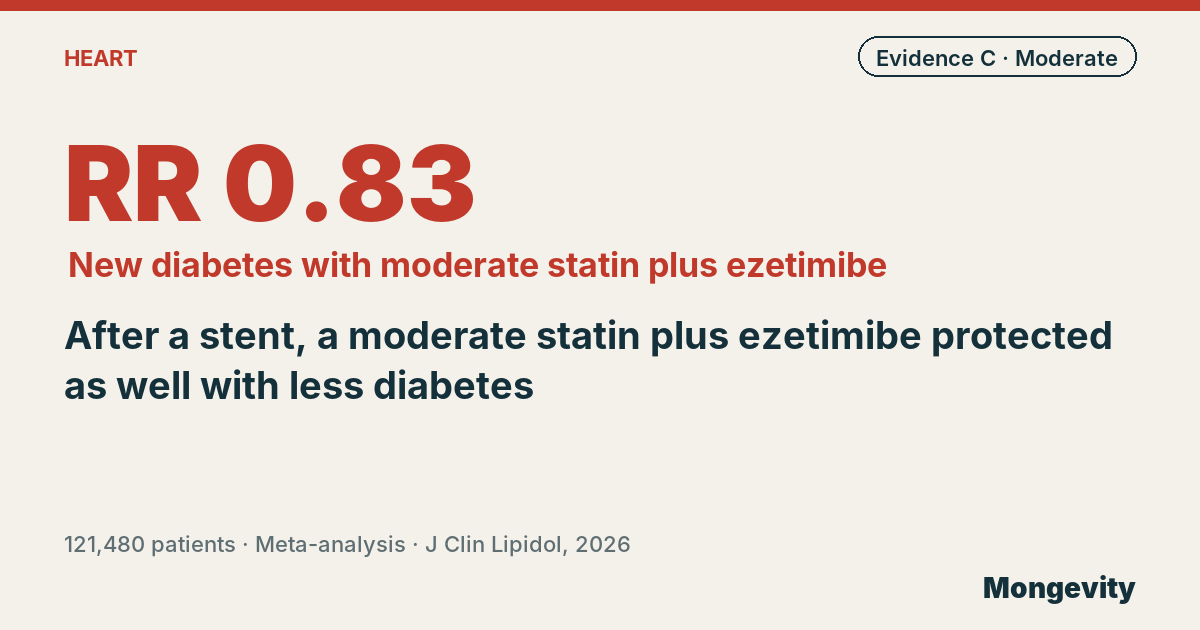
A moderate-intensity statin plus ezetimibe was linked to a lower risk of new diabetes (relative risk 0.83) and similar heart events compared with a high-intensity statin, in a meta-analysis of seven studies with 121,480 patients who had a coronary stent, published in August 2026 in Journal of Clinical Lipidology. It is a flexible option after heart stents.
After a coronary stent, guidelines recommend lowering LDL cholesterol by at least half. The usual way is a high-intensity statin. But high doses have been linked to a higher chance of developing diabetes. Another option is a moderate dose of statin combined with ezetimibe, a pill that blocks cholesterol absorption in the gut.
What did the study look at?
Researchers searched four databases through July 2025 for studies of patients who had percutaneous coronary intervention, the procedure that places stents. Seven studies with 121,480 patients qualified. 26,228 (21.5%) received a moderate-intensity statin plus ezetimibe and 95,252 (78.4%) a high-intensity statin.
What did the study find about heart stents?
- The combination was linked to a lower risk of new diabetes requiring medication (relative risk 0.83).
- All-cause mortality also favored the combination (relative risk 0.89).
- Major heart and vascular events did not differ (relative risk 0.99).
- The need for new procedures to reopen arteries did not differ either (relative risk 0.96).
Why does this matter?
People with stents need strong, long-term cholesterol lowering. Some stop or reduce statins because of side effects or worries about diabetes. This review suggests that a lower statin dose plus ezetimibe can offer similar heart protection with fewer metabolic problems, giving patients and doctors a flexible option.
How solid is this evidence?
It’s moderate. Mongevity rates it C on our A-to-E scale: a meta-analysis with a large number of patients. Limits: the abstract doesn’t detail how many studies were randomized, the groups were very unequal in size, and in observational data patients who got each treatment may differ in other ways. The mortality finding needs confirmation.
What are the open questions?
Randomized trials focused on diabetes risk and long-term outcomes would help confirm which strategy is best, and for which patients.
What does this mean for you?
If you have a stent and worry about your statin, don’t stop it on your own. Ask your cardiologist whether a combination with ezetimibe could reach your cholesterol target. Keeping LDL low, being active and not smoking remain key after a stent.
How do I explain this at dinner?
After a stent, people usually take a strong statin to lower cholesterol. Researchers found that a milder statin plus a second pill protected the heart just as well and was linked to less diabetes. A good question for the table: do you know your LDL cholesterol number?
In one sentence: after PCI, moderate-intensity statin plus ezetimibe was linked to similar cardiovascular protection and a lower risk of new-onset diabetes compared with high-intensity statin therapy.
Questions and answers
- What is ezetimibe?
- A pill that lowers cholesterol by blocking its absorption in the gut.
- Did the combination reduce diabetes?
- Yes: new diabetes needing medication was less frequent (relative risk 0.83).
- Did it protect the heart as well?
- Major heart events were similar (relative risk 0.99).
- Should I change my statin?
- Only with your cardiologist; don't stop it on your own.