In AFib with diabetes, tirzepatide was linked to fewer strokes than other GLP-1 drugs
Heart rhythmPart of a story we are following · 3 articles · See every update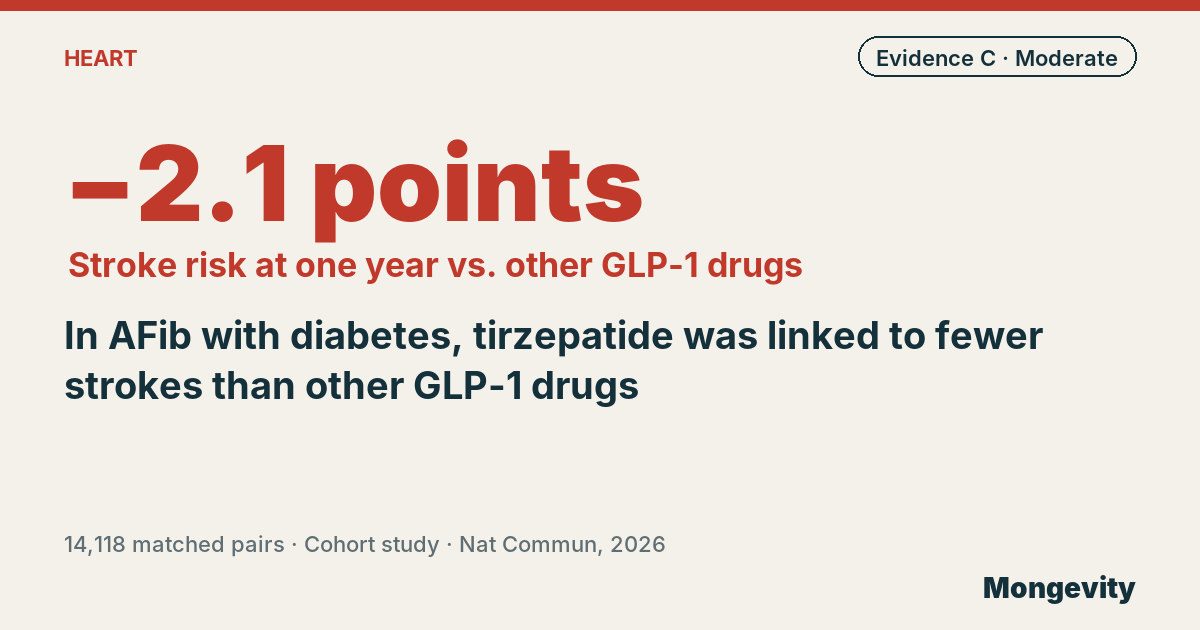
Starting tirzepatide was linked to lower risks of stroke and death than starting another GLP-1 drug in 14,118 matched pairs of adults with atrial fibrillation and type 2 diabetes, with absolute differences of 2.1 and 6.2 percentage points at one year, in a study published Aug. 22, 2026, in Nature Communications. Randomized trials are needed before this changes heart rhythm care.
People who have both atrial fibrillation (AFib), an irregular heart rhythm, and type 2 diabetes have a high risk of stroke, even when they take blood thinners and diabetes medicines. GLP-1 drugs such as semaglutide help with blood sugar and weight and protect the heart. Tirzepatide acts on two hormones, GLP-1 and GIP.
What did the study look at?
Researchers used a large international network of electronic health records. They identified adults with AFib and type 2 diabetes who started tirzepatide or another GLP-1 drug, and paired them so the two groups were similar in age, health conditions and medicines. The analysis included 14,118 matched pairs.
What did the study find about heart rhythm?
- Tirzepatide was linked to lower risks of any stroke, ischemic stroke (caused by a clot) and hemorrhagic stroke (caused by bleeding).
- It was also linked to lower risk of death from any cause.
- At one year, the absolute difference was 2.1 percentage points for stroke and 6.2 percentage points for death.
Why does this matter?
Stroke is one of the most feared complications of AFib. If a diabetes and weight medicine can lower that risk on top of blood thinners, it would be a valuable extra layer of protection. The size of the mortality difference is striking, which is also a reason for caution.
How solid is this evidence?
It’s moderate. Mongevity rates it C on our A-to-E scale: a large observational study with careful matching. Limits: patients weren’t assigned at random, people who receive a newer, often more expensive drug may differ in ways records don’t capture, such as income or access to care, and the large mortality gap may partly reflect those differences. The authors themselves say randomized trials are needed before changing treatment.
What are the open questions?
Randomized trials are needed to confirm whether tirzepatide truly prevents strokes in AFib with diabetes, and whether the benefit comes from weight loss, blood sugar control or other effects.
What does this mean for you?
If you have AFib and type 2 diabetes, keep taking your blood thinner as prescribed and ask your doctor which diabetes medicines best protect your heart and brain. GLP-1 drugs and tirzepatide are options to discuss, along with blood pressure control, activity and not smoking.
How do I explain this at dinner?
People with both an irregular heartbeat and diabetes are at high risk of stroke. In health records, those who started tirzepatide had fewer strokes and deaths than those on similar drugs. But it wasn’t a trial, so we can’t be sure the drug caused the difference. A good question for the table: why do we need trials when we already have huge databases?
In one sentence: in adults with atrial fibrillation and type 2 diabetes, tirzepatide was linked to lower stroke and mortality risks than other GLP-1 receptor agonists, pending confirmation in randomized trials.
Questions and answers
- What is tirzepatide?
- A medicine for type 2 diabetes and weight that acts on the GLP-1 and GIP hormones.
- How much lower was the stroke risk?
- 2.1 percentage points lower at one year than with other GLP-1 drugs.
- And mortality?
- 6.2 percentage points lower at one year, a large gap that needs confirmation.
- Does this prove tirzepatide prevents strokes?
- No. It's observational; randomized trials are needed.