Placing the pacemaker wire in a different spot cut heart failure problems in a trial
Heart rhythmPart of a story we are following · 3 articles · See every update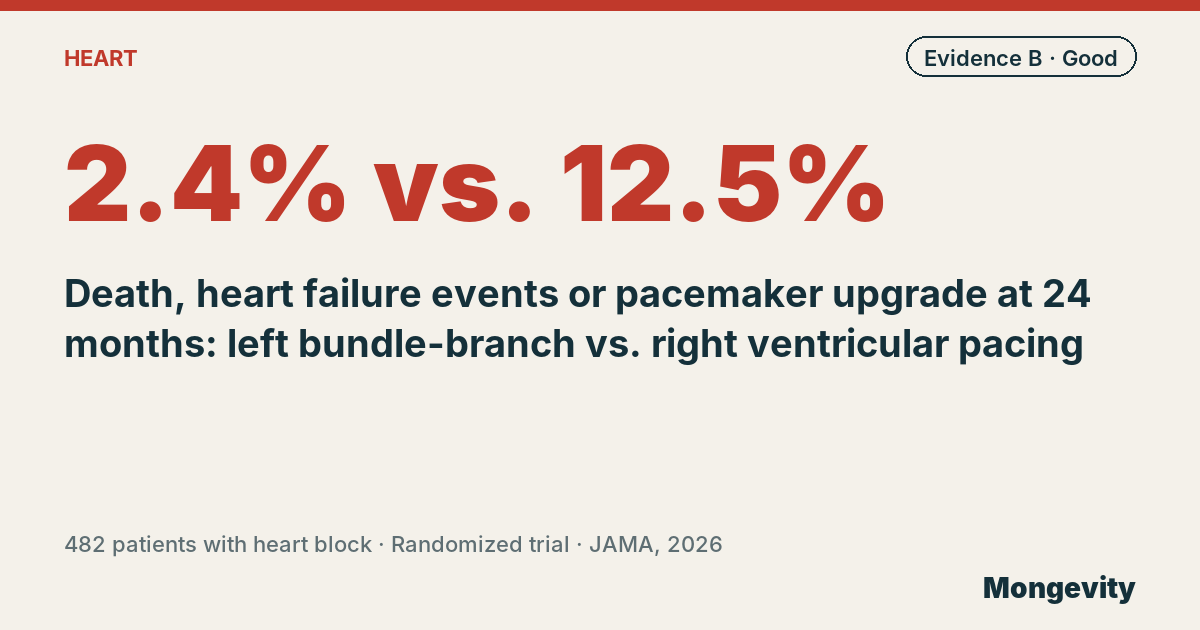
People with heart block who got left bundle-branch area pacing had death, heart failure events or pacemaker upgrade in 2.4% of cases at 24 months, vs. 12.5% with standard right ventricular pacing, in the LEAP-Block trial in China published Oct. 28, 2026, in JAMA. Where the wire goes may matter for heart rhythm treatment.
When the heart’s electrical signal gets blocked between the upper and lower chambers, a condition called atrioventricular block, people often need a pacemaker. For decades the standard has been to place the wire in the right ventricle. But pacing from there makes the heart contract in an unnatural order, and over time some people develop heart failure.
The newer approach cut serious problems at 24 months.
What is left bundle-branch area pacing?
The heart has natural “cables” that spread the electrical signal quickly so both sides squeeze together. Left bundle-branch area pacing places the pacemaker lead deep in the wall between the ventricles to tap into those cables, producing a more natural heartbeat.
What did the trial test?
At 14 hospitals in China, 499 people with atrioventricular block and normal heart pumping (ejection fraction of 50% or more), who were expected to need pacing more than 40% of the time, were assigned by chance to left bundle-branch area pacing or right ventricular pacing. The analysis included 482 people with a mean age of 67; 46% were women.
What did the study find about heart rhythm?
| At 24 months | Left bundle-branch | Right ventricle |
|---|---|---|
| Death, heart failure event or upgrade | 2.4% | 12.5% |
| Heart failure events | 3.4% | 11.3% |
The hazard ratio was 0.37. Procedures succeeded about equally in both groups, and there were no significant differences in deaths, device complications or pacing-induced damage to the heart muscle. The benefit was mostly driven by fewer heart failure events.
Why does this matter?
Many people get pacemakers each year, and those who depend on them most are the ones at risk of heart failure from right ventricular pacing. A placement that keeps the heartbeat more natural could protect them.
How solid is this evidence?
It’s good. Mongevity rates it B on our A-to-E scale. It was a randomized trial with a clear result, consistent across subgroups. Limits: it was moderately sized, done only in China, and the main outcome combined several events, with heart failure events driving the difference. Doctors also knew which technique they used.
What does this mean for you?
If you or a family member needs a pacemaker for heart block, it’s reasonable to ask the cardiologist which placement they plan and why. Left bundle-branch area pacing requires specific experience, so availability varies.
How do I explain this at dinner?
The heart has its own electric cables. A pacemaker helps when the signal gets stuck, and this study found that plugging into the heart’s own cables works better than plugging in from the side. A good question for the table: why does it matter in what order things happen?
In one sentence: placing the pacemaker lead in the left bundle-branch area cut deaths, heart failure events and upgrades compared with standard right ventricular pacing over 24 months.
Questions and answers
- What is atrioventricular block?
- A problem in which the heart's electrical signal doesn't pass properly from the upper to the lower chambers, often requiring a pacemaker.
- Is left bundle-branch area pacing better?
- In this trial, the combined risk of death, heart failure events or upgrade at 24 months was 2.4% vs. 12.5% with right ventricular pacing.
- Did it reduce deaths?
- There was no significant difference in deaths. The benefit came mainly from fewer heart failure events.