Older adults with dementia who had yearly wellness visits got dementia drugs more often
Alzheimer's and dementiaPart of a story we are following · 6 articles · See every update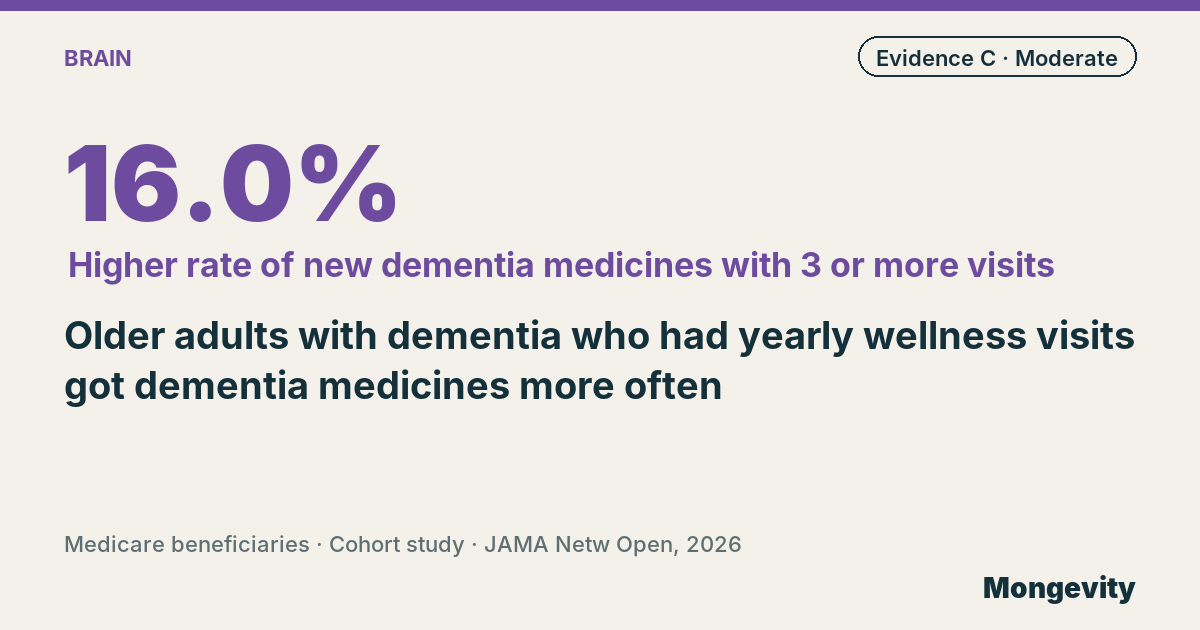
People with dementia on Medicare who had 3 or more annual wellness visits in the previous 3 years started dementia medicines at a 16.0% higher rate than those with no visits, in a US study published Oct. 1, 2026, in JAMA Network Open. The visits may help catch dementia and start treatment sooner.
In the US, Medicare covers a yearly “annual wellness visit,” a check-up focused on prevention that includes a review of memory and thinking. It’s meant to catch problems such as dementia earlier. But does it lead to treatment?
What did the study do?
Researchers used complete Medicare data on beneficiaries diagnosed with Alzheimer disease or a related dementia in 2018 who hadn’t taken dementia medicines before. They counted how many annual wellness visits each person had in the 3 years before, 0, 1, 2 or 3 or more, and checked who started a dementia medicine: memantine, donepezil, rivastigmine or galantamine. The average age was 82.3 years, and 64.5% were women.
What did the study find about dementia?
Most people, 60.8%, had no wellness visits in those 3 years. New dementia prescriptions ranged from 9.8% to 14.1% depending on the number of visits. After accounting for differences between groups:
The link was stronger in people whose dementia was newly diagnosed.
Why does this matter?
Current dementia medicines don’t stop the disease, but they can help manage symptoms for some people. Regular check-ups seem to open the door to that conversation, and to planning for future care. That most people with dementia had no wellness visits at all shows how much room there is to improve.
How solid is this evidence?
It’s moderate. Mongevity rates it C on our A-to-E scale: a very large study using complete Medicare data, but observational, so people who go to wellness visits may differ in other ways. It also measured prescriptions, not whether people felt or functioned better.
What does this mean for you?
If you or an older relative has Medicare, schedule the annual wellness visit and mention any memory or thinking changes. Outside the US, ask your doctor about a yearly check-up that includes memory. If a dementia diagnosis comes up, ask about treatment options and care planning.
How do I explain this at dinner?
In the US, older adults can get a free yearly check-up that includes memory. People with dementia who went to more of these visits were more likely to start a medicine for their symptoms. A good question for the table: when did the older people in your life last have a full check-up?
In one sentence: more Medicare annual wellness visits were linked to more new dementia medicine prescriptions in people with dementia.
Questions and answers
- What is an annual wellness visit?
- A yearly Medicare check-up focused on prevention that includes a review of memory and thinking.
- Were the visits linked to treatment?
- Yes: 3 or more visits were linked to a 16.0% higher rate of new dementia medicine prescriptions.
- How many people had these visits?
- Most did not: 60.8% had no wellness visits in the previous 3 years.