A huge genetic study found 48 new Alzheimer’s risk regions, pointing to immune cells
Alzheimer's and dementiaPart of a story we are following · 6 articles · See every update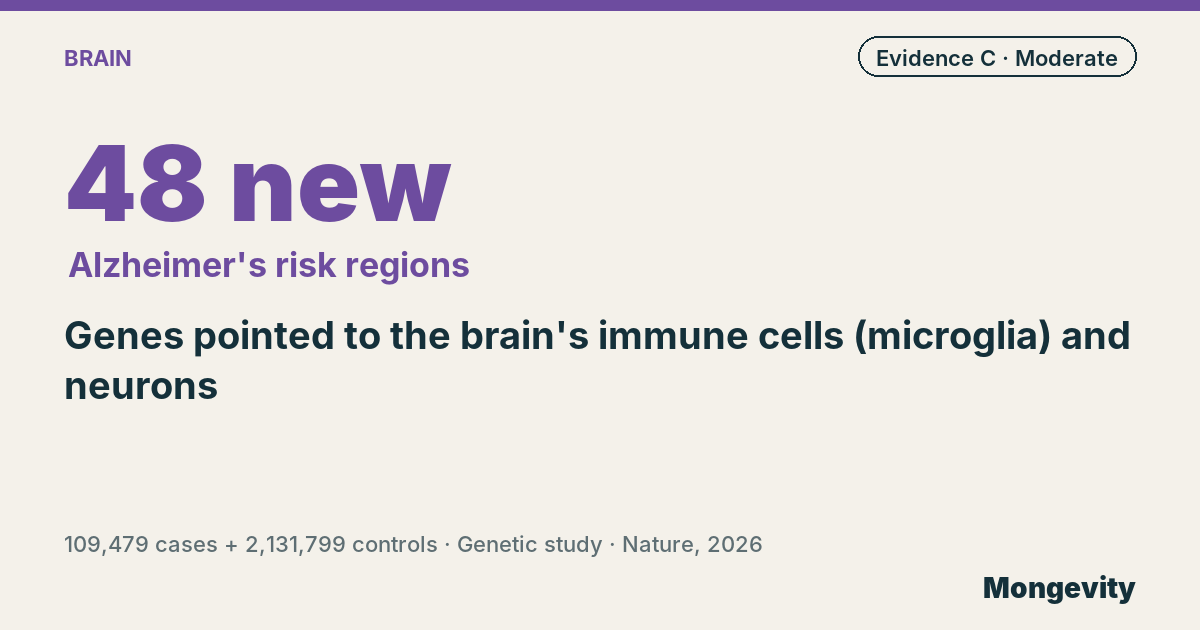
A genetic study of more than 2 million people identified 118 Alzheimer’s risk regions, 48 of them new, in a multi-ancestry analysis published Oct. 28, 2026, in Nature. Risk genes converged on the brain’s immune cells and neurons, pointing to new targets against dementia.
Alzheimer’s disease is the most common cause of dementia and is strongly inherited: twin studies estimate that 60-80% of the risk comes from genes. Yet only about 80 genetic regions had been firmly linked to it.
By analyzing genetic data from more than 2 million people of diverse ancestries, researchers found 118 risk regions in a combined analysis and 9 more in ancestry-specific analyses. Of these, 48 are new.
What did the study do?
The team pooled data from 109,479 people with Alzheimer’s, 74,141 “proxy” cases (people with a parent with the disease), 2,131,799 controls and 499,708 proxy controls. They looked for common genetic variants more frequent in people with the disease and then checked which genes and cell types those variants point to.
What did the study find about dementia?
- New risk genes: 48 regions not reported before, some highlighting potential drug targets.
- Two key cell types: genes more active in microglia, the brain’s immune cells, and less active in neurons in people with Alzheimer’s were enriched for genetic risk.
- More heritability than thought: common variants explained 16% of the risk, nearly three times earlier estimates.
- Better prediction: polygenic scores that combine many variants predicted risk better.
Why does this matter?
The results suggest there’s more to find in common genetic variation than many believed, and they strengthen the idea that the brain’s immune system plays a central role. New targets give drug developers more places to look.
How solid is this evidence?
It’s moderate for practical purposes. Mongevity rates it C on our A-to-E scale. Genetic association studies of this size are robust for finding risk regions, but they don’t by themselves show how a gene causes disease, and proxy cases add some uncertainty. It doesn’t change treatment today.
What does this mean for you?
Genes are not destiny. Commercial genetic tests don’t predict Alzheimer’s reliably for individuals, and a large share of dementia risk is linked to things that can be changed, such as blood pressure, hearing, physical activity and smoking. If memory worries you, talk with a doctor.
How do I explain this at dinner?
Scientists compared the genes of millions of people and found new spots in our DNA linked to Alzheimer’s. Many point to the brain’s cleaning crew, its immune cells. A good question for the table: why might the brain need its own cleaning crew?
In one sentence: a genetic study of more than 2 million people found 48 new Alzheimer’s risk regions and pointed to the brain’s immune cells, opening new paths for research.
Questions and answers
- Is Alzheimer's genetic?
- Partly: twin studies estimate 60-80% heritability. This study found common variants explain 16%, nearly three times earlier estimates.
- How many risk genes are known now?
- This study identified 118 loci in a multi-ancestry analysis and 9 more in specific ancestries, 48 of them new.
- Should I get a genetic test?
- Commercial tests don't reliably predict Alzheimer's for individuals. Talk with a doctor if memory worries you.