An anti-inflammatory ALS drug showed no benefit and raised liver enzymes
ALSPart of a story we are following · 3 articles · See every update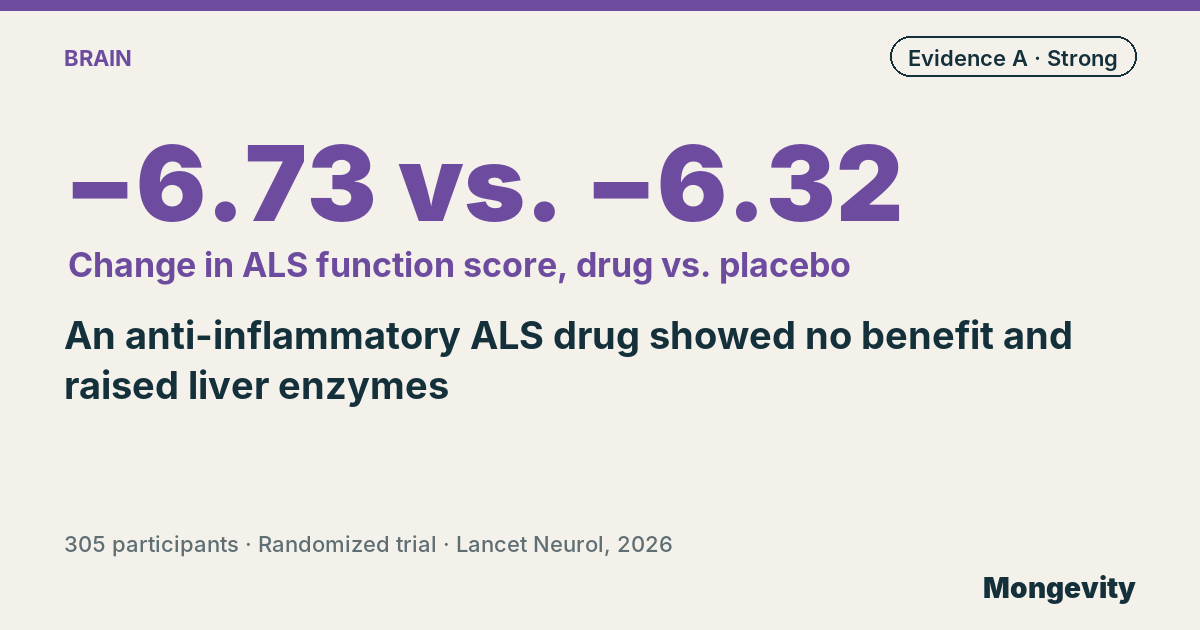
The RIPK1 inhibitor SAR443820 did not slow functional decline in ALS over 24 weeks and caused more liver enzyme increases than placebo, in the HIMALAYA trial of 305 people in 13 countries, published in October 2026 in The Lancet Neurology. Further development in ALS is not warranted, the authors said.
In amyotrophic lateral sclerosis (ALS), inflammation and a form of programmed cell death are thought to help destroy motor neurons. RIPK1 is a protein that drives both. SAR443820 is an oral drug that blocks RIPK1 and reaches the brain.
What did the trial test?
The HIMALAYA trial took place at 63 sites in 13 countries. Adults aged 18 to 80 with ALS were assigned by chance, 2 to 1, to 20 mg of SAR443820 twice daily (203) or placebo (102) for 24 weeks, without anyone knowing who got what. The main outcome was the change in the ALS Functional Rating Scale, which measures abilities such as speaking, swallowing, walking and breathing.
What did the study find about ALS?
- Function declined by 6.73 points with SAR443820 and 6.32 points with placebo; the difference was not significant.
- Adverse events were more frequent with the drug: 85% vs. 78%.
- More people stopped treatment with the drug (14% vs. 5%), mostly because of high liver enzymes.
- Nine people died during the trial; none of the deaths was attributed to the drug.
Why does this matter?
Inflammation is a popular target in neurodegenerative diseases. This well-run trial shows that blocking RIPK1, at least with this drug and dose, does not help people with ALS and adds liver risks. The authors concluded that further development in ALS is not warranted, which lets research move on.
How solid is this evidence?
It’s strong. Mongevity rates it A on our A-to-E scale: a double-blind, placebo-controlled randomized trial in many countries. Limits: it was a phase 2 trial that ended early, lasted 24 weeks and tested a single dose.
What are the open questions?
Whether other ways of targeting inflammation help in ALS, or whether specific subgroups might respond, remain open questions.
What does this mean for you?
Negative trials are disappointing but useful: they protect patients from ineffective drugs and side effects. If you or someone close lives with ALS, ask the care team about trials that are recruiting, and keep the pillars of care: a multidisciplinary team, nutrition and breathing support.
How do I explain this at dinner?
Researchers tested a drug that blocks a protein linked to inflammation and nerve cell death in ALS. After six months, people on the drug declined just like those on placebo, and their liver tests were worse. A good question for the table: why are failed trials worth publishing?
In one sentence: the RIPK1 inhibitor SAR443820 did not slow functional decline in ALS over 24 weeks and was linked to more liver enzyme increases.
Questions and answers
- What is RIPK1?
- A protein that regulates inflammation and cell death, thought to contribute to ALS.
- Did SAR443820 slow ALS?
- No. Function declined 6.73 points with the drug and 6.32 with placebo at 24 weeks.
- Was it safe?
- It caused more liver enzyme increases and more treatment discontinuations (14% vs. 5%).
- Will it be developed further?
- The authors concluded further development in ALS is not warranted.