In ALS, immune cells in spinal fluid seemed protective while those in blood seemed harmful
ALSPart of a story we are following · 3 articles · See every update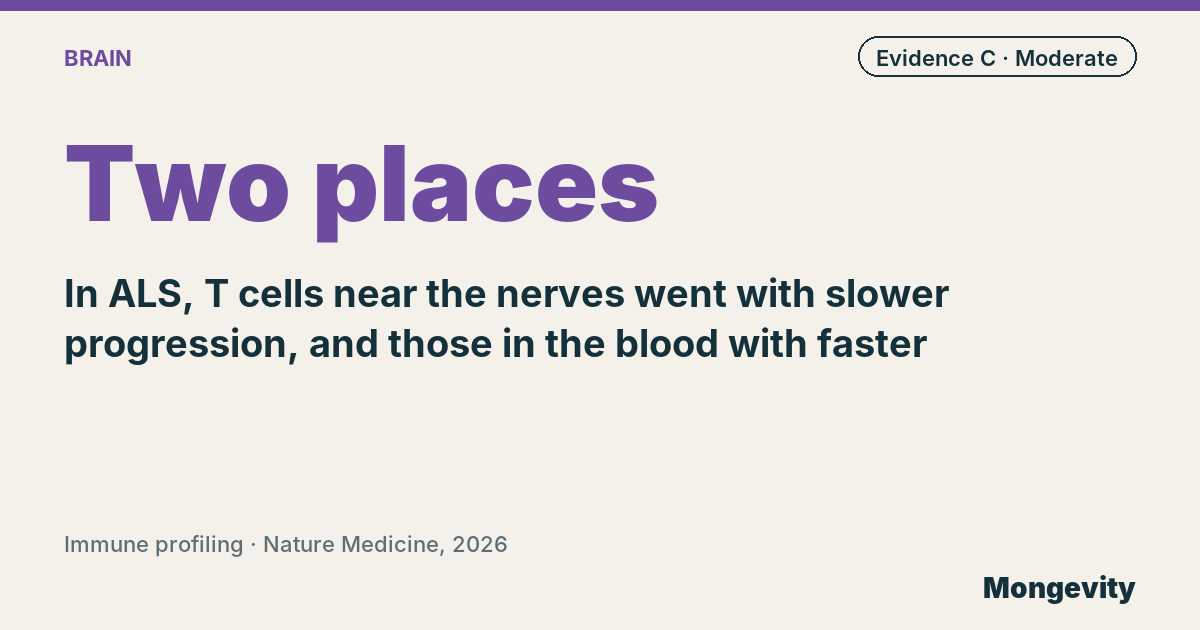
In ALS, more T cells in the spinal fluid went with slower progression and more activated T cells in the blood with faster progression, in a study published Oct. 27, 2026, in Nature Medicine. Signs of cytomegalovirus immunity were linked to shorter survival.
Amyotrophic lateral sclerosis (ALS) is a fatal disease in which the nerve cells that control muscles die. Researchers increasingly suspect the immune system plays a role, but it hasn’t been clear whether it helps or harms.
What did the study look at?
Researchers used advanced techniques to read the genes and receptors of individual T cells, a type of white blood cell, in the blood and in the cerebrospinal fluid (CSF) that surrounds the brain and spinal cord, following people over time.
What did the study find about ALS?
- Long-lived groups of T cells lived in the spinal fluid, and some were in close contact with cells that present antigens, a sign that an immune reaction is happening right there.
- More CD4 and CD8 T cells in the spinal fluid were linked to slower disease progression.
- More activated CD4 T cells in the blood were linked to faster progression.
- T cells shared between blood and spinal fluid behaved differently in each place.
- In sporadic ALS, more cytomegalovirus (CMV)-specific T cells in the spinal fluid and more antibodies against CMV in the blood were linked to faster progression and shorter survival.
Why does this matter?
It suggests the immune response near the nerves may be protective, while activation in the rest of the body may be harmful. That could guide future treatments that calm the body-wide immune response without blocking the helpful local one, and raises questions about the role of common viruses like CMV.
How solid is this evidence?
It’s moderate. Mongevity rates it C on our A-to-E scale. The methods are detailed and the patterns are consistent, but the study shows associations, not causes, and the number of patients wasn’t reported in the summary. The CMV finding needs confirmation.
What does this mean for you?
There’s no change to ALS treatment from this study. If you or someone close to you has ALS, care at a multidisciplinary clinic and participation in clinical trials are the best ways to access new approaches.
How do I explain this at dinner?
In a disease that weakens muscles, scientists looked at the body’s defense cells in two places: near the nerves and in the blood. Near the nerves they seemed to help, and in the blood they seemed to make things worse. A good question for the table: why might the same helper act differently in different places?
In one sentence: in ALS, T cells near the nerves were linked to slower progression and those in the blood to faster progression, pointing to new treatment ideas.
Questions and answers
- What is ALS?
- Amyotrophic lateral sclerosis, a fatal disease in which the nerve cells that control muscles die.
- Does the immune system help or harm in ALS?
- In this study, T cells in the spinal fluid were linked to slower progression, and activated T cells in the blood to faster progression.
- What does CMV have to do with it?
- In sporadic ALS, more signs of immunity to cytomegalovirus were linked to faster progression and shorter survival.