A complement-blocking drug cut urine protein by nearly half in IgA nephropathy
IgA nephropathyPart of a story we are following · 3 articles · See every update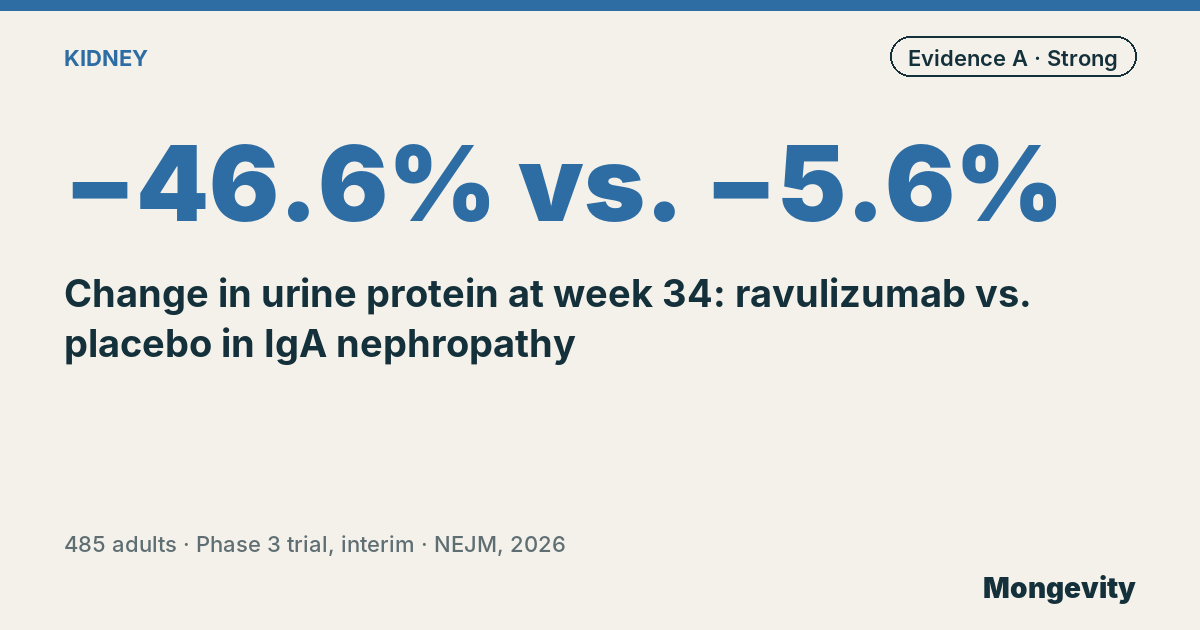
Ravulizumab lowered urine protein by 46.6% at week 34 in IgA nephropathy, vs. 5.6% with placebo, with no meningococcal infections, in an interim analysis of a phase 3 trial published Oct. 23, 2026, in New England Journal of Medicine. Blocking complement is a new route against IgA nephropathy.
In IgA nephropathy, a common kidney disease in young adults, part of the immune system called complement fuels inflammation in the kidney’s filters. That leads to blood and protein in the urine and a gradual loss of kidney function.
At week 34, protein in the urine fell by 46.6% with ravulizumab, compared with 5.6% with placebo.
Why measure protein in the urine?
Protein leaking into the urine is a sign of kidney filter damage. In IgA nephropathy, lowering it is linked to slower loss of kidney function over time, so it’s used as an early measure in trials.
What did the trial test?
485 adults with IgA nephropathy, kidney function above a set threshold and persistent protein in the urine despite standard therapy were assigned by chance to ravulizumab or placebo, given by IV infusion every 8 weeks. The interim analysis included 352 patients, 176 in each group.
What did the study find about IgA nephropathy?
| At week 34 | Ravulizumab | Placebo |
|---|---|---|
| Change in urine protein-to-creatinine ratio | -46.6% | -5.6% |
| Adverse events | 69.5% | 75.8% |
| Serious adverse events | 4.6% | 9.0% |
Compared with placebo, urine protein was 43.4% lower with ravulizumab. Because complement blockers can raise the risk of meningococcal infection, this was watched closely: none occurred, and there were no deaths.
Why does this matter?
Ravulizumab attacks a different part of the disease process than drugs that block APRIL or BAFF, so it could add another option, possibly in combination, for people whose disease keeps progressing.
How solid is this evidence?
It’s strong for an early result. Mongevity rates it A on our A-to-E scale: a large randomized placebo-controlled phase 3 trial. Limits: this is an interim analysis based on urine protein at 34 weeks; whether it preserves kidney function over years still needs to be shown. The trial was funded by Alexion and AstraZeneca.
What does this mean for you?
If you or someone close to you has IgA nephropathy with persistent protein in the urine, ask the nephrologist about newer treatments and clinical trials. Complement blockers require vaccination against meningococcus before starting.
How do I explain this at dinner?
Part of the body’s defense system can accidentally damage the kidney’s filters. A medicine that blocks it reduced the protein leaking into the urine by almost half. A good question for the table: why might a leak be an early warning sign?
In one sentence: ravulizumab nearly halved urine protein in IgA nephropathy at 34 weeks, but its long-term effect on kidney function is still to be shown.
Questions and answers
- What is ravulizumab?
- A drug given by IV every 8 weeks that blocks the final steps of complement, part of the immune system involved in kidney inflammation.
- How much did it lower urine protein?
- By 46.6% at week 34, vs. 5.6% with placebo.
- Is it safe?
- Serious adverse events were 4.6% vs. 9.0% with placebo, and no meningococcal infections occurred; vaccination is required before starting.