On dialysis with diabetes, semaglutide was tied to fewer deaths than older GLP-1 drugs
Living with dialysisPart of a story we are following · 4 articles · See every update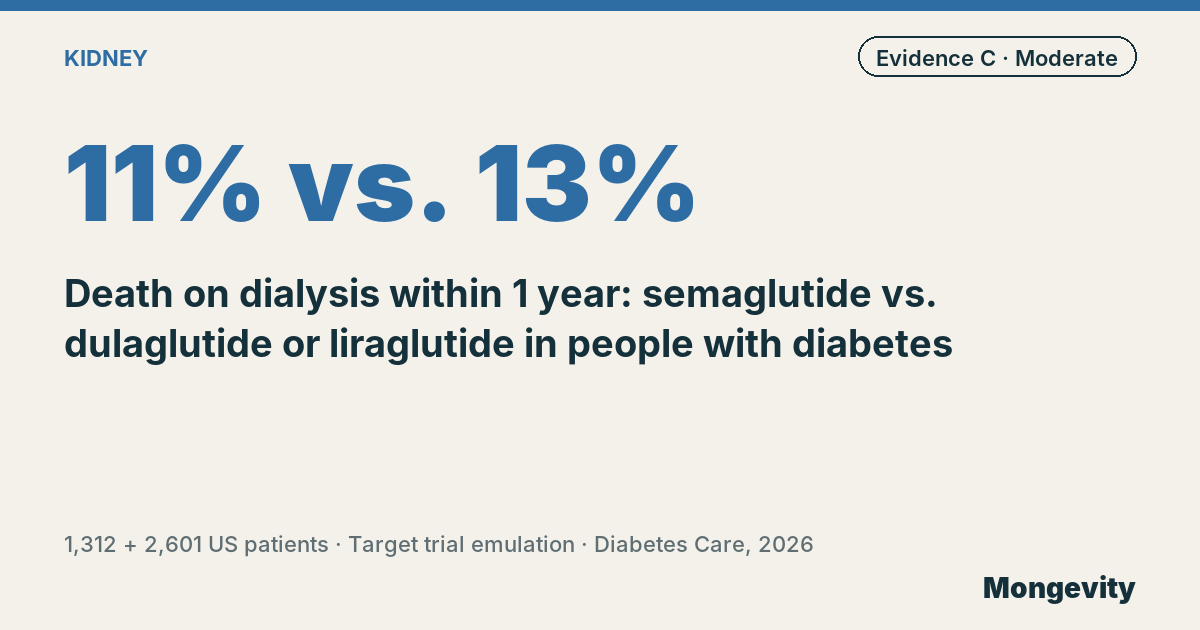
Semaglutide users on dialysis with diabetes had a 1-year death rate of 11% vs. 13% with dulaglutide or liraglutide, and fewer hospitalizations, in a US study published Oct. 27, 2026, in Diabetes Care. The benefit vs. liraglutide alone wasn’t significant, a caveat for patients on dialysis.
People with diabetes who need hemodialysis have very high risks of death and hospitalization. GLP-1 drugs help with blood sugar and weight, but there’s little evidence on which one works best for people whose kidneys have failed.
Semaglutide was linked to fewer deaths and hospitalizations, mainly compared with dulaglutide.
What did the study look at?
Using national kidney and Medicare data from 2011 to 2022, researchers emulated a randomized trial: they compared 1,312 people who started semaglutide with 2,601 who started dulaglutide or liraglutide, and used statistical weighting to make the groups comparable. The median follow-up was 1.1 years.
What did the study find about dialysis?
| At 1 year | Semaglutide | Dulaglutide or liraglutide |
|---|---|---|
| Death on dialysis | 11% | 13% |
| Any hospitalization | 57% | 62% |
| Body weight change | -4.8% | -3.4% |
The hazard ratio for death was 0.82. Compared with dulaglutide alone, results were similar. Compared with liraglutide alone, there was no statistically significant benefit for death or hospitalization.
Why does this matter?
People on dialysis are usually excluded from drug trials, so doctors often choose treatments without direct evidence. Well-designed analyses of real-world data help fill that gap until randomized trials are done.
How solid is this evidence?
It’s moderate. Mongevity rates it C on our A-to-E scale. Emulating a trial with careful weighting is a strong observational method, but people weren’t assigned to drugs by chance, so differences may remain. The data came from the US only, and follow-up was short.
What does this mean for you?
If you or someone close to you is on dialysis and has diabetes, ask the nephrologist and endocrinologist together whether a GLP-1 drug makes sense and which one. Weight loss, nausea and appetite changes need watching in people on dialysis, because many already struggle to eat enough and keep their muscle. Bring a list of all current medicines, including insulin, so the team can adjust doses and avoid low blood sugar. Don’t switch from one GLP-1 drug to another on your own.
How do I explain this at dinner?
Some people need a machine to clean their blood and also have diabetes. Doctors compared three similar medicines using real patient records, and one of them was linked to fewer deaths and hospital stays. A good question for the table: why might two similar medicines work differently?
In one sentence: among dialysis patients with diabetes, semaglutide was linked to fewer deaths and hospitalizations than older GLP-1 drugs, mainly dulaglutide, in a real-world analysis.
Questions and answers
- Is semaglutide better than other GLP-1 drugs for people on dialysis?
- In this study it was linked to a lower death rate (11% vs. 13% at 1 year) than dulaglutide or liraglutide combined, mainly vs. dulaglutide.
- Did people lose weight?
- Yes: 4.8% with semaglutide vs. 3.4% with the other drugs at 1 year.
- Is this proof?
- No. It's an observational analysis designed to mimic a trial; randomized trials are still needed.