In kidney disease, eating very little protein was linked to more kidney failure, not less
Chronic kidney diseasePart of a story we are following · 3 articles · See every update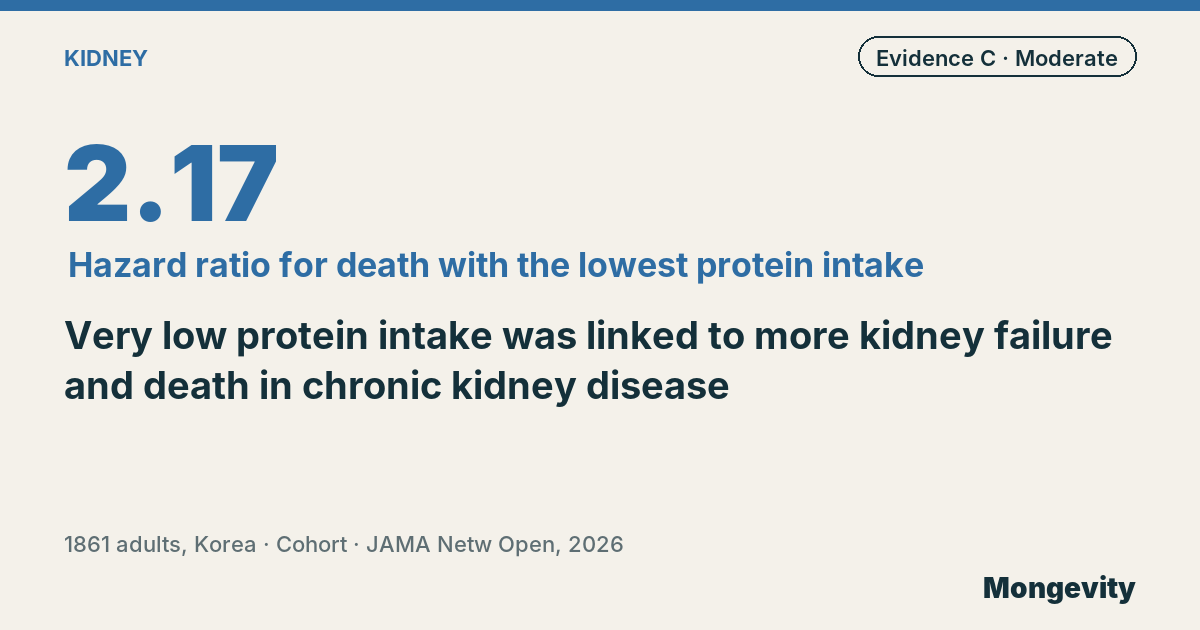
The lowest protein intake, under 0.6 g/kg a day, was linked to a higher risk of kidney failure and death than the highest intake in 1861 people with chronic kidney disease in Korea, in a study published Oct. 1, 2026, in JAMA Network Open. Very low protein diets may not protect the kidneys.
People with chronic kidney disease are often told to cut back on protein to protect their kidneys. But eating too little protein can also lead to muscle loss and malnutrition, especially in people with less muscle to begin with.
The people who ate the least protein didn’t have better kidney outcomes. They had a higher risk of kidney failure and death.
What did the study look at?
1861 adults with chronic kidney disease, not on dialysis, were enrolled at 9 hospitals in South Korea between 2011 and 2016 and followed for a median of 9.3 years. Their daily protein intake was measured objectively from nitrogen in a 24-hour urine collection, rather than from food questionnaires.
What did the study find about chronic kidney disease?
Compared with the highest intake (above 1.2 g/kg a day), the lowest intake (below 0.6 g/kg a day) was linked to:
| Outcome | Subdistribution hazard ratio |
|---|---|
| Kidney failure needing dialysis or transplant | 1.42 |
| Death from any cause | 2.17 |
| Major cardiovascular events | no significant link |
The relationship wasn’t a straight line: very low intake stood out as risky.
Why does this matter?
Protein restriction is a common recommendation in kidney disease, but this study suggests that pushing it too far may backfire, especially in Asian populations with lower body mass and muscle reserves. The authors call for balancing restriction with nutritional monitoring.
How solid is this evidence?
It’s moderate. Mongevity rates it C on our A-to-E scale. Measuring protein from urine is a strength, and follow-up was long. But it’s observational: people eating very little protein may have been sicker or less well nourished for other reasons. Intake was measured only at the start.
What does this mean for you?
If you have chronic kidney disease, don’t make big changes to your protein intake on your own. Ask for a referral to a renal dietitian, who can set a target that protects your kidneys without costing you muscle.
How do I explain this at dinner?
People with weak kidneys are often told to eat less protein. Scientists in Korea found that eating very little was linked to worse outcomes, maybe because the body loses muscle. A good question for the table: why can too little of something be as bad as too much?
In one sentence: in people with chronic kidney disease, very low protein intake was linked to more kidney failure and death, suggesting restriction should be balanced with good nutrition.
Questions and answers
- Should people with kidney disease eat less protein?
- Some restriction is common, but in this study very low intake (under 0.6 g/kg a day) was linked to more kidney failure and death.
- How was protein intake measured?
- From nitrogen in a 24-hour urine collection, which is more objective than food questionnaires.
- What should I do?
- Don't change your diet on your own; ask for a renal dietitian to set an individual target.