After a kidney transplant, acid-reducing pills were linked to more graft failure
Kidney transplantPart of a story we are following · 3 articles · See every update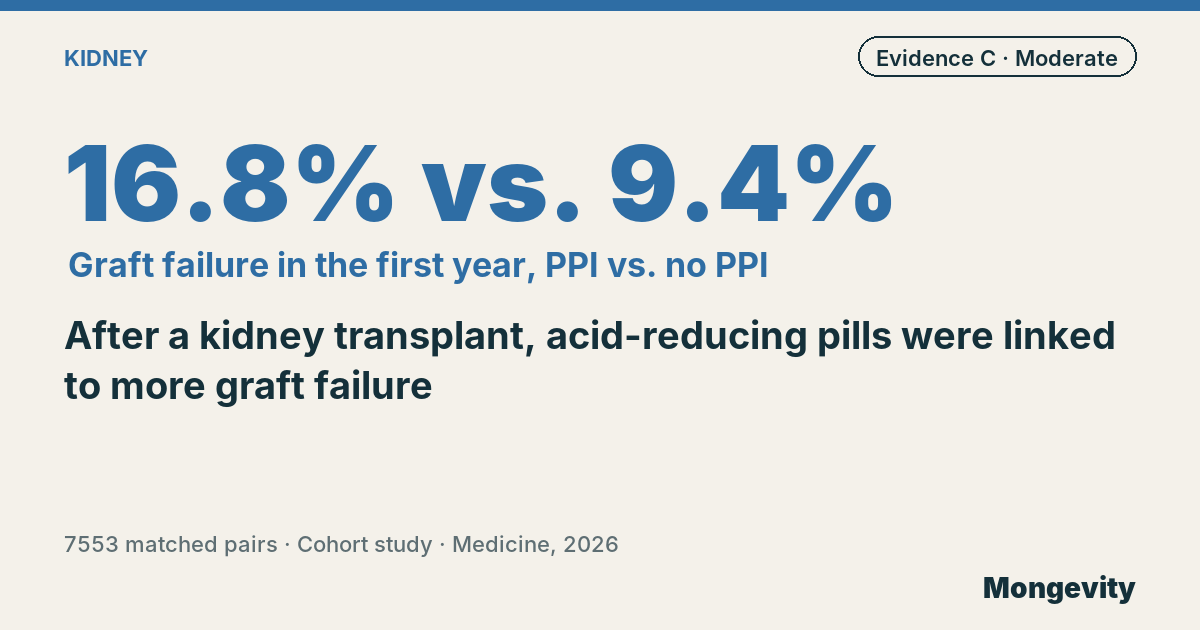
Kidney transplant recipients taking proton pump inhibitors a month after transplant had more graft failure in the first year, 16.8% vs. 9.4%, in a US study of 7553 matched pairs published Oct. 9, 2026, in Medicine. Reviewing acid-reducing pills may help protect kidney transplants.
Proton pump inhibitors (PPIs), such as omeprazole or pantoprazole, reduce stomach acid. They are often started around a kidney transplant to protect the stomach from the many new medicines, and then simply continued. In people without a transplant, long-term use has been linked to kidney problems.
What did the study look at?
Researchers used a large US health records network covering transplants from 2000 to 2021. They included 23,306 kidney recipients and checked who was taking a PPI one month after the transplant: 15,601 (66.9%). To compare like with like, they matched users and non-users on their characteristics, ending with 7553 pairs, and followed them for five years.
What did the study find about kidney transplants?
- Within the first year, the transplanted kidney failed in 16.8% of PPI users vs. 9.4% of non-users (hazard ratio 1.79).
- Between one and five years, graft failure was 12.8% vs. 4.7% (hazard ratio 2.63).
- At five years, graft survival was 72.6% with PPIs vs. 85.8% without.
- PPI use was also linked to more dialysis, faster decline in kidney function and more repeat transplants, with higher risk with longer use.
Why does this matter?
PPIs are among the most widely used medicines, and many people take them longer than needed. If they harm transplanted kidneys, reviewing whether each patient still needs one could be a simple way to protect the graft.
How solid is this evidence?
It’s moderate. Mongevity rates it C on our A-to-E scale: a large matched cohort. Limits: it’s observational, so people who need PPIs may be sicker in ways records don’t capture; over-the-counter PPI use may be missed; and the size of the differences is large enough that some of it may come from confounding.
What are the open questions?
Trials testing whether stopping or limiting PPIs after transplant improves graft survival would help, as would studies of safer alternatives for stomach protection.
What does this mean for you?
If you have a kidney transplant and take a PPI, ask your transplant team whether you still need it. Don’t stop on your own, because stopping suddenly can cause rebound acid. There may be alternatives or a lower dose that suit you.
How do I explain this at dinner?
Many people who get a new kidney also get a pill to reduce stomach acid and just keep taking it. In a big US study, those who kept taking it were more likely to lose their new kidney. It doesn’t prove the pill caused it, but it’s worth asking whether you still need it. A good question for the table: which of your medicines were meant to be temporary?
In one sentence: in kidney transplant recipients, proton pump inhibitor use after transplant was linked to a higher risk of graft failure and worse kidney outcomes over five years.
Questions and answers
- What are PPIs?
- Medicines that reduce stomach acid, such as omeprazole or pantoprazole.
- How much higher was graft failure?
- 16.8% vs. 9.4% in the first year (hazard ratio 1.79).
- Does this prove PPIs harm transplanted kidneys?
- No; it's observational, though the link was strong and consistent.
- Should I stop my PPI?
- Ask your transplant team first; don't stop suddenly on your own.