A weekly injection slowed kidney decline in IgA nephropathy over two years
IgA nephropathyPart of a story we are following · 3 articles · See every update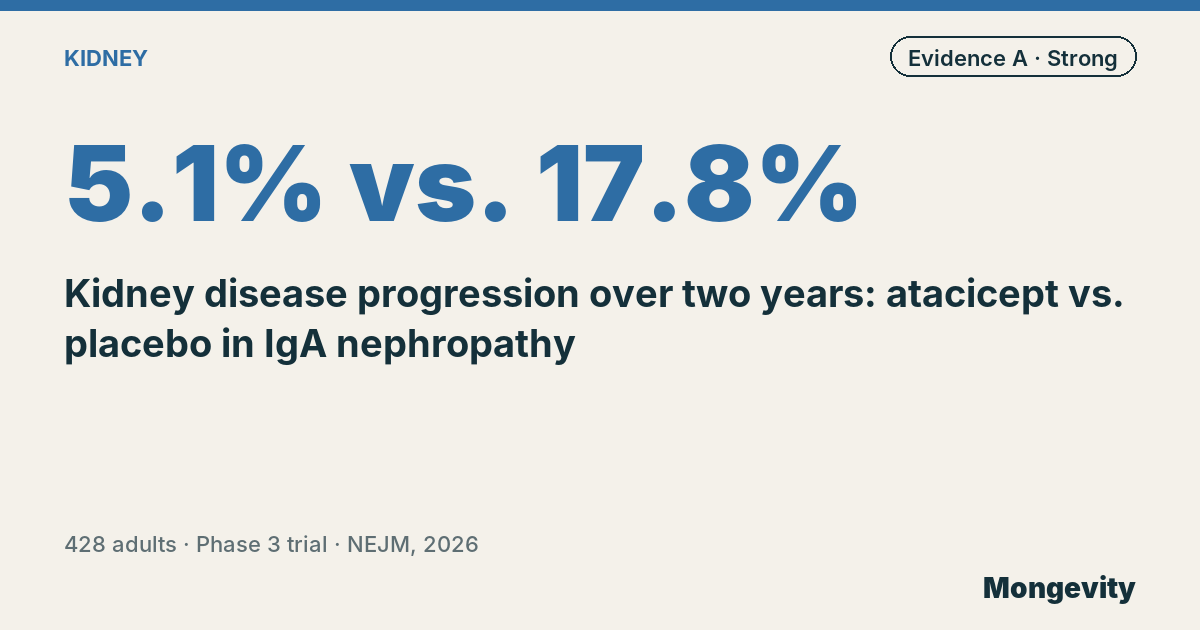
Atacicept nearly stopped the yearly loss of kidney function in IgA nephropathy, and disease progression occurred in 5.1% of patients vs. 17.8% on placebo, in the final analysis of the ORIGIN 3 trial, published Oct. 22, 2026, in New England Journal of Medicine. It is one of several new drugs changing how IgA nephropathy is treated.
Several new drugs are changing the outlook for IgA nephropathy, a kidney disease that often begins in young adults.
What is IgA nephropathy?
It’s one of the most common kidney diseases worldwide and often affects young adults. Abnormal IgA antibodies form clumps that lodge in the kidney’s filters, causing inflammation, blood and protein in the urine, and a slow loss of kidney function. Many people eventually need dialysis or a transplant.
What did the trial test?
Adults with biopsy-confirmed IgA nephropathy were assigned by chance to atacicept 150 mg or placebo, injected under the skin every week; 428 received treatment, 214 in each group. Atacicept blocks two signals, BAFF and APRIL, that drive the production of the abnormal IgA.
What did the study find about IgA nephropathy?
| Week 52, atacicept | 0.1 eGFR units |
|---|---|
| Week 52, placebo | 5.7 eGFR units |
| Yearly to week 104, atacicept | 0.6 eGFR units |
| Yearly to week 104, placebo | 5.6 eGFR units |
The hazard ratio for progression was 0.24. No one on atacicept progressed to dialysis, transplant or death, compared with 7 patients on placebo.
Why does this matter?
Without treatment, many people with IgA nephropathy lose kidney function year after year. A drug that nearly flattens that decline could keep people off dialysis for much longer. With sibeprenlimab and other targeted drugs also reporting strong results, doctors may soon have several options to choose from.
How solid is this evidence?
It’s strong. Mongevity rates it A on our A-to-E scale: a large randomized placebo-controlled phase 3 trial with clear differences in kidney function and hard kidney outcomes. Limits: it was funded by the maker, Vera Therapeutics, and follow-up was two years.
What does this mean for you?
If you or someone close to you has IgA nephropathy, ask the nephrologist about drugs that target the disease’s cause, such as atacicept, and whether they’re approved or available in trials. Blood pressure control and reducing protein in the urine remain essential.
How do I explain this at dinner?
Some kidneys get damaged by a faulty antibody. A weekly shot that blocks the signals that make it nearly stopped the kidneys from getting worse over two years. A good question for the table: why does slowing a problem early make such a difference later?
In one sentence: atacicept nearly stopped the yearly loss of kidney function in IgA nephropathy and cut disease progression compared with placebo.
Questions and answers
- What is atacicept?
- A weekly injection that blocks BAFF and APRIL, two signals that drive the abnormal IgA in IgA nephropathy.
- How much did it slow kidney decline?
- The yearly eGFR change was -0.60 with atacicept vs. -5.60 with placebo through week 104.
- Did it prevent dialysis?
- No one on atacicept progressed to dialysis, transplant or death, vs. 7 patients on placebo.