In people 75 and older, a common diabetes drug didn’t look riskier than the alternative
Medicines in old agePart of a story we are following · 3 articles · See every update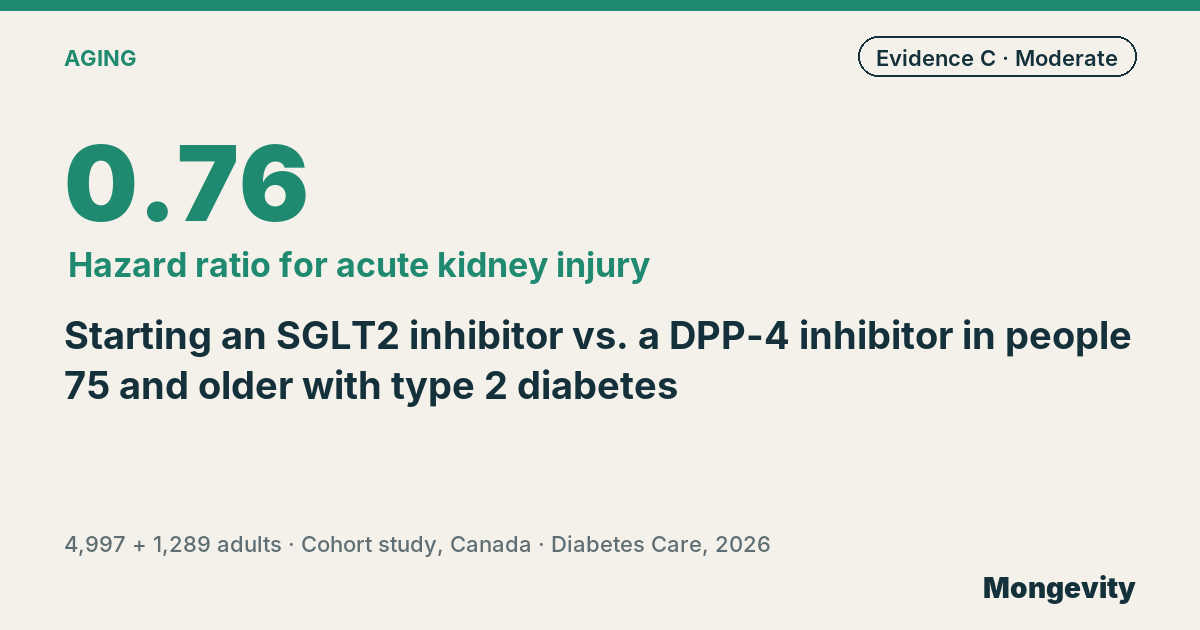
People 75 and older with type 2 diabetes who started an SGLT2 inhibitor had lower risks of acute kidney injury and hospitalization than those who started a DPP-4 inhibitor, with no clear increase in harms, in a cohort study in Canada published Oct. 27, 2026, in Diabetes Care. Age alone may not rule out this medicine in older adults.
SGLT2 inhibitors, such as empagliflozin and dapagliflozin, are diabetes pills that also protect the heart and kidneys. Doctors are sometimes cautious using them in very old patients because of worries about infections, dehydration, falls and a rare but serious problem called ketoacidosis.
Compared with people who started another common diabetes pill, a DPP-4 inhibitor, those starting an SGLT2 inhibitor didn’t have more harm, and had less acute kidney injury.
What are SGLT2 inhibitors?
They make the kidneys release extra sugar into the urine. That lowers blood sugar, and large trials have shown benefits for the heart and kidneys. Because they increase urination and sugar in the urine, they can raise the risk of genital infections and dehydration.
What did the study look at?
Researchers used health records from British Columbia, Canada, for people 75 and older with type 2 diabetes who started either an SGLT2 inhibitor (4,997 people) or a DPP-4 inhibitor (1,289 people) between 2021 and 2023. They compared infections, ketoacidosis, acute kidney injury, falls, fractures and hospital stays, using statistical methods to make the two groups as comparable as possible.
What did the study find about medicines in older adults?
| SGLT2 vs. DPP-4 inhibitor | Hazard ratio |
|---|---|
| Acute kidney injury | 0.76 (lower) |
| Any hospitalization | 0.87 (lower) |
| Infection | no difference |
| Ketoacidosis, falls, fractures | no clear difference |
A hazard ratio below 1 means less risk with SGLT2 inhibitors. For ketoacidosis, falls and fractures, the estimates were imprecise and could fit with either benefit or harm.
Why does this matter?
Older adults are often left out of clinical trials, so doctors have to decide with less information. Real-world data like this help show whether a drug that works in younger people is also reasonable in someone much older.
How solid is this evidence?
It’s moderate. Mongevity rates it C on our A-to-E scale. It’s an observational study: people weren’t assigned to drugs by chance, so differences between groups may remain despite the adjustments. The SGLT2 group was also younger on average (median 79 vs. 82 years). Some results were imprecise.
What does this mean for you?
If you or an older relative has type 2 diabetes, age alone may not be a reason to avoid an SGLT2 inhibitor. Ask the doctor how to stay hydrated, what to do on sick days, and which signs of infection to watch for.
How do I explain this at dinner?
Some diabetes pills make you pee out extra sugar. Doctors worried they might be risky for very old people, so researchers checked thousands of real patients and found they did about as well as with another pill, and their kidneys did a little better. A good question for the table: why do scientists need to study older people separately?
In one sentence: in people 75 and older with type 2 diabetes, starting an SGLT2 inhibitor wasn’t linked to more harm than a DPP-4 inhibitor and was linked to less kidney injury.
Questions and answers
- Are SGLT2 inhibitors safe for people over 75?
- In this study they weren't linked to more harm than DPP-4 inhibitors, and acute kidney injury and hospitalizations were less frequent.
- Do they cause more infections in older adults?
- In this study there was no difference in infection risk compared with DPP-4 inhibitors.
- Should I switch my diabetes medicine?
- Don't change it on your own. Bring the question to your doctor, who knows your full health picture.