In AFib with advanced kidney disease, apixaban balanced stroke and bleeding better
Heart rhythmPart of a story we are following · 3 articles · See every update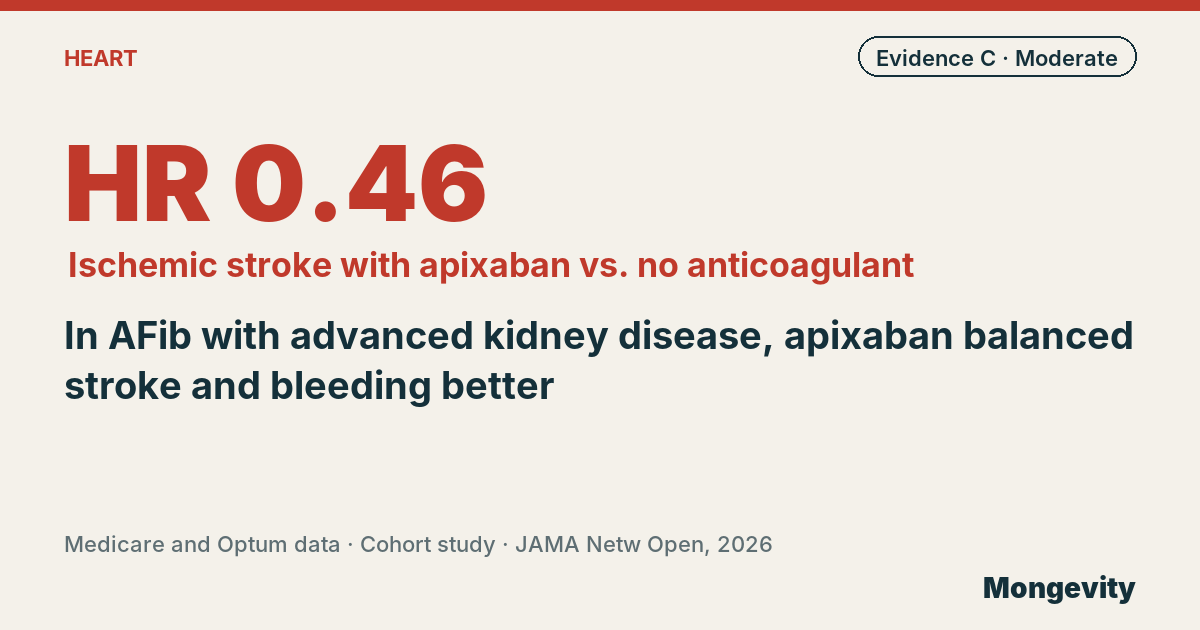
In older US adults with atrial fibrillation and advanced kidney disease not on dialysis, apixaban was linked to less ischemic stroke (hazard ratio 0.46) but more major bleeding (1.32) than no anticoagulant, in a Medicare-based study published in September 2026 in JAMA Network Open. Warfarin raised bleeding without clearly reducing stroke, so apixaban offered a better balance for this heart rhythm problem.
Atrial fibrillation (AFib), an irregular heart rhythm, raises the risk of stroke, and blood thinners reduce it. But people with advanced chronic kidney disease bleed more easily and were left out of most trials, so the balance of benefit and harm is unclear.
What did the study look at?
Researchers used US insurance data from 2013 to 2025 on adults with AFib and stage 4 or 5 kidney disease who were not on dialysis. They designed the analysis to mimic a trial, comparing people who started apixaban, people who started warfarin and people who took no anticoagulant. Most were in their late seventies. The main outcomes were hospitalization for major bleeding, ischemic stroke (caused by a clot) and both combined.
What did the study find about heart rhythm?
- Compared with no anticoagulant, apixaban was linked to more major bleeding (hazard ratio 1.32) and less ischemic stroke (hazard ratio 0.46), with no difference in the combined outcome (1.05).
- Warfarin was linked to much more bleeding (hazard ratio 2.44), no clear reduction in stroke (0.87) and a worse combined outcome (1.95) than no anticoagulant.
- Compared directly with warfarin, apixaban was linked to less major bleeding (hazard ratio 0.55) and less ischemic stroke (0.50).
Why does this matter?
Doctors often hesitate to prescribe blood thinners to people with severely reduced kidney function. This study suggests that if one is used, apixaban offers a better trade-off than warfarin, and that the decision should weigh each person’s risk of stroke against their risk of bleeding.
How solid is this evidence?
It’s moderate. Mongevity rates it C on our A-to-E scale: a large observational study designed to emulate a trial, with careful balancing of the groups. Limits: patients weren’t assigned at random, insurance data can miss details such as kidney function changes or over-the-counter aspirin use, and the results apply to US insured adults.
What are the open questions?
Randomized trials in advanced kidney disease are needed to confirm the best anticoagulant and dose, and whether newer drugs could reduce bleeding further.
What does this mean for you?
If you have AFib and advanced kidney disease, the decision about blood thinners is personal. Ask your cardiologist and nephrologist to weigh your stroke and bleeding risks together, and whether apixaban could be an option for you. Report any unusual bleeding right away.
How do I explain this at dinner?
People with an irregular heartbeat and very weak kidneys are caught between strokes and bleeding. In this study, a newer blood thinner, apixaban, cut strokes by about half but caused more bleeding, while the older warfarin mostly added bleeding. A good question for the table: how do you decide when a medicine’s benefit is worth its risk?
In one sentence: in atrial fibrillation with advanced chronic kidney disease not on dialysis, apixaban reduced ischemic stroke but increased bleeding vs. no anticoagulant, a more favorable trade-off than warfarin.
Questions and answers
- What did apixaban do vs. no anticoagulant?
- Less ischemic stroke (hazard ratio 0.46) but more major bleeding (1.32).
- How did warfarin compare?
- More bleeding (2.44) without a clear stroke reduction vs. no anticoagulant.
- Apixaban vs. warfarin?
- Less bleeding (0.55) and less ischemic stroke (0.50) with apixaban.
- Should I start or stop a blood thinner?
- Only with your doctors, weighing your own risks.