Narrower vessels in the eye were linked to early behavior changes before dementia
Alzheimer's and dementiaPart of a story we are following · 6 articles · See every update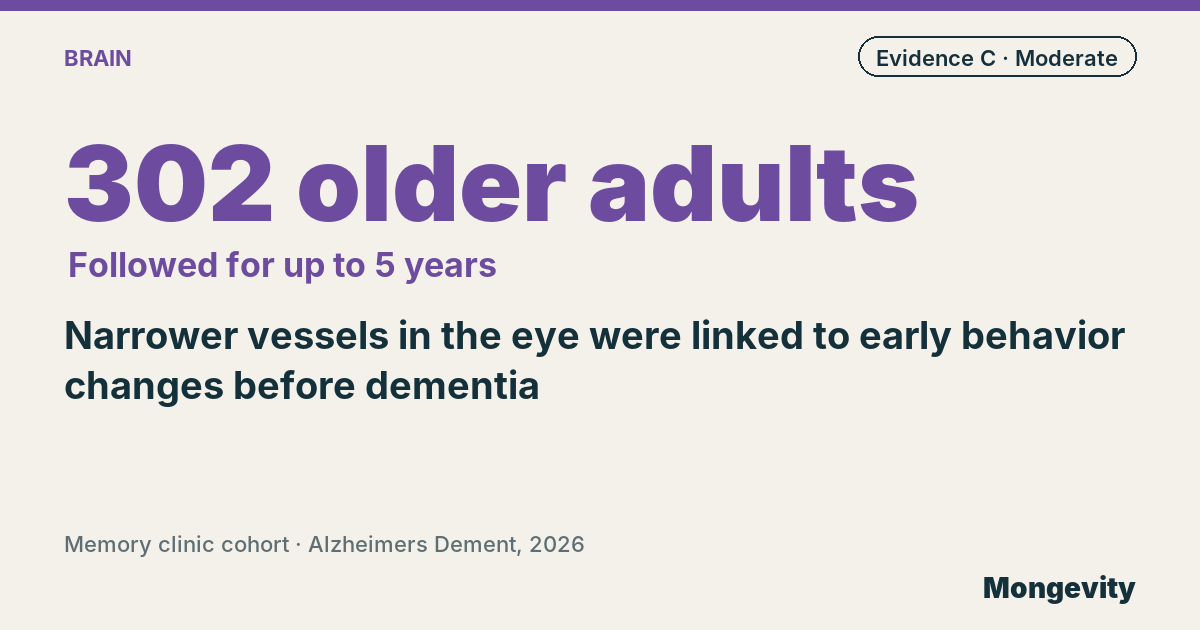
Narrower small arteries in the retina were linked to a higher chance of mild behavioral impairment, an early warning sign of dementia, in 302 dementia-free older adults in Southeast Asia, in a study published in October 2026 in Alzheimer’s & Dementia. An eye scan could someday help flag dementia risk.
Dementia doesn’t always start with memory loss. In some people, the first signs are changes in mood or behavior later in life, such as new apathy, irritability, anxiety or impulsiveness. When these changes are lasting and new, doctors call it mild behavioral impairment, and it can be an early marker of dementia. The retina, at the back of the eye, offers a direct view of tiny blood vessels similar to those in the brain.
What did the study do?
Researchers followed 302 older adults without dementia from a memory clinic in Southeast Asia for up to 5 years. They measured the width of small retinal arteries and veins from photographs of the back of the eye, and assessed mild behavioral impairment with a standard questionnaire. They also looked at brain MRI signs of small vessel disease and proteins in the blood.
What did the study find about dementia?
- Narrower retinal arteries, and a lower ratio between artery and vein width, were linked to a higher chance of developing mild behavioral impairment.
- A lower artery-to-vein ratio was also linked to more white matter damage on brain MRI.
- It was linked to blood proteins related to immune function and inflammation.
Why does this matter?
A photo of the back of the eye is quick, cheap and noninvasive. If retinal vessel changes help flag people at risk of early behavior changes and dementia, they could become a useful screening tool, and point to vascular and inflammatory pathways as targets.
How solid is this evidence?
It’s limited. Mongevity rates it C on our A-to-E scale: a prospective study combining eye, brain and blood measures, but modest in size, from a memory clinic in one region, and with exploratory biological analyses. The abstract doesn’t report effect sizes.
What are the open questions?
Larger studies in other populations are needed to confirm whether retinal photos add useful information beyond existing tests, and whether protecting small blood vessels lowers risk.
What does this mean for you?
If you or an older relative show new, lasting changes in mood or behavior, mention them to a doctor; they can matter as much as memory problems. Keep regular eye exams and protect your blood vessels by controlling blood pressure, blood sugar and cholesterol, not smoking and staying active.
How do I explain this at dinner?
The eye is a window to the brain’s blood vessels. In older adults without dementia, narrower vessels in the eye were linked to new changes in mood and behavior, which can be an early sign of dementia. A good question for the table: what changes in a person might worry you more than forgetfulness?
In one sentence: narrower retinal arteries were linked to new mild behavioral impairment in dementia-free older adults, suggesting eye photos could help flag early risk.
Questions and answers
- What is mild behavioral impairment?
- New, lasting changes in mood or behavior in later life that can be an early sign of dementia.
- What was the link with the eye?
- Narrower retinal arteries were linked to a higher chance of developing it.
- Can an eye photo predict dementia?
- Not yet: it's a promising lead that needs confirmation.