Long-term psychodynamic therapy eased depression symptoms in 16 trials
Depression treatmentsPart of a story we are following · 3 articles · See every update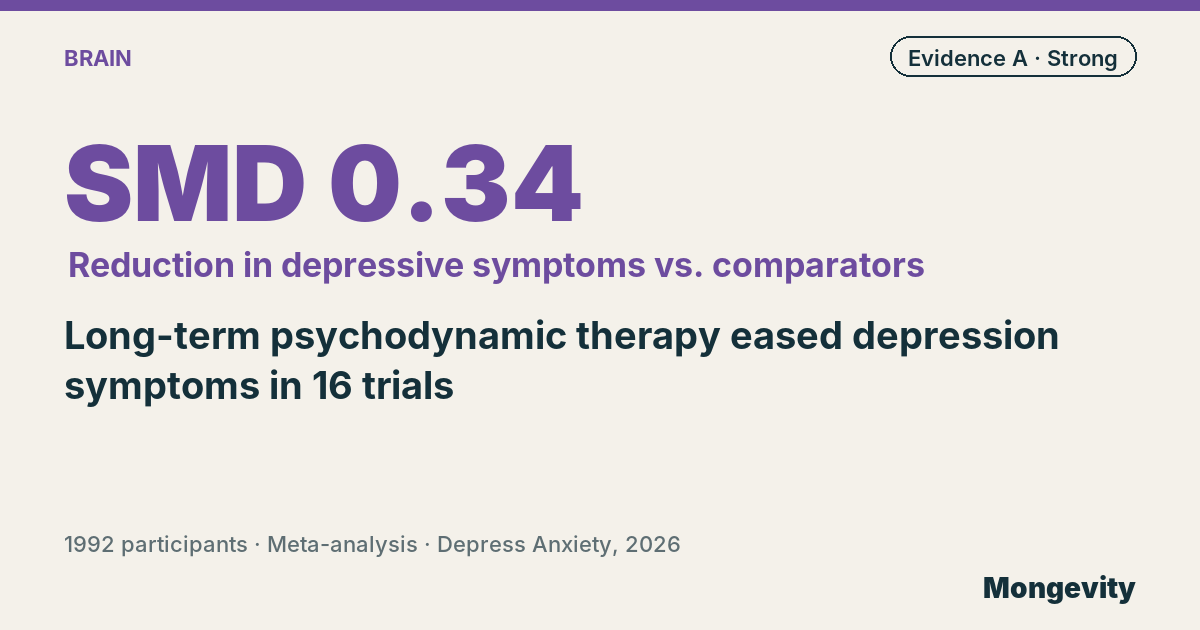
Psychodynamic psychotherapy lasting at least nine months reduced depressive symptoms compared with other conditions (standardized mean difference 0.34), according to a meta-analysis of sixteen randomized trials with 1992 participants published Sept. 23, 2026, in Depression and Anxiety. Long-term talk therapy is an evidence-based depression treatment.
Psychodynamic psychotherapy explores how past experiences, relationships and patterns we’re not fully aware of shape how we feel today. Its long-term form can last a year or more.
What did the study look at?
Researchers searched four major databases through January 2025 for randomized trials of long-term psychodynamic psychotherapy, defined as lasting at least nine months and at least 30 sessions. Sixteen trials with 1992 participants met the criteria. They compared therapy with any other condition and specifically with other active treatments, and rated certainty with the GRADE system.
What did the study find about depression treatment?
- At the end of treatment, long-term psychodynamic therapy reduced depressive symptoms compared with all comparators (standardized mean difference 0.34).
- Compared with other active treatments, the effect was smaller (0.27).
- Effects were generally sustained at follow-up.
- Certainty was high for the overall comparison and moderate for comparison with active treatments.
- Risk of bias was a concern in most studies.
Why does this matter?
Short structured therapies, such as cognitive behavioral therapy, have the most research behind them, and long therapies are sometimes questioned because of cost and time. This review suggests that long-term psychodynamic therapy is an evidence-based option, particularly for people whose depression is long-lasting or tied to relationship patterns.
How solid is this evidence?
It’s strong for the main result. Mongevity rates it A on our A-to-E scale: a pre-registered meta-analysis of randomized trials with formal certainty grading. Limits: there were few trials, populations and comparators varied, risk of bias was frequent, and the authors found little evidence on daily functioning, costs or long-term maintenance.
What are the open questions?
Which patients benefit most, how it compares in cost with shorter therapies, and whether gains last for many years remain open questions that the authors suggest studying with individual patient data.
What does this mean for you?
If you live with depression, several types of therapy work, and the best one is often the one you can stick with and that fits your situation. Long-term psychodynamic therapy is a reasonable option to discuss with a mental health professional, alone or alongside medicine.
How do I explain this at dinner?
Researchers pooled sixteen trials of a talk therapy that digs into past experiences and lasts at least nine months. People with depression who got it improved more than those in other groups, and the improvement tended to last. A good question for the table: what helps you most when you’re feeling down?
In one sentence: a meta-analysis of sixteen randomized trials found that long-term psychodynamic psychotherapy reduced depressive symptoms, with effects generally sustained at follow-up.
Questions and answers
- What is long-term psychodynamic therapy?
- A talk therapy exploring past experiences and relationship patterns, here lasting at least nine months and 30 sessions.
- Did it reduce depression?
- Yes, compared with other conditions (standardized mean difference 0.34) and, to a lesser degree, with active treatments (0.27).
- Do the effects last?
- They were generally sustained at follow-up.
- Is it better than other therapies?
- The comparison with active treatments showed a smaller effect with moderate certainty.