A short-acting nasal psychedelic eased hard-to-treat depression in a phase 2b trial
Depression treatmentsPart of a story we are following · 3 articles · See every update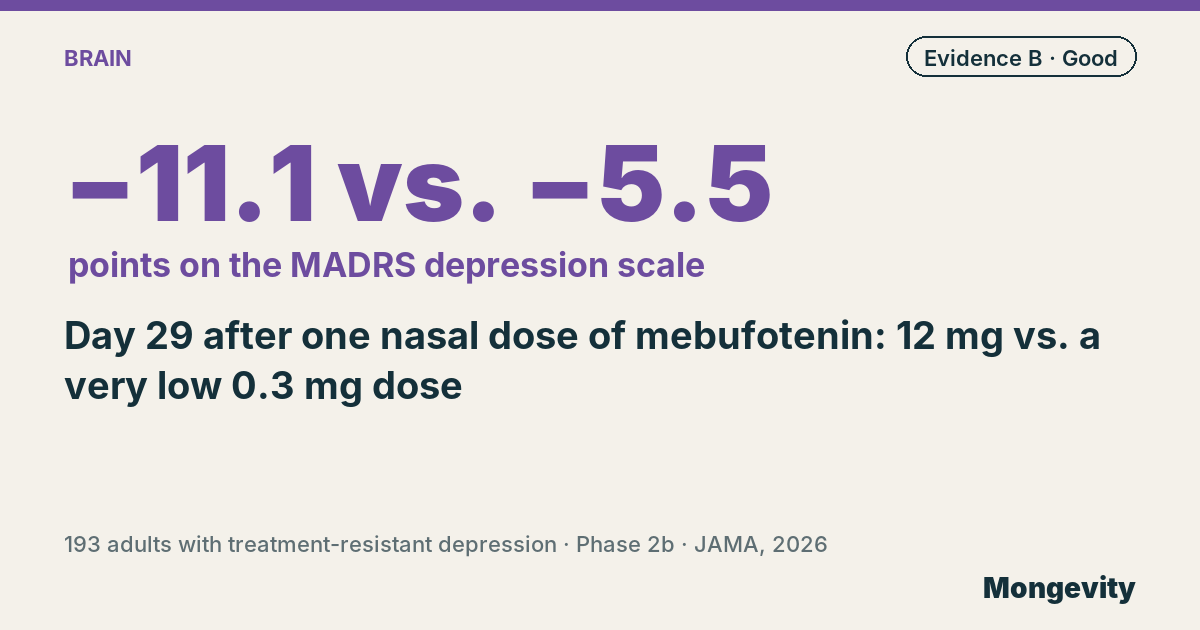
One intranasal dose of mebufotenin cut depression scores more than a very low dose at day 29 in adults with treatment-resistant depression, and most people were ready to go home within 2 hours, in a phase 2b trial at sites in the US, Europe and Australia published Oct. 26, 2026, in JAMA. It could be a shorter psychedelic option for depression treatment.
Some people with depression don’t get better after trying several antidepressants. Psychedelics such as psilocybin have shown promise for them, but they require many hours of supervision in a clinic, which makes them hard to offer widely.
Its psychedelic effect is brief. At day 29, people who got the 12 mg dose had a bigger drop in depression scores than those who got a very low 0.3 mg dose, and most were ready to go home within 2 hours.
What is mebufotenin?
It’s a psychedelic compound that acts on serotonin receptors in the brain, like psilocybin, but its effects last a much shorter time. That could mean shorter clinic visits.
What did the trial test?
At 38 sites in Australia, Europe and the US, 193 adults aged 18 to 75 with moderate to severe depression that hadn’t improved after 2 to 5 antidepressants were assigned by chance to one nasal dose of 8 mg, 12 mg or 0.3 mg, alongside psychological support. The 0.3 mg dose served as a comparison that’s too low to have a real effect but helps keep the trial blind. Depression was measured with the MADRS scale, which runs from 0 to 60.
What did the study find about depression treatment?
| Day 29 | 8 mg | 12 mg | 0.3 mg |
|---|---|---|---|
| Change in depression score | -12.5 | -11.1 | -5.5 |
| Responded to treatment | 35% | 34% | 12% |
| In remission | 26% | 18% | 8% |
The benefit with 8 and 12 mg appeared within days and lasted through the 8-week follow-up. Side effects were reported by 76%, 85% and 73% of participants in the three groups, almost all mild or moderate. Most people were ready to leave within 2 hours.
Why does this matter?
Treatment-resistant depression is common and disabling. A treatment that works after one dose and needs a short visit could reach more people than therapies requiring a full day of supervision.
How solid is this evidence?
It’s good, but not yet definitive. Mongevity rates it B on our A-to-E scale. The trial was randomized and double-blind, but it was phase 2b, follow-up lasted 8 weeks, and with psychedelics many participants can guess whether they got the active dose, which can affect results. Larger phase 3 trials are needed.
What does this mean for you?
Mebufotenin isn’t an approved treatment. Using psychedelics outside a medical setting carries real risks. If you or someone close to you has depression that hasn’t improved with treatment, talk with a psychiatrist about the options that exist, including clinical trials. If you’re in crisis, contact your local emergency or crisis line.
How do I explain this at dinner?
Some people stay sad for a long time even after trying several medicines. Doctors tested a short-acting medicine sprayed into the nose, given once in a clinic, and many people felt better weeks later. A good question for the table: who could you check in on this week?
In one sentence: one nasal dose of a short-acting psychedelic eased treatment-resistant depression for weeks in a phase 2b trial, with most people ready to go home within 2 hours.
Questions and answers
- What is mebufotenin?
- A short-acting psychedelic, also called 5-MeO-DMT, given here as a single nasal dose in a clinic.
- Did it work for treatment-resistant depression?
- At day 29, the 12 mg dose lowered depression scores by 11.1 points vs. 5.5 with 0.3 mg; the 8 mg dose by 12.5 points.
- How long does the visit take?
- Most participants were ready to go home within 2 hours after the dose.
- Is it approved?
- No. It's experimental and should only be used in clinical trials or approved medical settings.