After a serious head injury, more generous transfusion was linked to better recovery
Head impacts and sportPart of a story we are following · 3 articles · See every update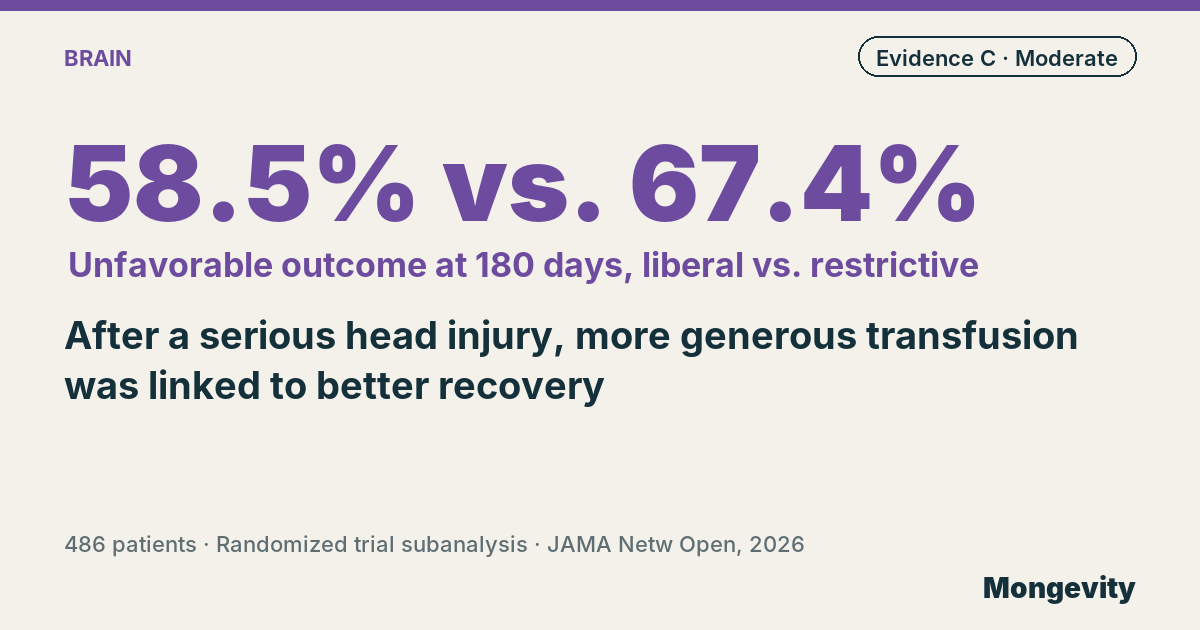
Transfusing at a higher hemoglobin threshold was linked to fewer poor neurological outcomes at 180 days, 58.5% vs. 67.4%, in 486 intensive care patients with traumatic brain injury in 22 countries, in an analysis of the TRAIN trial published in September 2026 in JAMA Network Open. The result was fragile, but it matters for severe head injuries.
After a serious traumatic brain injury, many patients in intensive care develop anemia, a low level of hemoglobin, the protein that carries oxygen in the blood. The injured brain needs oxygen, but blood transfusions have risks and are a limited resource. When to transfuse is not well defined.
What did the study look at?
It is a planned secondary analysis of the TRAIN trial, run in 72 intensive care units in 22 countries. Patients with brain injury and anemia were assigned by chance to a liberal strategy (transfuse when hemoglobin fell below 9 g/dL) or a restrictive one (transfuse below 7 g/dL). This analysis included only those with traumatic brain injury: 486 patients, with a mean age of 46.8 years and 71.4% men. The main outcome was an unfavorable neurological result at 180 days, meaning death or significant disability.
What did the study find about head injuries?
- The liberal group received 534 transfusions and the restrictive group 246.
- At 180 days, 58.5% of patients in the liberal group had an unfavorable outcome vs. 67.4% in the restrictive group (relative risk 0.86).
- Death at 28 days and serious complications, such as infection or brain ischemia, did not differ significantly.
- The fragility index was 1: changing the outcome of a single patient would make the result non-significant.
Why does this matter?
For years, the trend in intensive care has been to transfuse less. This analysis suggests the injured brain may be an exception, where keeping hemoglobin higher could help recovery. It is relevant to severe head injuries from traffic, falls or contact sports.
How solid is this evidence?
It’s moderate. Mongevity rates it C on our A-to-E scale: it comes from a randomized trial, but it’s a subgroup analysis and the result is fragile, as the authors themselves warn. Limits: doctors knew the strategy, and the patients were critically ill, so it doesn’t apply to mild concussions.
What are the open questions?
A trial designed specifically for traumatic brain injury is needed to confirm whether a liberal threshold improves recovery, and for which patients.
What does this mean for you?
This is a decision for intensive care teams, not for patients. For everyone, the best strategy against brain injury is prevention: seatbelts, helmets on bikes and motorcycles, fall prevention at home and proper protocols for head impacts in sport.
How do I explain this at dinner?
In patients with a serious head injury and low blood counts, giving blood transfusions earlier was linked to more of them recovering well six months later. But the result is so tight that one patient more or less would change it. A good question for the table: who here always wears a helmet on a bike?
In one sentence: in patients with traumatic brain injury and anemia, a liberal transfusion strategy was linked to fewer unfavorable neurological outcomes at 180 days, though the result was fragile.
Questions and answers
- What did the trial compare?
- Transfusing when hemoglobin fell below 9 g/dL (liberal) vs. below 7 g/dL (restrictive).
- What was found?
- Unfavorable outcomes at 180 days were 58.5% with the liberal strategy vs. 67.4% with the restrictive one.
- Is the result certain?
- No. The fragility index was 1, so it should be read with caution.
- Does it apply to mild concussions?
- No. It included critically ill patients in intensive care.