In older adults with fatty liver, GLP-1 drugs were linked to fewer liver crises and deaths
Fatty liverPart of a story we are following · 3 articles · See every update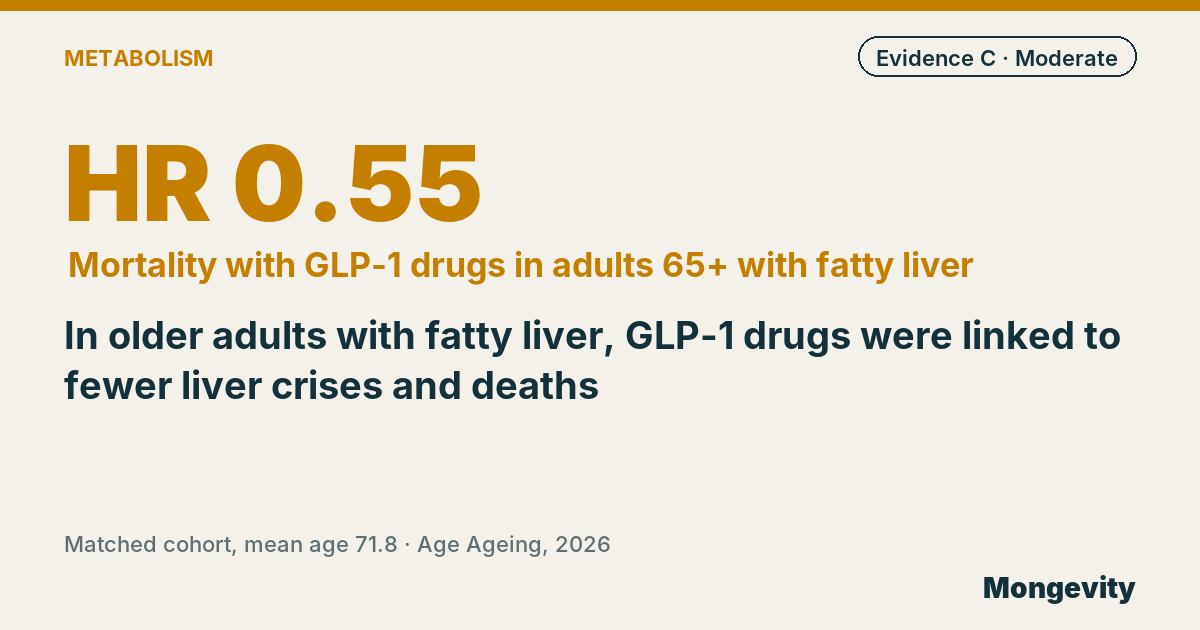
Starting a GLP-1 drug was linked to lower risks of liver decompensation (hazard ratio 0.72) and death (0.55) in US adults 65 and older with fatty liver disease, in a study published in September 2026 in Age and Ageing. Major heart events didn’t drop, and some side effects rose.
Metabolic dysfunction-associated steatotic liver disease (MASLD), commonly called fatty liver, is the leading cause of chronic liver disease in older adults. It can lead to liver failure and is linked to heart disease. GLP-1 drugs, such as semaglutide, reduce weight and liver fat, but trials in older adults are scarce.
What did the study look at?
Researchers used a large US health records network to find adults aged 65 or older with MASLD. They compared people who started a GLP-1 drug with similar people who didn’t, matching them on many characteristics. After matching, each group had a mean age of 71.8 years, and 62.0% were women. They followed outcomes from 90 days up to 10 years.
What did the study find about fatty liver?
- GLP-1 drugs were linked to a lower risk of liver decompensation, serious complications such as fluid in the abdomen or bleeding from the gut (hazard ratio 0.72).
- They were linked to a lower risk of death (hazard ratio 0.55) and of hospitalization (0.95).
- Major heart and vascular events did not differ (hazard ratio 0.98).
- Osteoporosis without fracture and retinopathy (eye damage) were more frequent; pancreatitis, muscle loss and fractures did not differ.
- Digestive side effects appeared more often as first events.
Why does this matter?
Older adults are often left out of trials, and doctors may hesitate to start new drugs in them. These results suggest GLP-1 drugs could protect the liver and improve survival in older people with fatty liver, while also flagging side effects to watch, such as bone and eye effects.
How solid is this evidence?
It’s moderate. Mongevity rates it C on our A-to-E scale: a very large observational study with careful matching and several sensitivity analyses. Limits: treatment wasn’t random, health records can miss details such as alcohol use or frailty, and the large mortality difference may partly reflect that healthier people are more likely to be prescribed new drugs.
What are the open questions?
Randomized trials in older adults are needed to confirm the liver and survival benefits and to clarify the bone and eye findings.
What does this mean for you?
If you’re 65 or older with fatty liver and diabetes or obesity, ask your doctor whether a GLP-1 drug could be appropriate. If you start one, keep up protein intake and strength exercise to protect muscle and bone, and keep regular eye checks if you have diabetes.
How do I explain this at dinner?
In older Americans with fatty liver, those who started a GLP-1 drug, the family that includes semaglutide, had fewer serious liver problems and were less likely to die over the years, though some side effects were more common. A good question for the table: what should older adults watch for when starting a new medicine?
In one sentence: in adults aged 65 or older with MASLD, starting a GLP-1 receptor agonist was linked to lower risks of hepatic decompensation, hospitalization and mortality, with higher rates of selected adverse events.
Questions and answers
- What is liver decompensation?
- Serious complications of advanced liver disease, such as fluid in the abdomen or gut bleeding.
- How much lower was the risk?
- A hazard ratio of 0.72 for decompensation and 0.55 for death.
- Did they reduce heart events?
- No; major heart events did not differ (hazard ratio 0.98).
- Were there side effects?
- Osteoporosis without fracture, retinopathy and digestive symptoms were more frequent.