Prescribed produce improved the diet of low-income rural patients
Diet and weightPart of a story we are following · 4 articles · See every update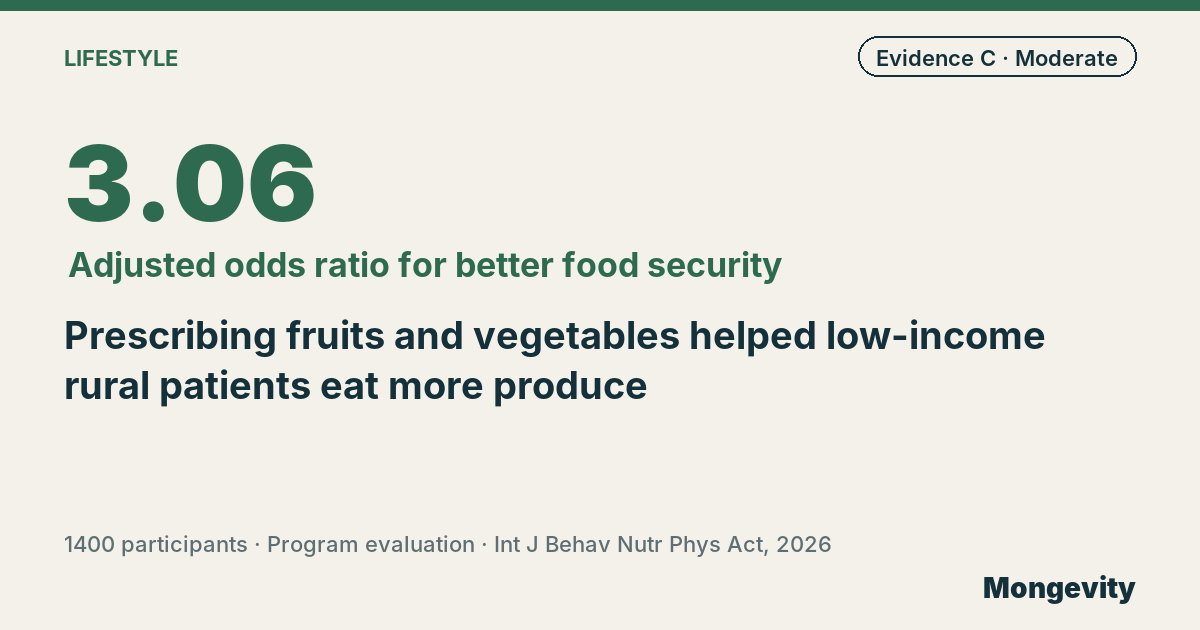
A produce prescription program in rural New York led to sustained increases in fruit and vegetable intake and better food security among low-income patients with chronic diseases, with the odds of being more food secure peaking at 3.06, according to an evaluation published in July 2026 in International Journal of Behavioral Nutrition and Physical Activity. Food vouchers can improve diet where money is tight.
Many people with diet-related chronic diseases, such as diabetes or high blood pressure, can’t easily afford or find fresh produce, especially in rural areas. Produce prescription programs let health care teams “prescribe” fruits and vegetables, giving patients vouchers or farm shares.
What did the study do?
Between 2022 and 2024, a program in south central New York enrolled 1400 low-income participants with diet-related chronic diseases. Over three seasons, participants received farm shares or vouchers worth $15 a week for about 24 weeks to buy fruits and vegetables. Researchers surveyed intake, food security, diet quality and health, and followed a group of 187 participants across all three seasons.
What did the study find about diet and weight?
- Within the same people over time, intake rose for fruit by 0.27 times a day, fruit juice by 0.33, green vegetables by 0.17 and other vegetables by 0.26.
- Food insecurity responses fell, and the odds of being in a more secure food category rose, peaking at an adjusted odds ratio of 3.06.
- Many participants moved toward higher food security, though low food security often persisted.
- Self-rated health and diet quality improved only modestly and inconsistently.
- Engagement was high: over 93% received vouchers, and 65% redeemed them more than 10 times a season.
Why does this matter?
Telling patients to eat more vegetables doesn’t help if they can’t afford them. This evaluation suggests that pairing medical care with practical access to produce can change eating habits, and that benefits grow with continued participation.
How solid is this evidence?
It’s moderate. Mongevity rates it C on our A-to-E scale: a multi-year evaluation with repeated measurements and participant feedback, but no randomized control group, self-reported intake and participants who chose to stay in the program.
What are the open questions?
Randomized studies are needed to see whether produce prescriptions improve health outcomes such as blood sugar and blood pressure, and what voucher amount and duration work best.
What does this mean for you?
If cost limits your access to fresh produce, ask your clinic or local health department whether produce prescriptions, food pantries or farmers market programs are available. Frozen and canned vegetables without added salt are also good, affordable options.
How do I explain this at dinner?
In rural New York, doctors “prescribed” fruits and vegetables to low-income patients, with weekly vouchers. People ate more produce and worried less about food, especially if they stayed in the program. A good question for the table: what makes healthy food hard to get where you live?
In one sentence: a produce prescription program in rural New York raised fruit and vegetable intake and food security among low-income patients, with benefits growing over time.
Questions and answers
- What is a produce prescription?
- A program where health care teams give patients vouchers or farm shares to buy fruits and vegetables.
- Did people eat more produce?
- Yes: intake rose for fruit and vegetables, for example by 0.26 times a day for other vegetables.
- Did it improve health?
- Self-rated health improved only modestly; health outcomes need further study.