A Mediterranean diet alone didn’t lower inflammation; adding fasting and losing weight did
Diet and weightPart of a story we are following · 4 articles · See every update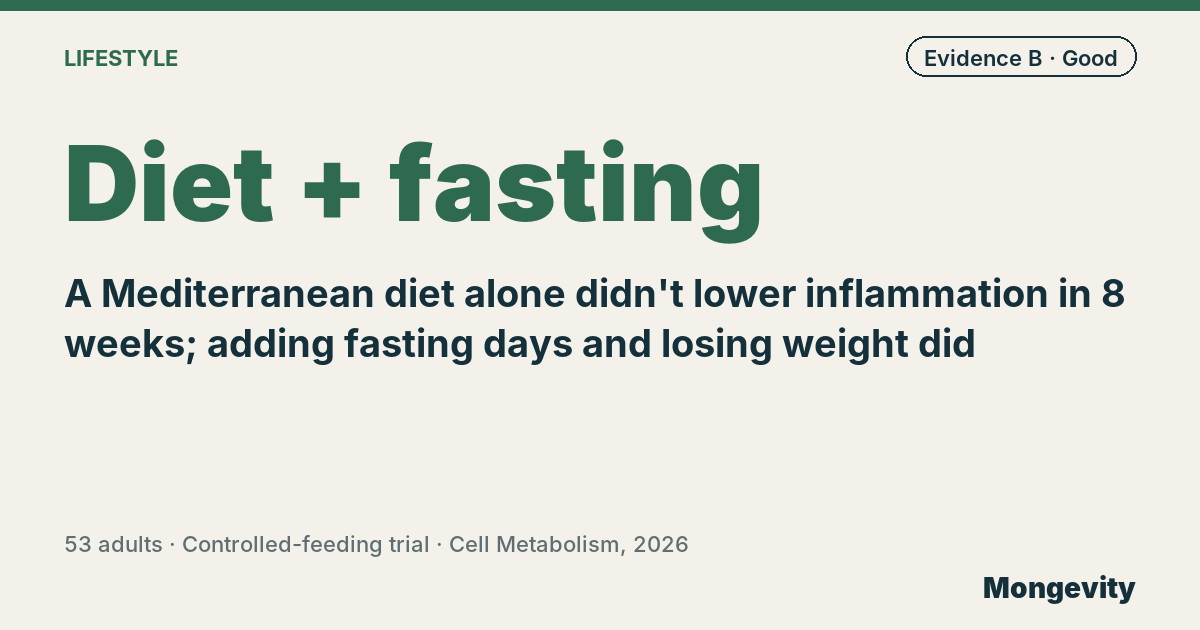
A fully provided Mediterranean diet didn’t lower the inflammation marker CRP in 8 weeks, but after twice-weekly fasting days were added, CRP fell along with weight, blood pressure and insulin resistance, in a 16-week feeding trial published Oct. 21, 2026, in Cell Metabolism. Losing weight may drive the benefit of diet on inflammation.
The Mediterranean diet is often credited with lowering inflammation. But people who switch to it also tend to lose weight, so it’s hard to know which one does the work.
The diet alone didn’t lower inflammation. When fasting days were added and people lost weight, it did.
What did the trial test?
53 adults with metabolic risk factors, mostly women with a mean age of 54.7, were assigned by chance to receive, fully provided, either a Mediterranean diet or their usual Western diet for 8 weeks. Then both groups added two fasting days a week for another 8 weeks. The main outcome was high-sensitivity C-reactive protein (CRP), a blood marker of inflammation.
What did the study find about diet and weight?
- During the first 8 weeks, CRP didn’t change, even though the two diets were clearly different. Cholesterol and other blood fats did improve with the Mediterranean diet.
- After fasting days began, CRP fell in the Mediterranean group compared with controls, along with greater weight loss, better insulin sensitivity and lower blood pressure.
- Molecular analyses showed parallel drops in inflammatory signals, while gut bacteria stayed largely stable.
Why does this matter?
It suggests that, at least over a couple of months, eating fewer calories and losing weight may matter more for inflammation than the quality of the diet alone. That doesn’t mean diet quality is unimportant: the Mediterranean diet still improved blood fats on its own.
How solid is this evidence?
It’s good. Mongevity rates it B on our A-to-E scale. Providing all the food is a strong design, because it ensures people really ate the assigned diet. Limits: the trial was small and short, most participants were women, and the fasting phase came after the diet phase, so the effects of fasting and time can’t be fully separated.
What does this mean for you?
A Mediterranean-style diet remains a healthy choice for the heart. If your goal is also to lower inflammation, losing excess weight, whether through fasting days or another approach that works for you, may be key. Talk to your doctor before fasting if you take medicines for diabetes or blood pressure.
How do I explain this at dinner?
Scientists cooked every meal for a group of adults. Healthy Mediterranean food alone didn’t calm a sign of inflammation in the blood, but eating less on some days and losing weight did. A good question for the table: what helps you eat a little less without feeling hungry?
In one sentence: in a controlled feeding trial, a Mediterranean diet alone didn’t lower inflammation in 8 weeks, but adding fasting days and losing weight did.
Questions and answers
- Does the Mediterranean diet lower inflammation?
- In this trial, not on its own over 8 weeks; CRP fell only after fasting days were added and people lost weight.
- What did the Mediterranean diet improve?
- Blood fats improved during the diet-only phase.
- Is intermittent fasting safe?
- For many adults, yes, but check with your doctor first if you take medicines for diabetes or blood pressure.