A Mediterranean diet and lifestyle was linked to lower mortality at every income level
Diet and weightPart of a story we are following · 4 articles · See every update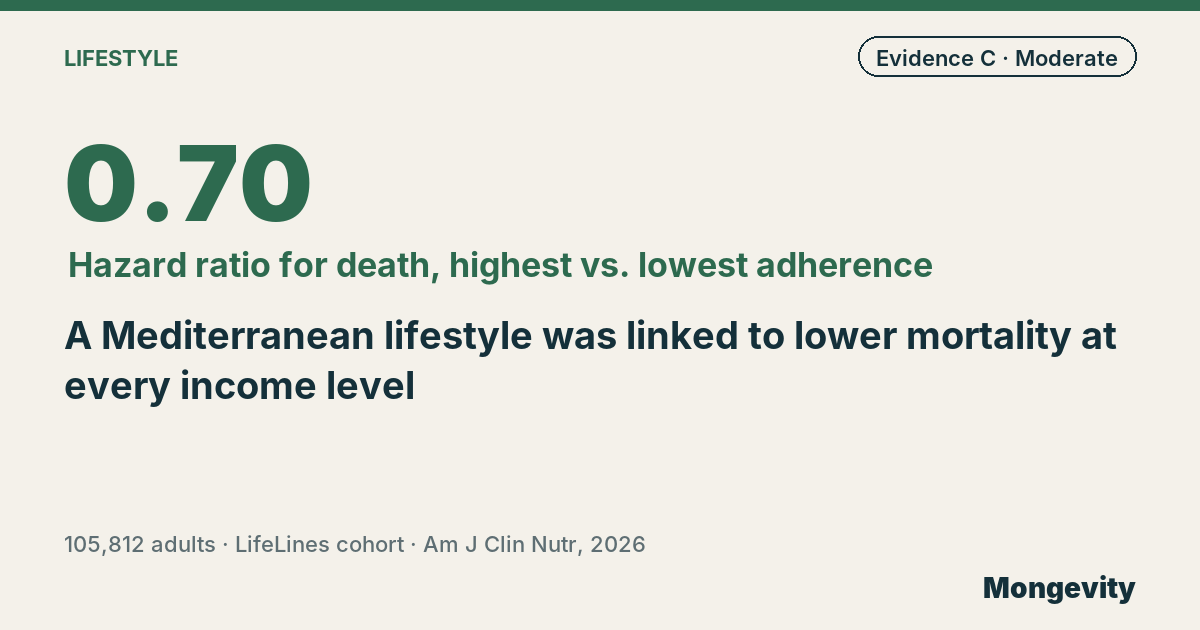
The most Mediterranean lifestyle was linked to lower mortality (hazard ratio 0.70) across socioeconomic levels in 105,812 adults in the Netherlands followed for a median 13.25 years, in a study published Oct. 9, 2026, in The American Journal of Clinical Nutrition. A healthy diet and lifestyle paid off at any income.
The Mediterranean lifestyle goes beyond diet. It includes eating patterns, physical activity, rest and social habits such as sharing meals.
What did the study do?
Researchers followed 105,812 adults in the Dutch LifeLines cohort. They scored each person on the MEDLIFE index, which includes 23 items about food, dietary habits, physical activity, rest and social life. Income and education were each grouped into three levels. Over a median of 13.25 years, 3976 people died.
What did the study find about diet and weight?
- Mortality fell steadily as adherence to the Mediterranean lifestyle rose.
- People in the highest quarter of adherence had a hazard ratio of 0.70 for death, compared with the lowest quarter.
- The link held for people with low and high income, and low and high education.
- Income shaped the link more than education: the hazard ratio for the highest adherence combined with the highest income was 0.54, and with the highest education 0.67.
- A poor lifestyle raised mortality similarly in people with high and low education.
Why does this matter?
Healthy lifestyles are often seen as benefiting mainly well-off people. This study suggests the Mediterranean lifestyle is linked to longer life across socioeconomic levels, so it could help narrow, rather than widen, health gaps, if made accessible.
How solid is this evidence?
It’s moderate. Mongevity rates it C on our A-to-E scale: a very large cohort with long follow-up and full adjustment, but observational. Lifestyle was measured once, at the start, and people who live this way may differ in other ways.
What are the open questions?
It’s unclear which parts of the lifestyle matter most, and which policies would help lower-income groups adopt it.
What does this mean for you?
You don’t need to live by the sea. Build meals around vegetables, legumes, whole grains, olive oil and fruit; move every day; rest enough; and share meals with others when you can. Small, steady steps count.
How do I explain this at dinner?
In a big Dutch study, people who lived the most “Mediterranean” way, eating well, moving, resting and sharing meals, were less likely to die over a median of 13.25 years, whether they were rich or poor. A good question for the table: what Mediterranean habit could you adopt?
In one sentence: a Mediterranean lifestyle was linked to lower mortality across all income and education levels in a large Dutch cohort.
Questions and answers
- What is the Mediterranean lifestyle?
- A pattern of eating, physical activity, rest and social habits, scored here with 23 items.
- How strong was the link with mortality?
- The highest vs. lowest adherence had a hazard ratio of 0.70 for death.
- Does it help people with less money?
- Yes: the link held across all income and education levels.