Exercise during pre-surgery cancer treatment didn’t help more people reach surgery
Exercise as medicinePart of a story we are following · 4 articles · See every update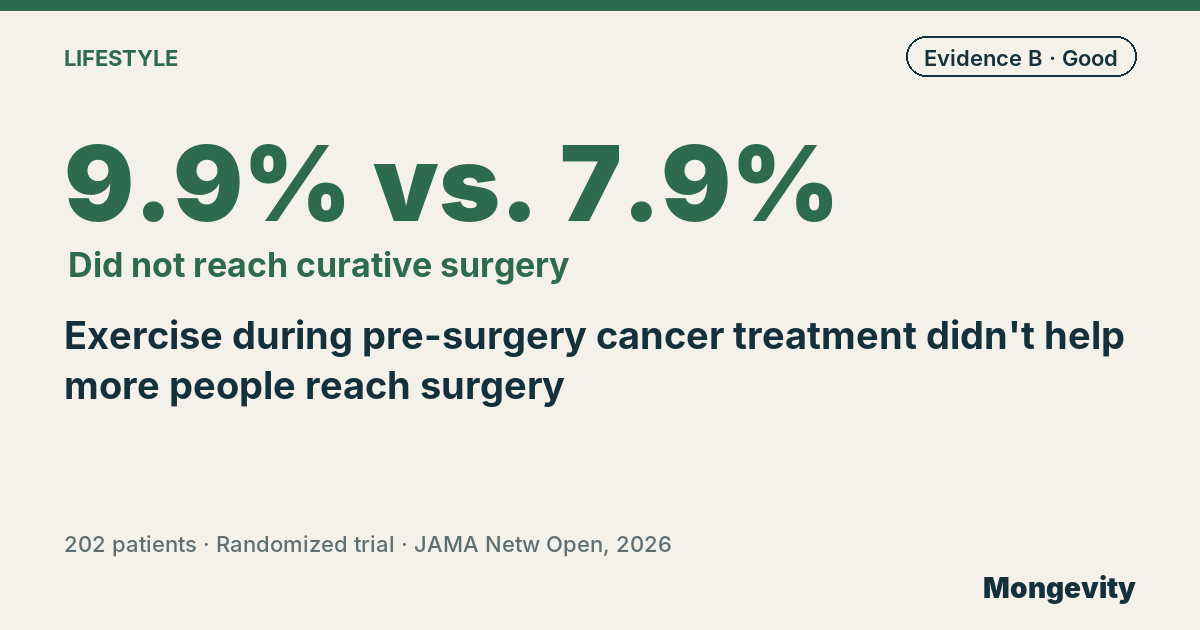
Twice-weekly exercise during treatment before surgery for gastroesophageal cancer didn’t raise the chance of reaching surgery in a Danish trial published Oct. 1, 2026, in JAMA Network Open, and 3-year survival was 51.0% vs. 65.0% with usual care. Exercise during cancer treatment still needs careful study.
Many people with cancer of the stomach or the lower esophagus get chemotherapy before surgery, called neoadjuvant treatment. It can be draining, and some people become too weak, or the cancer progresses, so they never reach the operation. Could exercise during that period help?
What did the trial test?
At Rigshospitalet in Copenhagen, Denmark, 207 people with gastroesophageal adenocarcinoma scheduled for curative treatment were assigned by chance to exercise training or usual care, and 202 were analyzed, 101 in each group. The exercise group did aerobic and strength training twice a week, from diagnosis until surgery. The main question was how many did not reach curative surgery.
What did the study find about exercise?
| Exercise | Usual care | |
|---|---|---|
| Did not reach curative surgery | 9.9% | 7.9% |
| 3-year overall survival | 51.0% | 65.0% |
The difference in reaching surgery wasn’t statistically significant. There were also no differences in stopping chemotherapy early or in complications after surgery. Survival at 3 years was lower in the exercise group, with a hazard ratio of 1.58.
How should we read the survival result?
With caution. Survival was a secondary outcome, and the trial wasn’t designed to answer it. The authors don’t conclude that exercise is harmful; they say more research is needed on its long-term effects. Still, it’s a surprising signal that deserves a closer look rather than being ignored.
How solid is this evidence?
It’s good. Mongevity rates it B on our A-to-E scale: a randomized trial with blinded assessment, at a single center. Limits: it was mid-sized, done in one hospital, and the survival finding is secondary and unexpected.
What does this mean for you?
If you or someone close to you is going through treatment before cancer surgery, staying active within your limits is still generally encouraged for well-being, but this trial shows a structured program didn’t improve the chance of reaching surgery. Ask your oncology team what level of activity is right for you.
Why does this matter?
Exercise is often promoted as a near-universal help in cancer care. Testing it carefully, and publishing a result that didn’t go the expected way, is how we learn where it helps and where it doesn’t.
How do I explain this at dinner?
People with stomach or esophageal cancer exercised twice a week during chemotherapy before surgery, hoping more of them would make it to the operation. It didn’t change that, and survival came out lower, though that wasn’t the main question. A good question for the table: why is it important to publish results that surprise us?
In one sentence: exercise during pre-surgery treatment for gastroesophageal cancer didn’t help more people reach surgery, and a lower survival signal needs further study.
Questions and answers
- What is neoadjuvant treatment?
- Chemotherapy or other treatment given before surgery to shrink the tumor.
- Did exercise help people reach surgery?
- No: 9.9% in the exercise group and 7.9% in usual care didn't reach curative surgery, a non-significant difference.
- Is exercise harmful during cancer treatment?
- The trial doesn't conclude that; lower survival was a secondary result that needs more study.