Exercising in water lowered blood pressure in older adults with hypertension
Exercise as medicinePart of a story we are following · 4 articles · See every update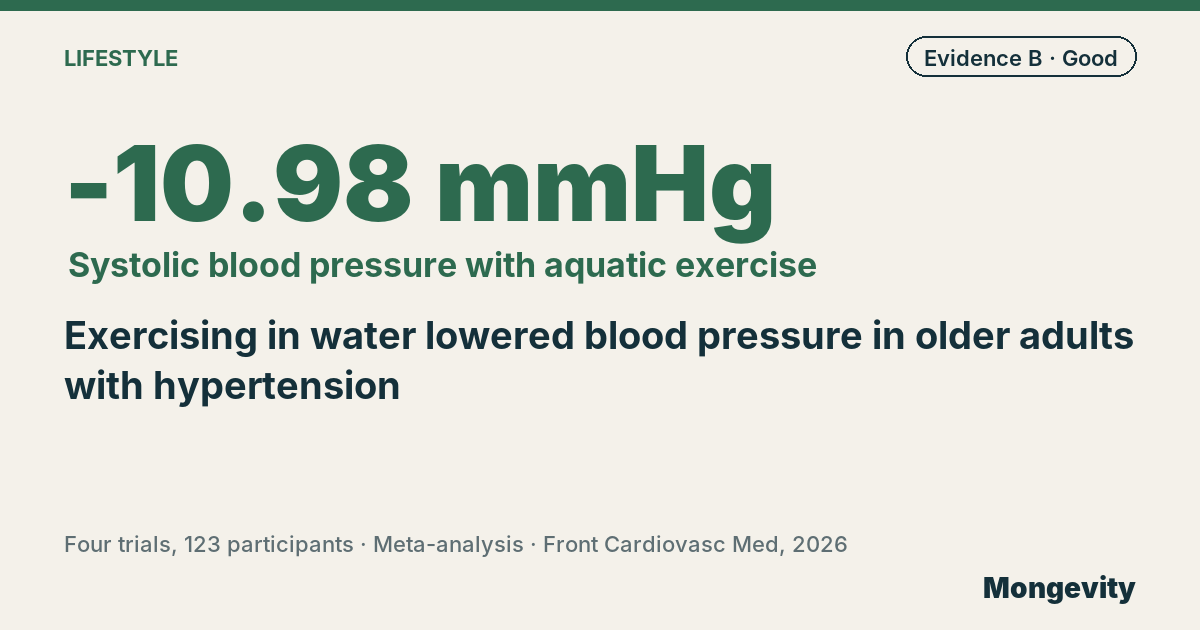
Aquatic exercise lowered systolic blood pressure by 10.98 mmHg in older adults with hypertension, according to a meta-analysis of four randomized trials published Oct. 8, 2026, in Frontiers in Cardiovascular Medicine. Exercising in water may be a gentle option for people with joint pain.
High blood pressure is one of the most common and controllable risk factors for heart disease and stroke in older adults. Exercise helps, but joint pain, balance problems or excess weight can make walking or running hard. Exercising in water is gentle on the joints and lowers the risk of falling.
What did the study do?
Researchers searched five databases up to July 2026 for randomized trials comparing aquatic exercise therapy with control conditions in older adults with hypertension. Four trials with 123 participants met the criteria.
What did the study find about exercise?
Compared with control conditions, aquatic exercise lowered:
| Measure | Average reduction |
|---|---|
| Systolic blood pressure | 10.98 mmHg |
| Diastolic blood pressure | 5.97 mmHg |
| Heart rate | 5.91 beats per minute |
The certainty of the evidence for the main outcomes was rated as moderate.
Why does this matter?
A drop of this size in systolic pressure is clinically meaningful and comparable to what some medicines achieve. For older adults who find other exercise hard on their joints, water exercise may be an appealing, safe option. Water also supports body weight, cools the body during effort and can make exercise feel easier, which may help people stick with it.
How solid is this evidence?
It’s good, with caveats. Mongevity rates it B on our A-to-E scale: a meta-analysis of randomized trials with moderate certainty. But there were only four small trials, so the true effect could be smaller, and long-term effects are unknown.
What are the open questions?
Larger, longer trials are needed to confirm the size of the effect, find the best type, frequency and intensity of water exercise, and see whether it lowers heart attacks and strokes.
What does this mean for you?
If you have high blood pressure and find walking or gym exercise uncomfortable, ask your doctor whether water aerobics, aqua walking or swimming could suit you. Keep taking prescribed medicines and check your blood pressure regularly.
How do I explain this at dinner?
For older adults with high blood pressure, exercising in a pool lowered the top number by 10.98 points in a review of small trials. Water takes pressure off the joints while the heart still gets a workout. A good question for the table: is there a pool near you?
In one sentence: aquatic exercise lowered blood pressure and heart rate in older adults with hypertension, though the evidence comes from only four small trials.
Questions and answers
- What is aquatic exercise therapy?
- Structured exercise done in water, such as water aerobics or aqua walking.
- How much did blood pressure fall?
- Systolic by 10.98 mmHg and diastolic by 5.97 mmHg, on average.
- Is it safe for older adults?
- It's low-impact and gentle on joints; check with your doctor before starting.